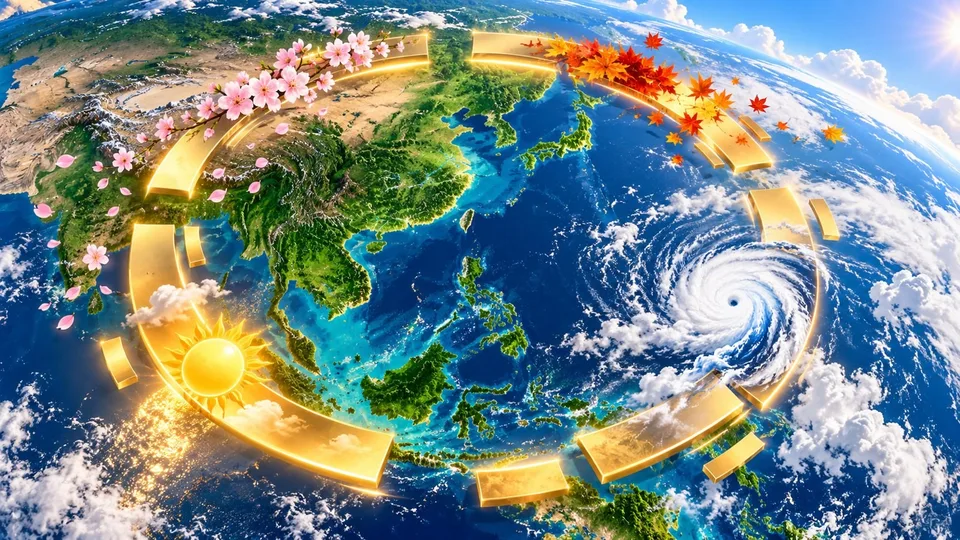
A Hong Kong travel platform's infographic, "Asia's Best Travel Times at a Glance," has been circulating widely. It divides the 12 months for Japan, South Korea, Thailand, Taiwan, Vietnam, Malaysia, Bali, the Philippines, Singapore and the Maldives into blocks such as cherry blossoms, autumn leaves, rainy season, hot season and peak travel season. Calendars like this are usually built on past climate averages. Data from national weather agencies and research teams show that the actual timing or intensity of several of these blocks has changed. The findings are summarised below by region.
Japan: earlier cherry blossoms, later autumn leaves
The Japan Meteorological Agency (JMA) has observed cherry blossom flowering and maple leaf colouring at fixed sites across the country since 1953, currently 58 sites for cherry blossoms and 51 for maples. According to JMA's 2025 climate change assessment report on the atmosphere, land and ocean, cherry blossom flowering has moved earlier by about 1.2 days per decade, while maple leaf colouring has moved later by about 3.1 days per decade. JMA notes that both changes correlate closely with mean temperatures before each event, and that long-term warming is considered one of the drivers.
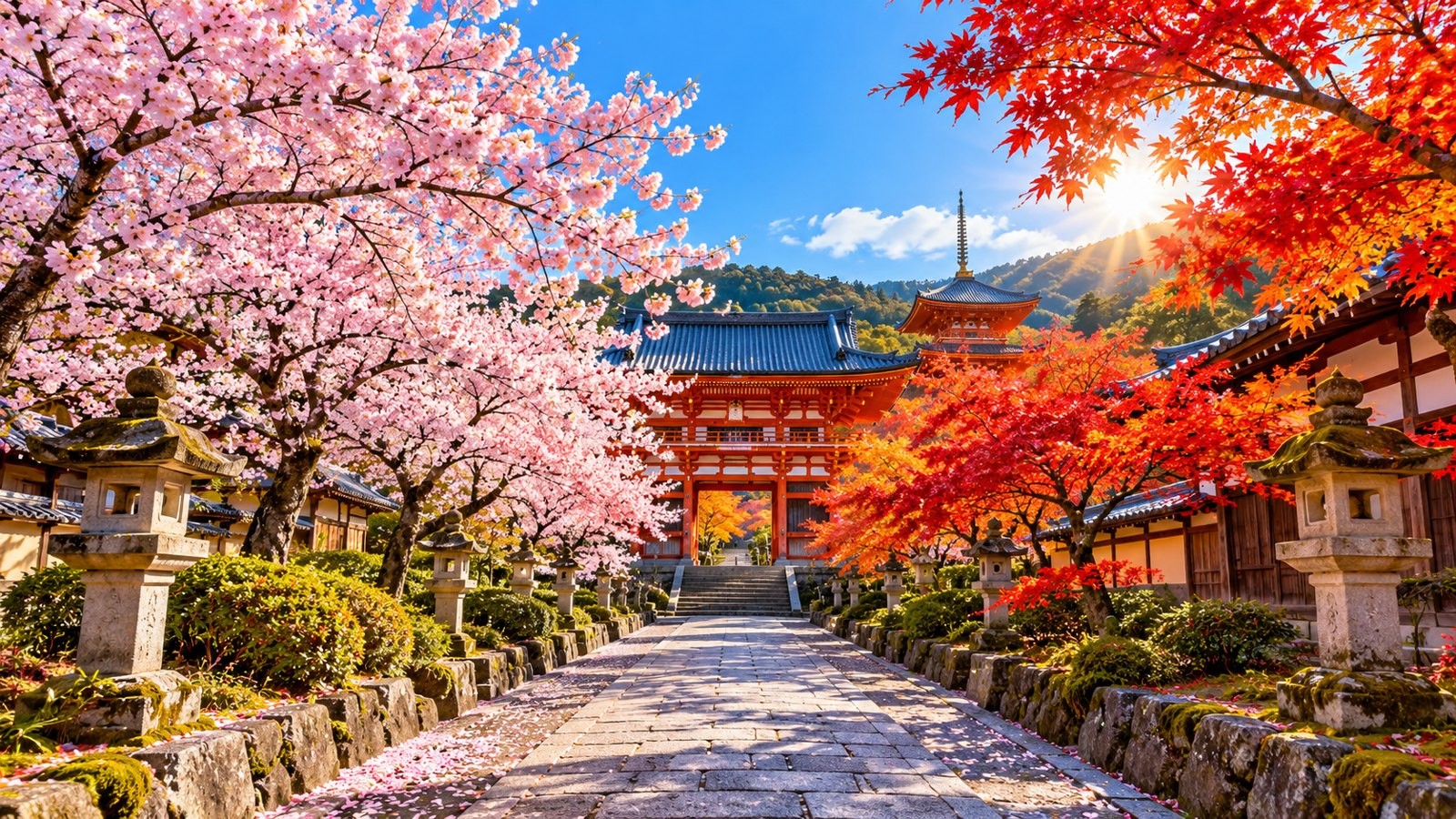
Comparing major cities, the 1991–2020 average flowering date was 5 days earlier in Tokyo and 6 days earlier in Nagoya, Sendai, Hiroshima and Fukuoka than the 1961–1990 average.
Kyoto has a far longer record. Professor Yasuyuki Aono of Osaka Prefecture University reconstructed full-bloom dates of Kyoto's mountain cherry back to 812 AD from court documents and diaries kept by aristocrats and monks. In 2021, Kyoto's cherry blossoms reached full bloom on March 26, the earliest date in this roughly 1,200-year record. The previous earliest was March 27, 1409.
The calendar places Japan's autumn leaves in October–November. Given JMA's long-term trend of about 3 days later per decade at its observation sites, travellers can check each year's leaf-colouring forecasts when planning.
South Korea: record-early cherry blossoms in Seoul
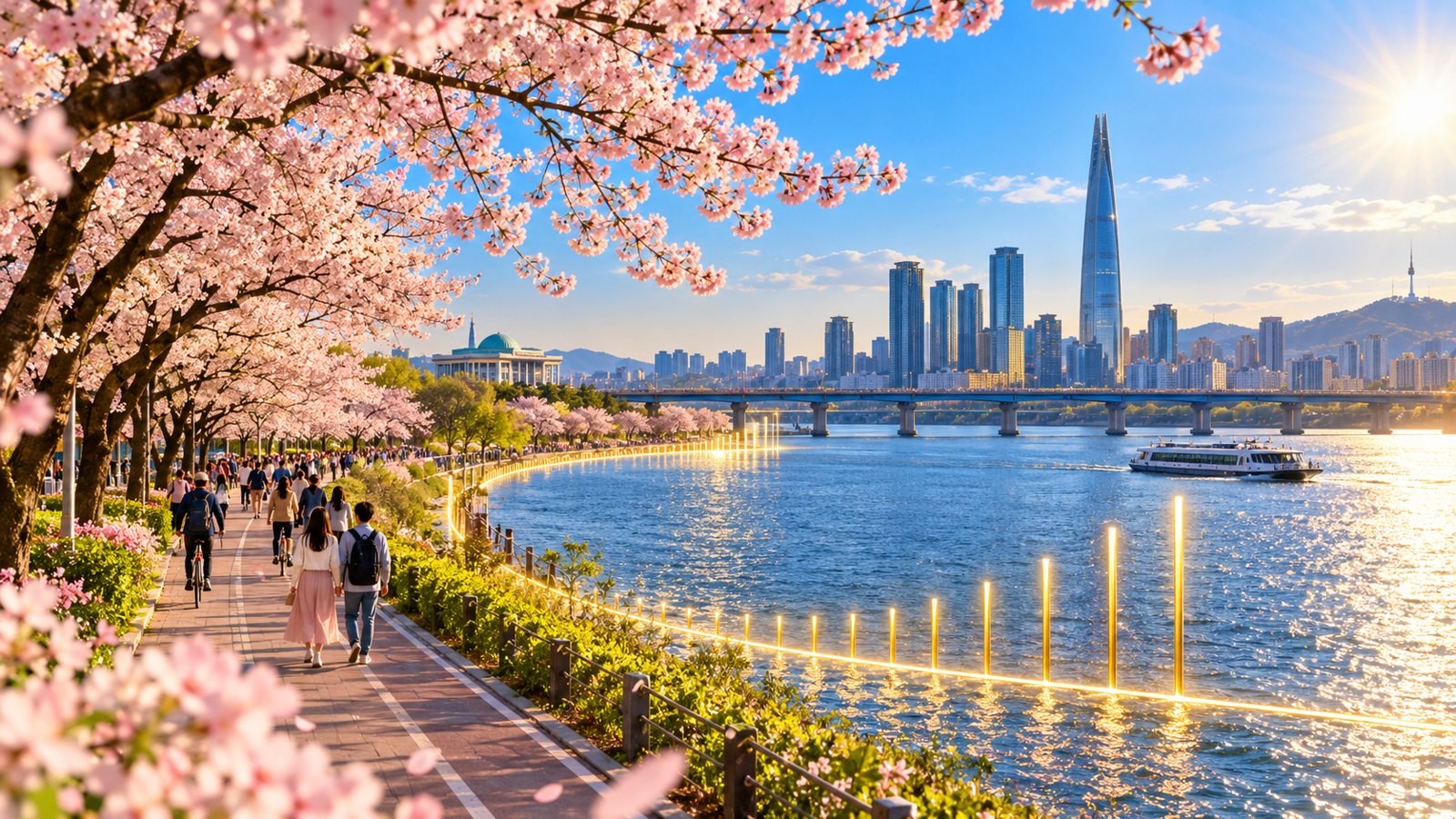
The Korea Meteorological Administration (KMA) declares Seoul's cherry blossom flowering based on a designated tree at its weather station in Jongno. In 2021, Seoul's cherry blossoms began blooming on March 24, the earliest date since observations began in 1922 and three days earlier than the previous record of March 27, 2020. KMA attributed this to above-normal temperatures and longer sunshine hours in February and March: Seoul's February mean was 2.3°C above normal, and March to the date of the announcement was 5.1°C above normal.
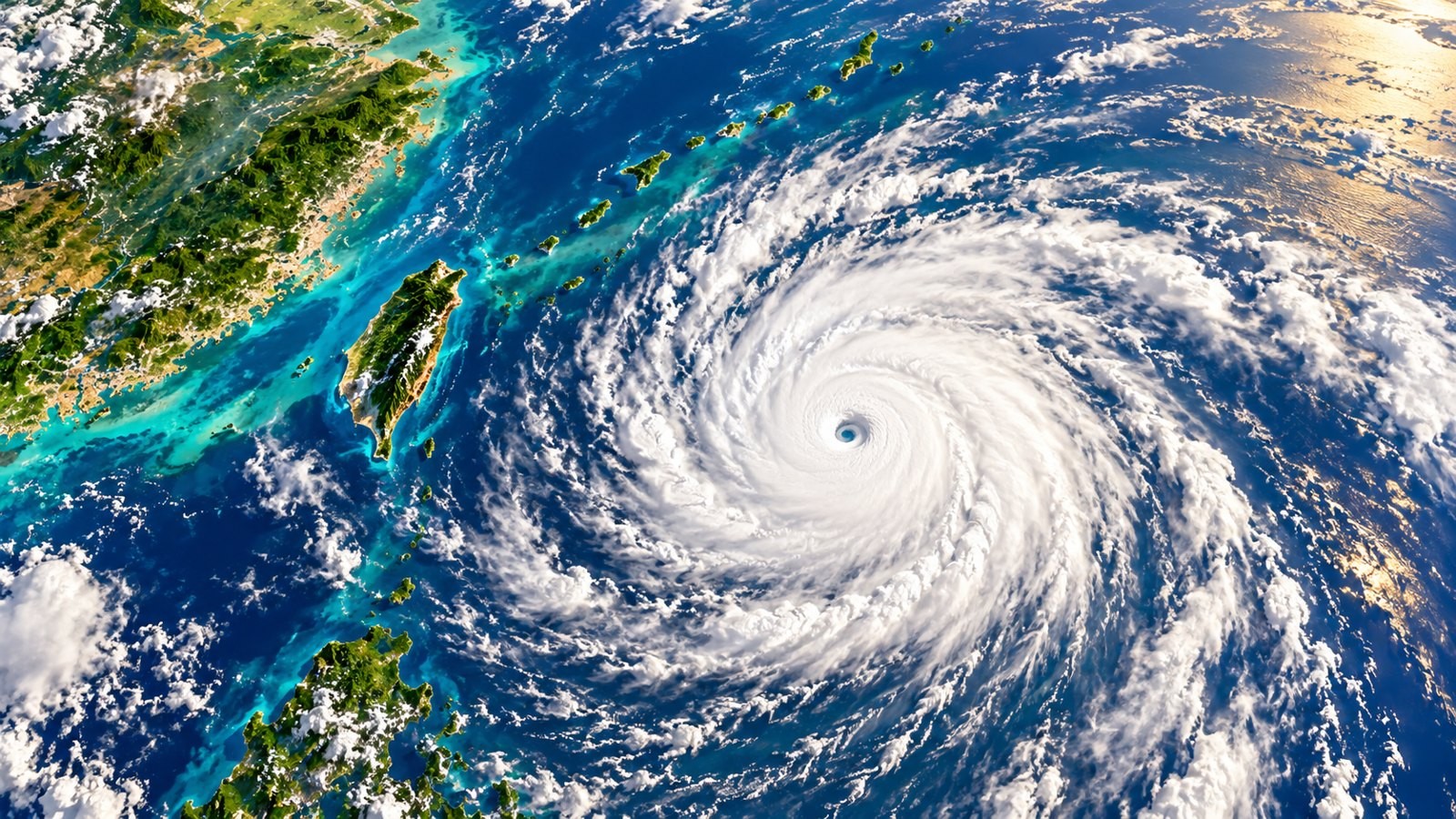
Typhoon season: the western North Pacific as a whole versus storms reaching East Asia
The calendar marks Japan's typhoon season as September. Studies of long-term changes in typhoon seasonality reach different results depending on the region analysed:
- A 2022 study by Wu and colleagues in Climate Dynamics, using several best-track datasets for 1980–2019, found that the typhoon season over the main formation region east of the Philippines has been ending earlier, consistent with stronger vertical wind shear in October and November.
- A 2025 study by Song and colleagues in Geophysical Research Letters defined the season as the period from the first to the last typhoon affecting China. It found that over 1979–2023, the end-of-season threshold dates shifted later by 5–8 days per decade. The authors linked this to later formation of the last typhoons of the year, mainly due to higher sea surface temperatures and mid-level relative humidity in the main development region, and called for extending the typhoon disaster-preparedness window.
In late October 2026, Typhoon Champi approached Taiwan and the Central Weather Administration issued sea and land typhoon warnings. On October 23, work and classes were cancelled in 20 cities and counties; only Kinmen operated as usual, and Taitung closed only Green Island and Orchid Island. China Airlines, STARLUX, EVA Air and Tigerair Taiwan cancelled or rescheduled flights, and autumn-foliage sites including Wuling Farm and Aowanda National Forest Recreation Area closed as a precaution.
Taiwan: Aowanda's maple peak comes in December
The calendar marks Taiwan's autumn-leaf season as October–November. The Nantou Branch of the Forestry and Nature Conservation Agency said in December 2025 that Aowanda enters its peak maple-viewing period each December, with mid-to-late December expected to be best in 2025. The branch also said that relatively warm temperatures and low rainfall in winter 2025 had already caused leaves to dry out and fall, and expected the display to last only until the end of December.
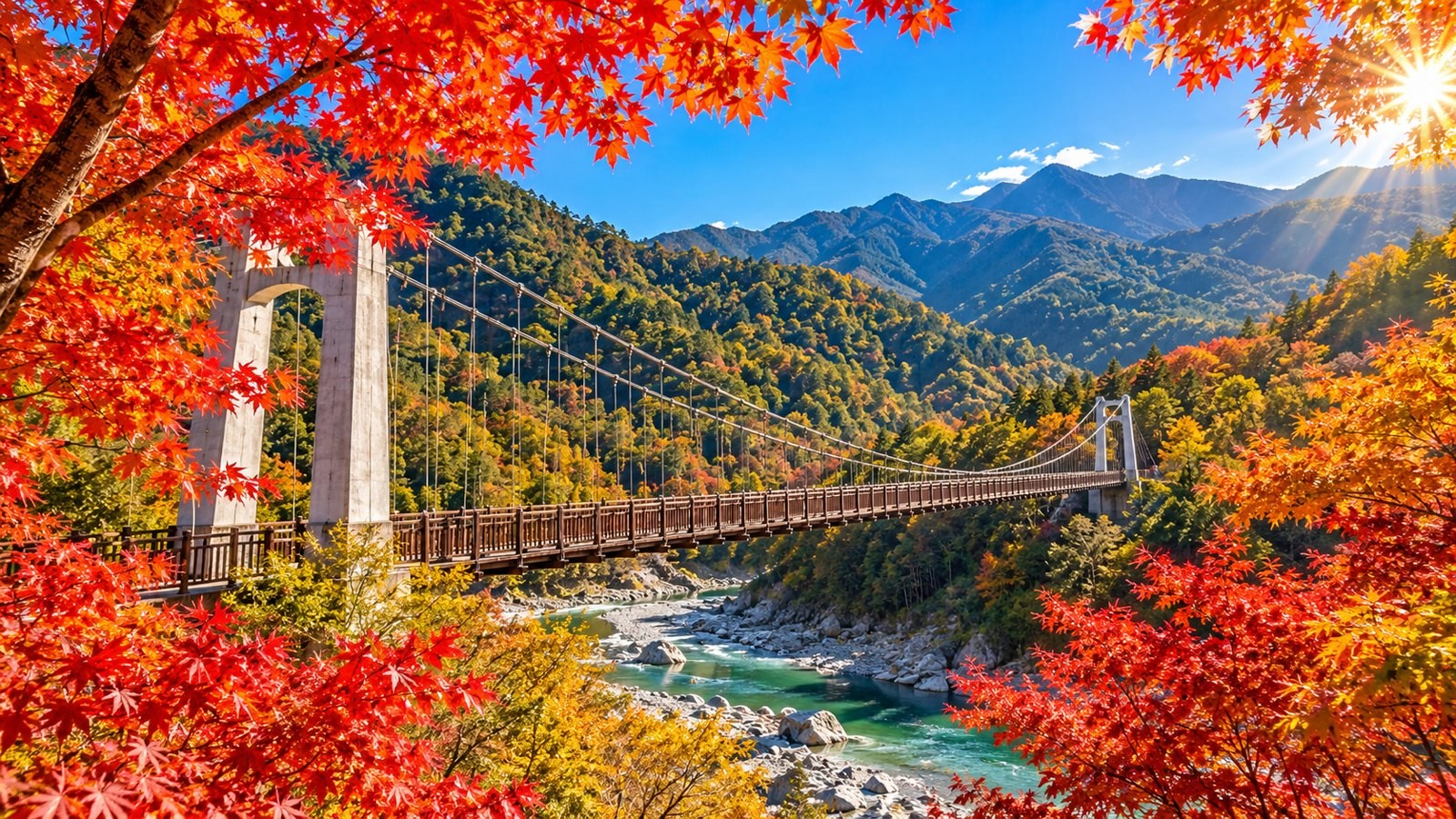
The Central Weather Administration's climate encyclopedia explains that when autumn is unusually warm, chlorophyll breaks down more slowly and colour change is delayed; when drought and heat are added, leaves may fall before they change colour.
Thailand, the Philippines and Southeast Asia: more extreme April heat
The calendar marks March as Thailand's hot season and April as the Songkran water festival, and March–May as the Philippines' peak diving season. In April 2024, extreme heat hit much of Asia:

- Thai Meteorological Department data showed that in April 2024 more than three dozen districts set local temperature records, some dating back to 1958. Temperatures topped 40°C in 26 provinces, and Lampang in the north reached 44.2°C.
- World Weather Attribution (WWA) found that the Philippines' 15-day April 2024 heatwave would have been virtually impossible without human-caused climate change, which made it about 1.2°C hotter. Sangley Point on Manila Bay recorded an overnight low of 30.2°C, the highest minimum temperature in the country's history.
- For South and Southeast Asia (including Thailand, Vietnam, Cambodia, Laos and Myanmar), WWA estimated from observations that such extreme April heat is at least 30 times more likely and about 0.8–1°C hotter.
Bali: a delayed and shorter dry season in 2025
The calendar marks April–September as Bali's pleasant peak season, which roughly matches the dry season in southern Indonesia. Indonesia's Meteorology, Climatology and Geophysics Agency (BMKG) said in June 2025 that only about 19% of the country's seasonal zones had entered the dry season by early June. Above-normal rainfall in April–May over southern Sumatra, Java, Bali and East and West Nusa Tenggara delayed the start of the dry season. BMKG expected above-normal rainfall to persist in some areas until October and said the 2025 dry season would be shorter than normal.
The Maldives: the dry season is also the coral bleaching heat period
The calendar marks January–April as the Maldives' dry season with the best sea conditions. The US National Oceanic and Atmospheric Administration (NOAA) confirmed the fourth global coral bleaching event on April 15, 2024. Between January 2023 and September 2025, bleaching-level heat stress affected about 84.4% of the world's coral reef area.
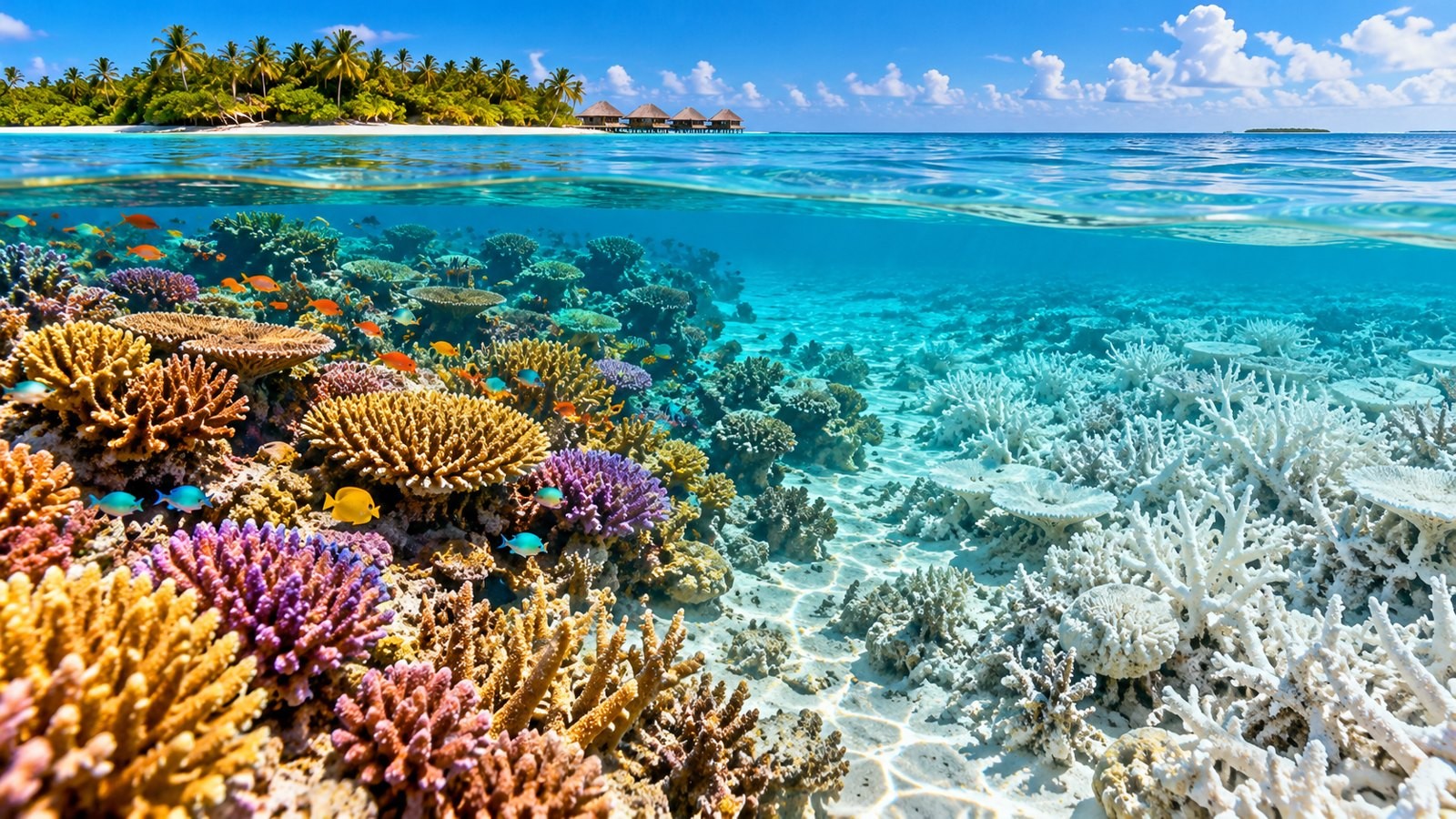
A 2026 study of the Maldives in Coral Reefs reported that local sea surface temperatures reached a record 31.5°C in April 2024 and stayed above the 30.5°C bleaching threshold from March to July. Live hard coral cover in the central atolls fell by more than 40% on average, with 57% mortality on one lagoon reef in Ari Atoll. Reefs in southern Huvadhoo Atoll showed no detectable mortality and their coral cover increased by 12–23%.
Calendar labels compared with observed changes
| Country/region | Calendar label | Observed change | Source |
|---|---|---|---|
| Japan | Cherry blossoms Mar–Apr, autumn leaves Oct–Nov | Flowering about 1.2 days earlier per decade, leaf colouring about 3.1 days later per decade; Kyoto's 2021 full bloom the earliest since 812 | JMA; Yasuyuki Aono |
| South Korea | Cherry blossoms Mar–Apr | Seoul flowering on March 24, 2021, the earliest since 1922 | KMA |
| Typhoons | Japan typhoon season in September | End of the typhoon season affecting China 5–8 days later per decade; Typhoon Champi closed most of Taiwan on October 23, 2026 | Song et al. (2025); DGPA |
| Taiwan | Autumn leaves Oct–Nov | Aowanda peaks in December; warm, dry winter 2025 dried leaves early | Forestry and Nature Conservation Agency, Nantou Branch |
| Thailand | Hot season in March | Over three dozen districts set heat records in April 2024; peak 44.2°C | Thai Meteorological Department (via The Straits Times) |
| Philippines | Diving season Mar–May | April 2024 heatwave virtually impossible without human-caused climate change | WWA |
| Bali | Peak season Apr–Sep | 2025 dry season delayed and shorter | BMKG |
| Maldives | Dry season Jan–Apr | Sea temperatures above bleaching threshold Mar–Jul 2024; central-atoll coral cover down more than 40% | NOAA; Coral Reefs |
Calendars like this are useful for a rough plan. For the actual timing of blossoms, autumn leaves, rainy seasons and heat, check the current-year information from local weather agencies and site managers before travelling.
Sources
- Japan Meteorological Agency, assessment report on observed and projected climate change in the atmosphere, land and ocean (2025): https://www.data.jma.go.jp/cpdinfo/ccj/2025/pdf/cc2025_honpen.pdf
- Japan Meteorological Agency, Climate Change Monitoring Report: https://www.data.jma.go.jp/cpdinfo/monitor/
- Reuters, "Kyoto's earliest cherry blooms in 1,200 years point to climate change", 2021-03-31: https://www.reuters.com/business/environment/kyotos-earliest-cherry-blooms-1200-years-point-climate-change-says-scientist-2021-03-31/
- BBC, "Japan's cherry blossom 'earliest peak since 812'", 2021: https://www.bbc.com/news/world-asia-56574142
- Yonhap, "Seoul's cherry blossom blooming begins on earliest date on record", 2021-03-25: https://en.yna.co.kr/view/AEN20210325007600315
- Wu, Huang & Xu (2022), Climate Dynamics: https://doi.org/10.1007/s00382-022-06627-0
- Song et al. (2025), "Delayed Typhoon Season in China Over the Past Four Decades", Geophysical Research Letters: https://doi.org/10.1029/2025GL116746
- Directorate-General of Personnel Administration, Executive Yuan, work and class cancellations: https://www.dgpa.gov.tw/ndse.html
- Central News Agency, transport and event changes during Typhoon Champi, 2026-10-22: https://www.cna.com.tw/news/ahel/202610225003.aspx
- Liberty Times, Aowanda maple report, 2025-12-09: https://news.ltn.com.tw/news/life/breakingnews/5272659
- Central Weather Administration, Climate encyclopedia: will leaves still turn red?, 2024-12-09: https://climate.cwa.gov.tw/ClimatePedia/detail_page/23
- The Straits Times, "Thailand reels under heatwave as some regions hit record high temperatures of 44.2 deg C", 2024-04-30: https://www.straitstimes.com/asia/se-asia/thailand-reels-under-heatwave-as-some-regions-hit-record-high-temperatures
- World Weather Attribution, April 2024 Asia heatwave attribution: https://www.worldweatherattribution.org/climate-change-made-the-deadly-heatwaves-that-hit-millions-of-highly-vulnerable-people-across-asia-more-frequent-and-extreme/
- BMKG, "Musim Kemarau 2025 Mundur dan Berdurasi Lebih Pendek", 2025-06-21: https://www.bmkg.go.id/berita/utama/musim-kemarau-2025-mundur-dan-berdurasi-lebih-pendek-bmkg-perubahan-pola-iklim-harus-disikapi-dengan-adaptasi-bijak
- NOAA, "NOAA confirms 4th global coral bleaching event", 2024-04-15: https://www.noaa.gov/news-release/noaa-confirms-4th-global-coral-bleaching-event
- NOAA Coral Reef Watch, global bleaching status update: https://coralreefwatch.noaa.gov/satellite/research/coral_bleaching_report.php
- "Outcomes of the fourth global coral bleaching (2023–2024) in the Maldives", Coral Reefs (2026): https://doi.org/10.1007/s00338-026-02850-x
Leave a comment
Comments are reviewed before publication. Email is private and used only when contact is necessary. Privacy notice