
In late October, X got loud. Chinese and Turkish users started trading memes, and within days the fight had moved from flags to the Great Wall, from the economy to ancient history. Users from Japan, Taiwan and Spain dropped in too. Participants even gave it a name: "the first Twitter world war".
It all started with two joke images.
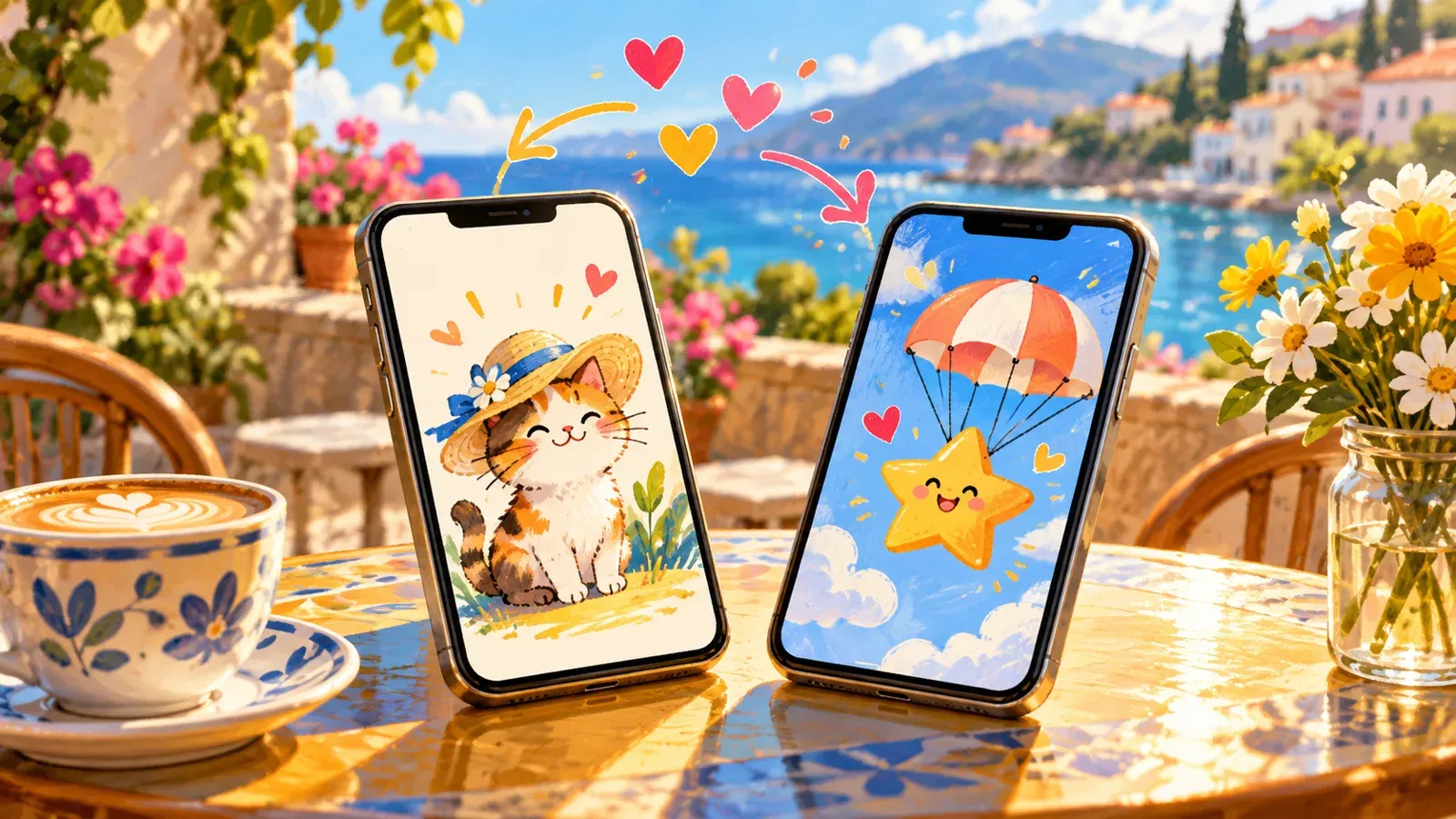
A cat and a parachuting Patrick Star
Around 7 p.m. Taiwan time on Oct. 19, the Turkish account ArdaaZz (@BarkinResmii) posted a cat meme poking fun at Chinese users. The account has only about 560 followers, yet by Oct. 26 the post had about 7.47 million impressions.
At 10:54 p.m. the same day, the Chinese account LeLe (@LeLeluax) quoted it with a comeback: Patrick Star parachuting next to the Turkish flag, captioned "I heard this is how the Turkish flag was designed." By Oct. 26 that post had about 16.64 million impressions, 167,000 likes and nearly 4,000 replies. The account itself has about 5,100 followers.
Patrick is the pink starfish from the American cartoon SpongeBob SquarePants, and the joke plays on where the star on Türkiye's flag came from. The flag is a white crescent and star on red, and Britannica says various myths surround its symbols, but none really explains their origins. What is on record: the Ottoman navy adopted the red flag with a white star and crescent in 1793, when the star still had eight points; it was cut to five around 1844, and the Turkish Republic confirmed the design by law in 1936. The star's backstory is a bit of a mystery, though no source mentions a parachute.
Two small accounts, and each post was seen thousands of times more often than the account had followers. That is the most interesting part of the whole story.
From flags to the Great Wall to the lira
Turkish users answered with Great Wall memes, joking that the wall was built to keep out ancient Turkic peoples. Chinese users fired back that modern Türkiye is a long way from the Great Wall, and brought up the Han dynasty and the Xiongnu.
To get the joke, you need two bits of history.
Are the ancient Turks related to Türkiye? "Tujue" is what Chinese chronicles called a nomadic people who rose in the 6th century. Around 552 they overthrew the Rouran and founded the Turk (Göktürk) Khaganate, which stretched from Mongolia to the Black Sea and was the first state to use "Türk" as its political name. Britannica groups today's speakers of Turkic languages, including Turks, Azerbaijanis, Kazakhs, Uzbeks and Uyghurs, as Turkic peoples linked historically and linguistically to the Tujue. Later the Seljuks, a Muslim Turkic group, moved west and beat a Byzantine army at Manzikert in 1071, opening Anatolia to large-scale Turkic settlement that eventually led to the Ottoman Empire and modern Türkiye. Türkiye also treats the 8th-century Old Turkic Orkhon inscriptions, found in Mongolia, as a root of its language and culture.
Language and ancestry are different stories, though. A 2015 genetics study found that Anatolian Turks are genetically close to their neighbors, with only a small East Asian and Siberian component. Modern Turks speak a Turkic language, while much of their ancestry comes from people who already lived in Anatolia.
Who was the Great Wall actually built against? According to Britannica, the Great Wall is many walls built over two millennia. Around 214 B.C., the first Qin emperor linked older walls mainly against the Xiongnu, and Han Emperor Wu strengthened them for the same reason. Under the Northern Zhou and the Sui, walls really were rebuilt against the Turks: the Sui repaired the Great Wall seven times to defend against the Tujue. Once the Tang defeated the Turks, the wall mattered less. Most of the brick wall tourists see today is Ming work aimed at the Mongols. So "the wall was built to stop the Turks" is true for one chapter of a long story.
As for the Xiongnu that Chinese users brought up, they were a nomadic confederation that dominated the Mongolian steppe from the 3rd century B.C. What language they spoke, and whether they were linked to the later Turks or to Europe's Huns, is still debated. The traditional view leans Turkic, while other scholars propose different language families, so both sides claiming them for points are leaning on an open question.
According to Türkiye Today on Oct. 22, the exchange then drifted to Türkiye's economy and the weak lira, and on to comparisons of national brands, cultural symbols and even IMDb ratings. The lira jokes have a real backdrop: Türkiye has been through several sharp lira slides in recent years, and central bank data show annual inflation hit 85.51% in October 2022. An X trending summary also mentions a user-made power ranking that put the United States and China as superpowers and Türkiye as a regional power.

One thread was more sensitive. The South China Morning Post reported on Oct. 25 that a Turkish user's post about a conversation with a Uyghur woman drew more than 2 million views before the account was apparently deleted. The thread touched a nerve because Uyghur is also a Turkic language, and Istanbul is home to a sizable Uyghur community, so many Turks feel close to the issue. The report also noted that business and investment ties between the two countries have grown in recent years. So far, there are no reports of a diplomatic dispute between the two governments over the online spat.
Japan, Taiwan and others join the fun
China Times reported on Oct. 23 that Japanese and Taiwanese users joined in, some drawing fictional alliance maps and teasing each other with anime, cartoon characters and cultural in-jokes. Türkiye Today said Spanish users took part as well, and accounts from Azerbaijan and Taiwan showed up in the conversation. Azerbaijanis are a Turkic people too, and Azerbaijani is close to Turkish, so their cheering for the Turkish side was no surprise.
Türkiye Today also said some Japanese accounts backed the Turkish users. There is an old friendship behind that. In 1890 the Ottoman frigate Ertuğrul sank in a typhoon off what is now Kushimoto in Wakayama, and Japan's Foreign Ministry records that 69 survivors were rescued and sent home on Japanese warships. In 1985, during the Iran-Iraq War, a Turkish plane flew 215 stranded Japanese out of Tehran. Both stories come up often in the two countries.
Taiwanese users mostly came to make memes and enjoy the show.
X trending summaries also caught a side plot: Chinese users praising Greece and recalling the 2001 passage of the carrier Varyag, later the Liaoning, through the Bosporus. The unfinished, engineless hull was sold from Ukraine to China, and Türkiye refused passage on safety grounds; the BBC reported that it waited 16 months before tugs towed it through on Nov. 1, 2001, after a deal between the two governments. Meanwhile Iranian, Greek and Indian accounts reposted Chinese posts. Satirical clips and AI-generated meme videos followed, keeping the feud going across language communities.
Why small accounts hit millions of views
Most of the answer lies in how the platform works. X's "For You" feed ranks posts by how likely you are to interact with them, and replies, reposts, quotes and likes all count. Provocative jokes are especially good at pulling in replies and quotes, so the system shows them to more people who have never heard of the author.
Trending pages then bundle scattered posts into an "event". These summaries are generated automatically by X's AI assistant Grok, and the pages note that Grok can make mistakes. The three summaries used here (1, 2, 3) cover the flag meme, the power rankings and the later videos, and each one drew a bigger crowd.

Automatic translation removed the language barrier. You don't need to read Turkish or Chinese; one tap and you can read a post and reply. Türkiye Today pointed out that sarcasm, slang and cultural humor can get lost in translation, so a lighthearted joke can come out sounding harsher on the other side. The same report said there is no confirmed evidence that translation errors started the original dispute. The South China Morning Post likewise said users on both sides relied on AI translation tools to get past the language barrier, which helped the argument grow.
Plenty of people also tagged @grok, asking it to explain the feud in Turkish, English or Chinese or to rule on a historical claim. AI is handy for sorting information, but its answers still need checking, much as errors become harder to spot when AI agents write code. Türkiye Today also reported that some users suspected AI-generated accounts were involved; that has not been independently confirmed.
A few tips for watching a meme war

- Impressions count views. They don't tell you how many people agree, let alone what a whole country thinks.
- A joke is a joke. Türkiye Today noted that many historical claims in the exchange were jokes or provocations and had not been verified.
- However loud a trend gets, the two governments still deal with each other through diplomatic and trade channels.
- If a translation sounds especially harsh, check the original or try a second translation tool.
- AI summaries are a good starting point. Confirm key numbers and claims against the original posts and reports, in the spirit of the principle for students using AI: let AI help, and check the conclusions yourself.
Leave a comment
Comments are reviewed before publication. Email is private and used only when contact is necessary. Privacy notice