
On October 27, 2026, Anthropic published a research update on the progress its life sciences team has made in drug development over the past several months. Anthropic says the team is running in-depth research collaborations with six organizations (BigHat Biosciences, Bristol Myers Squibb, Divergence Labs, Enveda, Generate Biomedicines and The Column Group) and has started its own drug discovery work. Anthropic also states that most of the work is still preclinical and most of the drugs have not yet been tested in humans.
Scope of the collaborations with six organizations
Anthropic notes that drug development spans many steps: finding targets, designing molecules, making molecules that can be manufactured reliably, writing the regulatory documents clinical trials require, and designing and running the trials. Bottlenecks are spread across the whole process, so the team chose to join real drug programs across different disease areas and development stages.
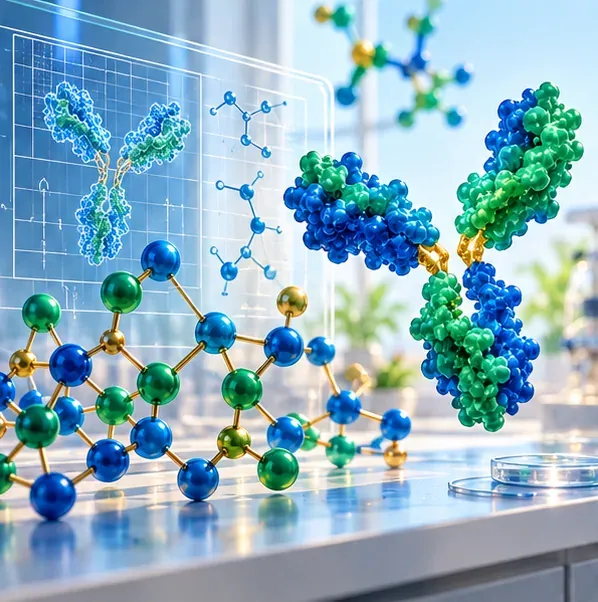
Anthropic lists three purposes for this work:
- Learn where models are strong and where they fall short on more drug development tasks, and prioritize model improvements accordingly.
- Turn the programs into examples the life sciences community can learn from.
- If the programs keep their current trajectory, the projects themselves could deliver direct results, with target diseases including food allergy, rare pediatric diseases and several cancers.
Design results at Generate Biomedicines and Divergence Labs
One CAR-T design from Generate Biomedicines is about 70% shorter than the standard version and made about ten times as many receptors in immune cells in lab tests. Generate is working on extending CAR-T cell therapy to solid tumors. CAR-T has mainly been used against cancers of the blood cells, and Generate wants to shorten one segment of the therapy's genetic instructions to free up room for the instructions other cancers need. Six scientists used Claude Code to propose new designs for that segment, and one design came out about 70% shorter than the standard version. In lab tests, that design led immune cells to make about ten times as many receptors, kill tumor cells more effectively and stay active longer.

Divergence Labs is developing a new food allergy therapy that aims to strip IgE off immune cells entirely, whereas the standard drug only neutralizes IgE floating free in the blood. This needs a two-"arm" design: one arm binds IgE tightly and the other helps pry IgE off the immune cell. Claude first turned the goal into a detailed design plan, then, largely autonomously, generated about 35,000 antibody designs in about a month. In early tests Divergence found 3 designs that bind IgE and 20 designs that make IgE come off, and 3 of those looked better than the standard drug at making IgE come off. The next step is to build a drug that combines the two arms.
Experimental data at BigHat and document review at Enveda
BigHat Biosciences combines AI with an automated lab to improve two antibody-fragment lead molecules: one that targets cancer cells and one that extends how long a drug stays in the body. Claude was connected to BigHat's lab data system, Reccy, and suggested molecular changes. BigHat's lab made and tested about 1,010 variants in about 10 weeks. Along the way the team suspected that the standard thermal stability and aggregation metrics could be misleading, and Claude and the researchers re-analyzed the raw data and proposed different metrics and process changes; the main predictions held up when tested. Compared with the original molecules, the best versions bound more than 10 times more strongly, the cancer-targeting lead stayed in solution at a temperature 18°C higher, and the long-acting lead aggregated more than 100 times more slowly.

Enveda's manufacturing chemists have spent up to 75% of their time on paperwork. Enveda built a system that connects manufacturing documents to Claude, which flags possible problems. In a test on 1,061 pages of documents, Claude found all 11 issues that human reviewers had found and flagged 7 more that humans had missed. Human review time fell 89%, from more than 25 hours to under 3 hours. Claude also wrote first drafts of two important regulatory documents. One took four hours and would take about three months by hand; the other went through Enveda's standard human review process, which found a single minor error.
The Column Group, Bristol Myers Squibb and Mithril Medicine
The Column Group (TCG) is forming a new company, Pleiades, which plans to use Claude so a small team can run more and more complex drug programs at the same time. Pleiades' first Claude skill evaluates whether a drug target is worth pursuing, and it has already evaluated 45 target-disease pairs.

Bristol Myers Squibb recently began working with Anthropic on bottlenecks in clinical trial planning. BMS used Claude to evaluate the trial plan for an early-stage drug and estimate the likelihood that the trial would succeed, and the two sides plan to expand the collaboration in 2027.
Anthropic says it has acquired Mithril Medicine, a one-person company developing two treatment approaches for rare muscular dystrophies. Founder Cody Tranbarger used Claude to organize contracts, logistics and experiments across 11 external labs, and handed many operational tasks to Claude. In under 18 months, Mithril took a possible therapy for one muscular dystrophy from idea to promising results in mouse experiments. Anthropic says that if the drug candidate keeps holding up, it expects to be ready to start human clinical trials as early as the end of 2028.
Work remains mostly preclinical
Anthropic states that this research is still early, mostly preclinical, and that the drugs have largely not yet entered human testing. Anthropic plans to extend Claude's role into clinical trials as the drug programs advance, and to work with more organizations that are already in the clinic.
On tools and access, Anthropic mentions that it has launched Claude Science, an AI workbench for researchers, and is offering Claude credits to life sciences researchers. Anthropic has also set up a Life Sciences Verification Program, which lets trusted organizations use its most capable model with looser safeguards, because the safeguards that are needed can sometimes get in the way of legitimate biological research. Anthropic is also accepting proposals for life sciences visiting researchers.
Directions Taiwan can draw on
The cases in this update center on laboratory and document workflows, and Taiwan's biotech and pharmaceutical companies can look at a few specific steps to assess where adoption might fit. The points below are the editors' suggestions; the source article provides no data on adoption in Taiwan.
- Manufacturing and quality document review: In Enveda's test on 1,061 pages, Claude found all 11 issues human reviewers found and flagged 7 more, and review time fell from more than 25 hours to under 3 hours. Taiwanese drug makers could consider a small pilot on one type of document, keeping human re-checks in place.
- Connecting lab data systems: BigHat had Claude read lab data and suggest variants, and about 1,010 variants were made and tested in about 10 weeks. Taiwanese research institutes and startups that already hold structured experimental data could first take stock of their data formats and then assess connecting an AI tool.
- First drafts of regulatory documents: One Enveda regulatory document draft took four hours, against about three months by hand. Taiwanese teams preparing regulatory documents could have AI produce a first draft and have specialists check it item by item.
- Operational coordination for small teams: Mithril's founder used Claude to organize contracts, logistics and experiments across 11 external labs. Taiwanese startups could look at this way of handing outside-collaboration paperwork to an AI assistant.
For how AI agents can be deployed inside a company, see our related article Japan Digital Agency rolls out AI agents on GenNAI. Anthropic's cases rest on the company's own account and partners' technical reports, so results should be validated on a company's own data before adoption.
Leave a comment
Comments are reviewed before publication. Email is private and used only when contact is necessary. Privacy notice