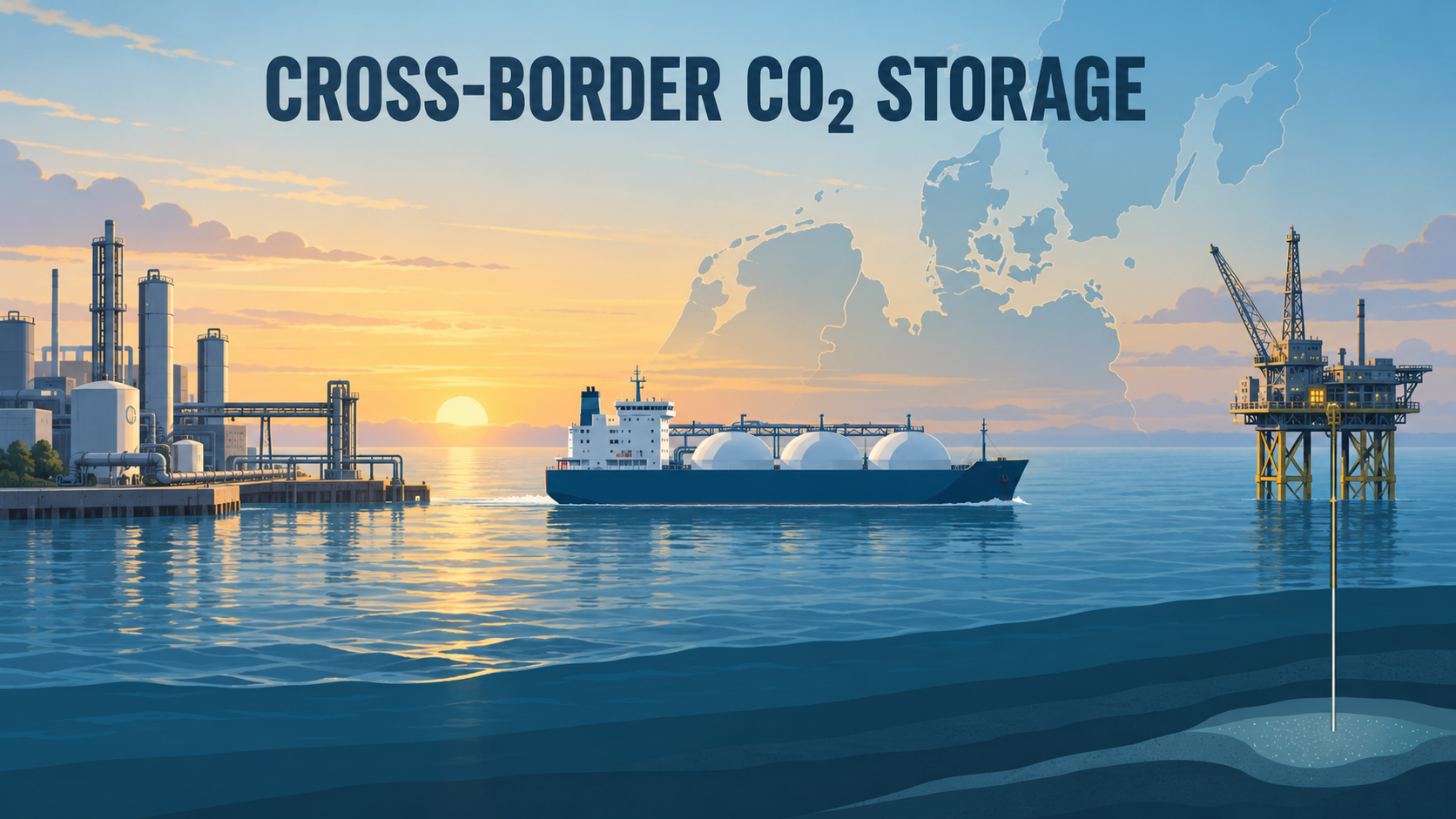
Germany's cross-border carbon management cooperation has taken a new step. In an announcement on 7 October 2026, the Federal Ministry for Economic Affairs and Energy said that State Secretary Frank Wetzel had signed CO₂ export letters of intent with Denmark and with the Netherlands in Berlin the day before, advancing cooperation on carbon capture, utilisation and storage. What was announced is an intention to cooperate; the announcement gave no actual export volumes or commercial start dates. German government announcement
Cross-border storage needs permits and liability that connect
The letters were signed at the first strategic dialogue of Germany's carbon management forum. The German government also said it is drafting a carbon management action plan to address the economics of capture, transport, storage and utilisation. This shows that as cross-border cooperation moves forward, infrastructure and investment conditions must be put in place at the same time.
The International Maritime Organization (IMO) explains under the London Protocol that exporting CO₂ across borders for storage in sub-seabed geological formations requires an agreement or arrangement between countries and involves the allocation of permitting and liability; the provisional application mechanism adopted in 2019 also carries formal declaration and notification requirements. This is the institutional background for understanding cross-border storage, and a single press announcement is not enough to conclude that all the legal and commercial terms of any individual project have been settled. IMO explanation
Questions a Taiwanese approach should answer first
The following are policy observations drawn from the German case. If Taiwan assesses overseas storage, it should confirm the applicable conditions one by one rather than simply copy the European model of cooperation.
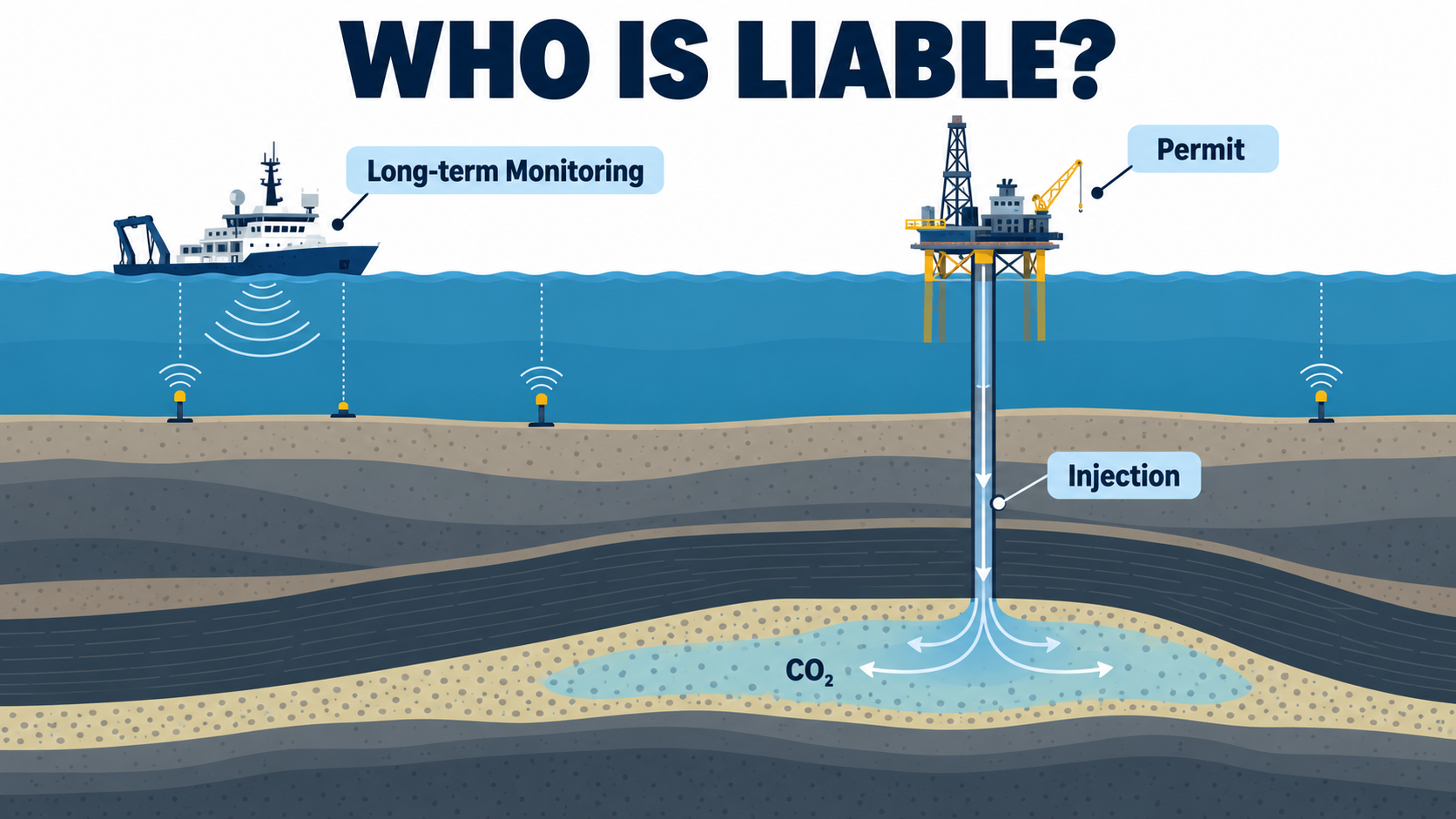
First is cross-border liability: at which point is the CO₂ handed over between the capture plant, the transport operator and the storage operator? If quality is off-spec, transport is interrupted or injection is restricted, who pays to deal with it? How do regulators obtain complete data so that liability is not broken by crossing a border? These terms must be consistent across permits, contracts and oversight arrangements.
Second is emission-reduction accounting. From the volume captured at the source and the volume loaded onto ships to the volume finally injected and continuously monitored, there should be records that can be cross-checked. If the reductions are to be used in corporate decarbonisation claims or related schemes, it also has to be clear which reductions are accepted, who verifies them and how to avoid the same CO₂ being counted twice. The extra energy consumed by capture and transport should also be included when assessing the net reduction.
Long-term liability likewise has to be settled before investment. Who monitors the site after closure, how a leak would be handled, and where the money comes from if an operator exits all affect whether a storage service is credible and whether companies are willing to sign long-term contracts.
In the end, companies still have to price the whole chain
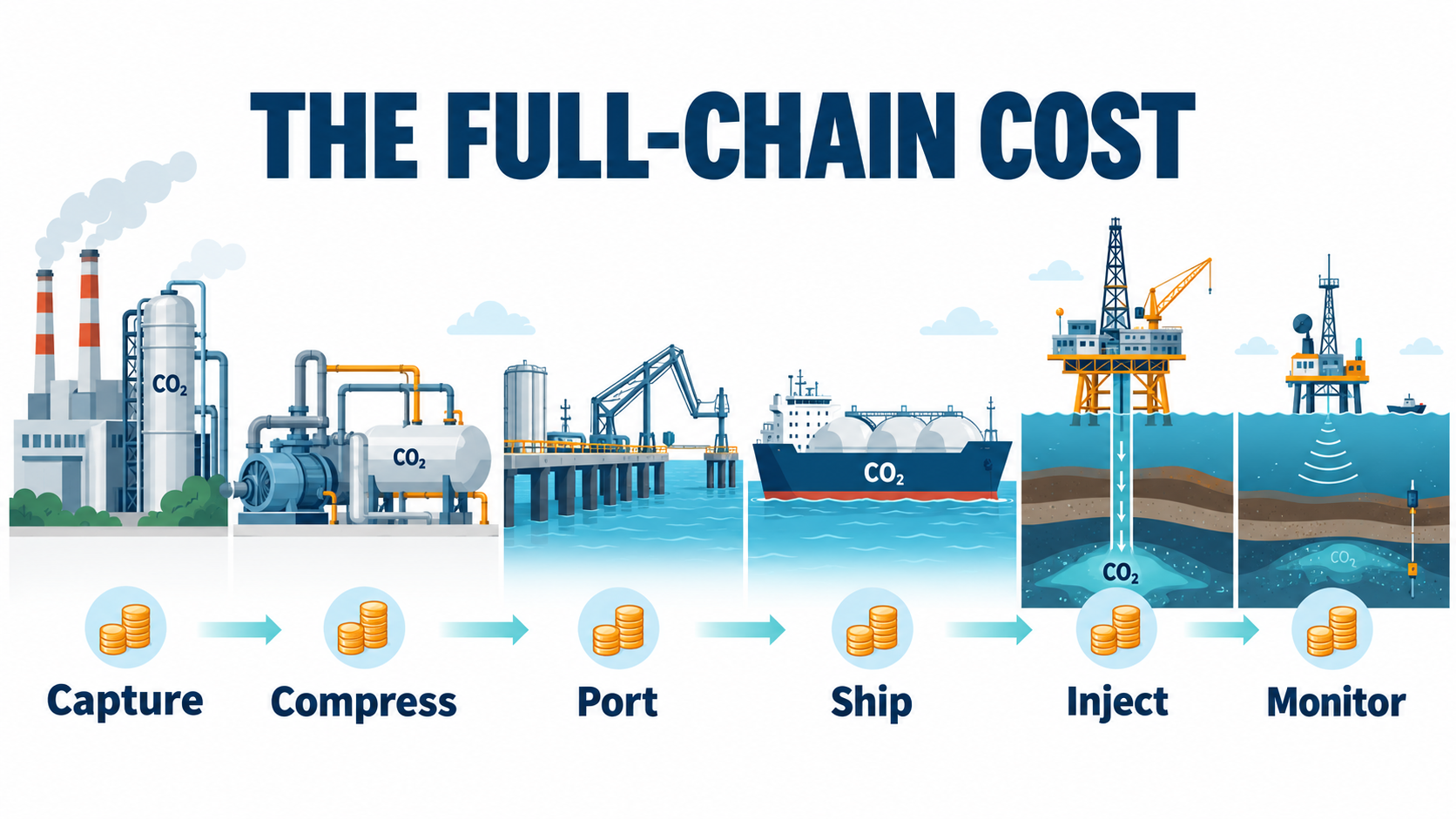
When industry evaluates offers, the price should cover capture, compression or liquefaction, port handling, shipping, injection and monitoring. Looking only at a per-tonne storage price can easily miss upstream equipment and logistics costs. How much volume the first customers commit, whether facility utilisation is high enough and how delay risk is shared will also determine whether a project can be financed.
What is worth following next is how Germany's letters of intent turn into concrete permits, transport and storage service arrangements. For Taiwan, getting clear answers on liability, accounting and full-chain costs first is what makes it possible to judge which emission sources overseas storage suits and how large a share it should take in decarbonisation planning.