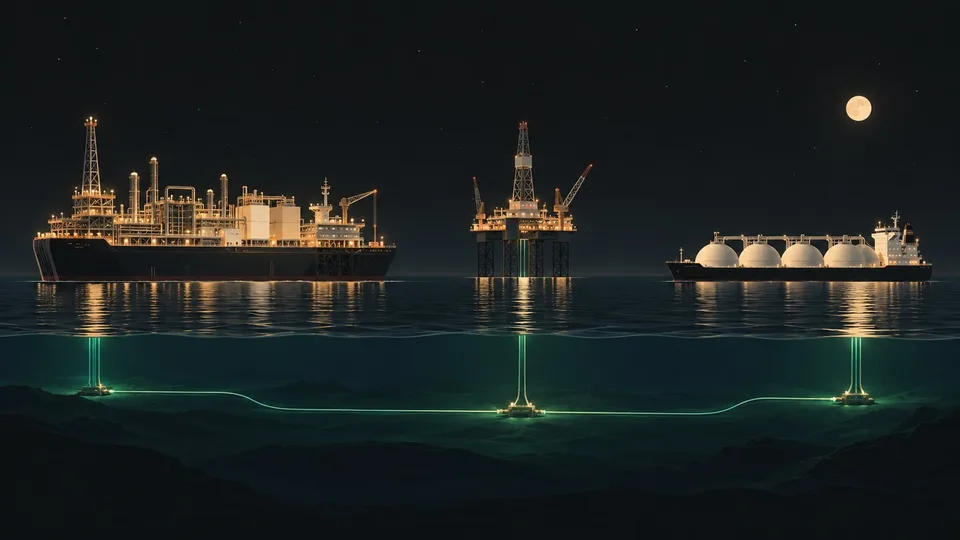
The offshore energy industry is handling two jobs at once: meeting today's demand for oil and gas, and building infrastructure for a lower-carbon future. Offshore Energy's LinkedIn newsletter Fossil Pulse rounded up the week in "High stakes at sea" on 14 October.
Rig count holds steady

According to Westwood Global Energy Group's RigLogix data, 507 offshore rigs were working worldwide as of 12 October 2026: 373 jack-ups and 134 floating rigs, one fewer than the week before.
New work focused on deepwater and high-specification units. Transocean logged about US$1.1 billion in commitments, including UK North Sea work for Shell and a three-rig deal with Equinor in Norway. Seadrill won a US$420 million drillship contract in Indonesia, extending its revenue visibility into 2027.
New fields through existing platforms
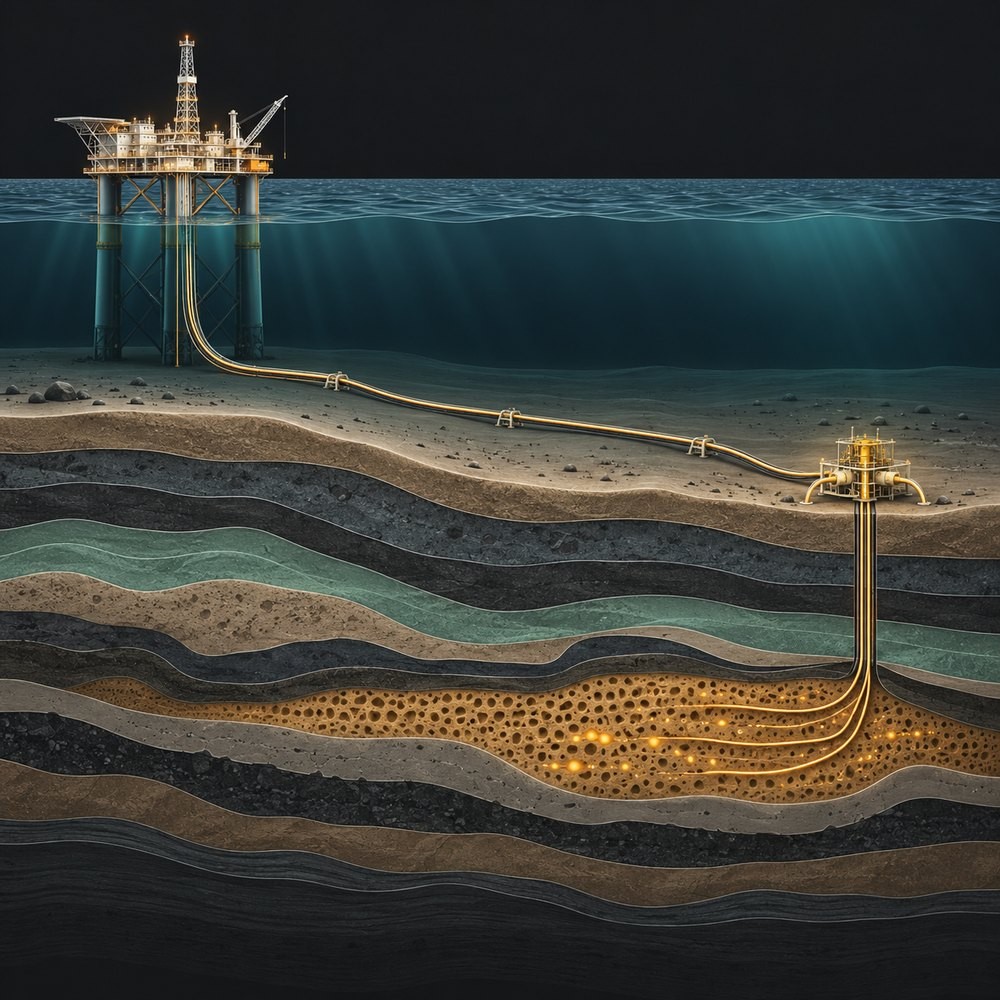
Mature basins are turning to subsea tie-backs: a new discovery is linked by subsea pipeline to a nearby platform that is already producing, which shortens development time and lowers upfront cost. Equinor, Petoro and OMV found gas near an existing field in the Norwegian North Sea, estimated at up to 10.3 million barrels of oil equivalent. Offshore Energy cites the recent Norwegian finds as examples of short tie-backs.
FLNG: a liquefaction plant at sea
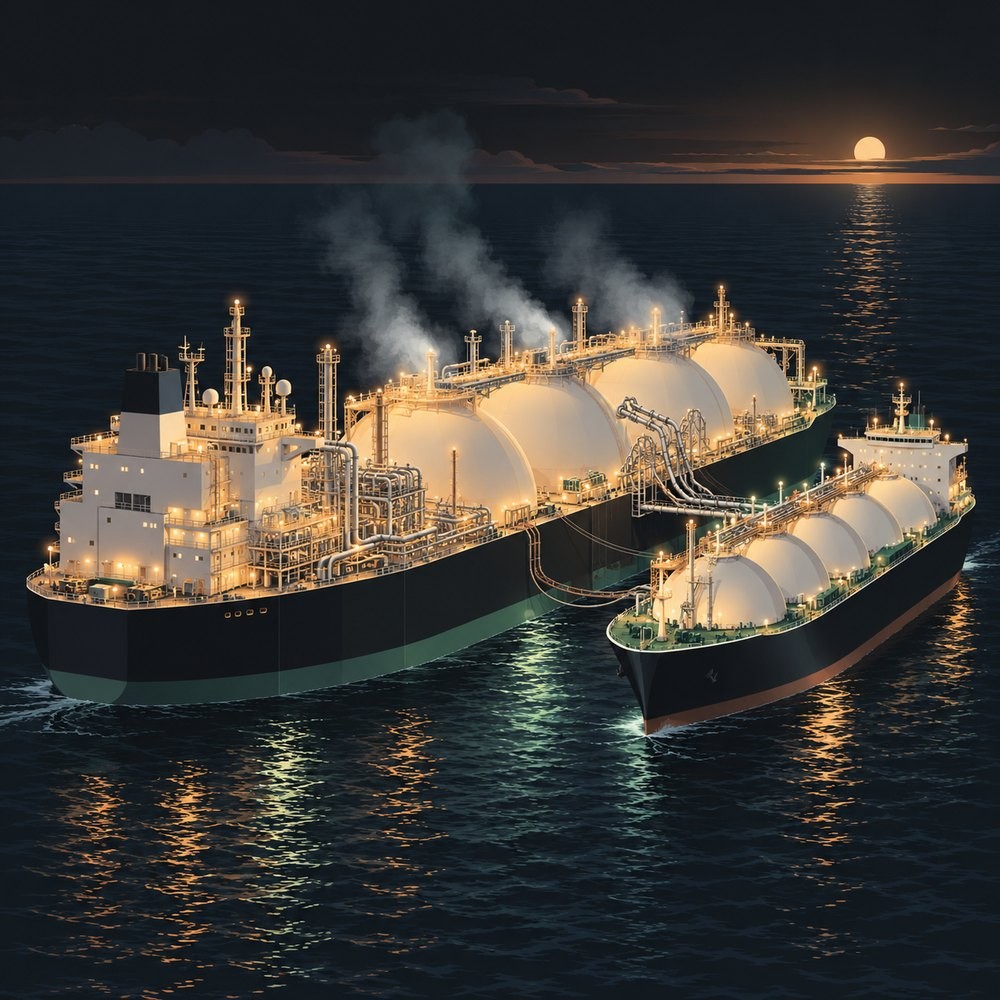
An FLNG (floating liquefied natural gas) unit chills gas into liquid offshore so it can be shipped; an FSRU (floating storage and regasification unit) turns LNG back into gas at the import end. This week Golar LNG bought an LNG carrier from NYK Line to convert into its fourth FLNG unit, due in early 2029 with 20% more storage. Excelerate Energy hired Seatrium to convert an LNG carrier into its 13th FSRU.
CO2 transport: US$211 billion by 2060
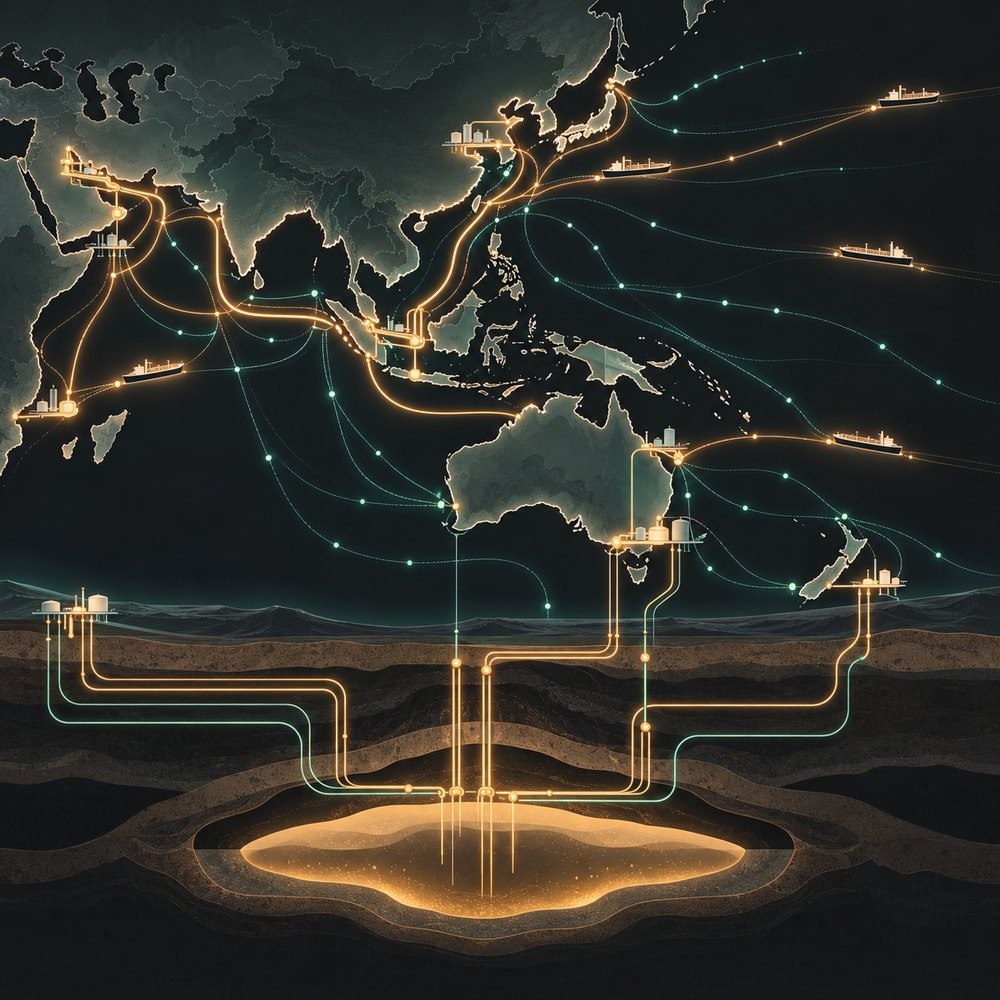
For carbon capture, utilisation and storage (CCUS) to work, captured CO2 has to reach underground storage, so transport is a key link. A Wood Mackenzie report released on 14 October estimates:
- The global CO2 transport industry could be worth US$211 billion by 2060, moving 3 billion tonnes of CO2 a year, with 200 million tonnes crossing borders.
- Asia Pacific accounts for about 60% of investment because of long distances and large volumes, followed by North America and Europe.
- More than 80% of investment goes to pipelines; where domestic storage falls short, cross-border trade and liquefied CO2 shipping emerge.
- Up to 1,000 km, pipeline and shipping costs are comparable; the choice depends on existing infrastructure.
Offshore engineering is moving into this field too. Eni's CCS project has installed an offshore CO2 transport and storage platform off the UK coast to serve industrial decarbonisation.
What Taiwan can take from this
Wood Mackenzie projects cross-border CO2 transport demand from Japan, South Korea, Singapore and Taiwan at about 164 million tonnes a year by 2060, against about 187 million tonnes of storage capacity in Australia and Southeast Asia, with Australia, Indonesia and Malaysia as the main storage hubs. Directions Taiwan could consider:
- Map domestic geological storage options while assessing cross-border storage.
- Wood Mackenzie notes that bilateral agreements, liability frameworks and economic incentives decide whether cross-border CCS networks take shape; the legal groundwork can start early.
- Combine port and shipbuilding capabilities to assess the need for liquefied CO2 shipping and terminals.
- Apply experience from planning gas import facilities to future CO2 export facilities.
Sources
- Offshore Energy, "High stakes at sea: Capital, security, and the race for new offshore supply", 2026-10-14: https://www.linkedin.com/pulse/high-stakes-sea-capital-security-race-new-offshore-bqrff
- Wood Mackenzie, "Global CO2 transport industry set to reach USD 211 billion by 2060": https://www.woodmac.com/press-releases/global-co2-transport-industry-set-to-reach-usd-211-billion-by-2060/
- Carbon Pulse, "CO2 transport infrastructure needs policy coherence to reach full potential", 2026-10-14: https://carbon-pulse.com/560459/
Leave a comment
Comments are reviewed before publication. Email is private and used only when contact is necessary. Privacy notice