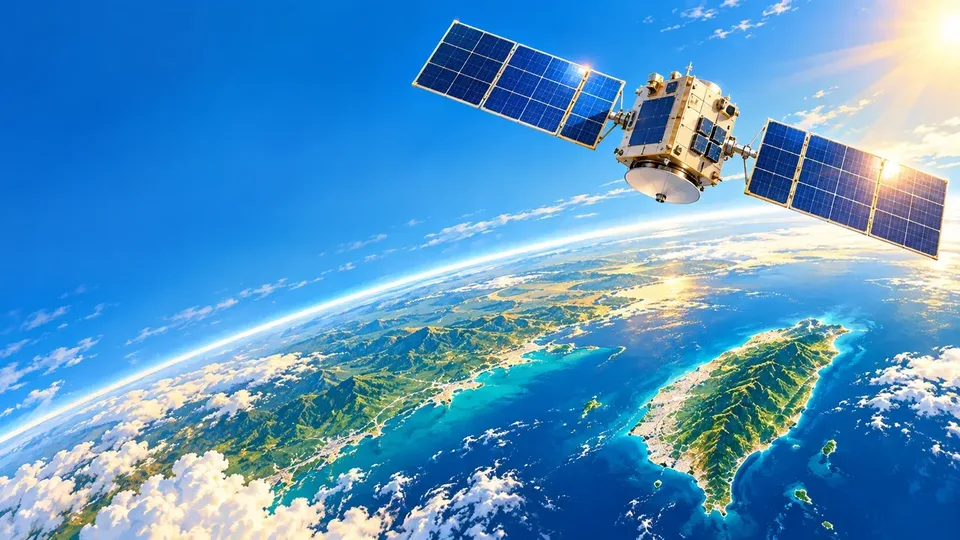
Google launched the first prototype satellite of Project Suncatcher on October 1, 2026. At the end of October, ground engineers sent the first prompts to a Gemma 4 model preloaded on the satellite and completed inference in orbit. It is the first time Google has operated its own Tensor Processing Units (TPUs) in space. This article draws on TechCrunch, Google's announcements and Google's research paper to summarize the test and the plans that follow.
The prototype launched on a Falcon 9 on October 1, 2026
The satellite was built with Planet and flew on SpaceX's Falcon 9 on the Transporter-18 rideshare mission from California. The same rocket carried more than 100 payloads, including missions from Satlyt and Cowboy Space Company. On launch day, Travis Beals, a senior director at Google Research, wrote that the team had confirmed contact with the satellite and that it was operating as expected.
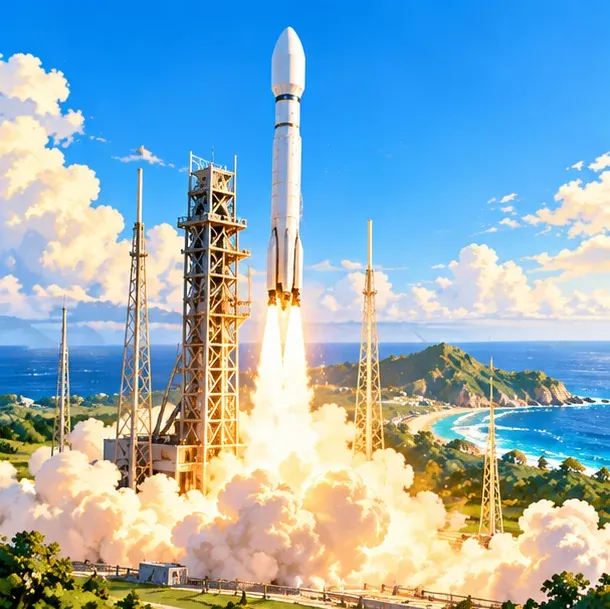
Google describes the project as a long-term research moonshot that aims to assess whether space could one day host scalable machine learning infrastructure. On the same day, Google published the peer-reviewed version of its research paper in the journal Joule.
The satellite carries 4 TPUs, up to about 1 kW of solar power, and runs 1 at a time
The satellite carries 4 TPUs and generates up to about 1 kW from solar panels. Because of the power limit, only 1 TPU can run at a time, for about 20 minutes per run. TechCrunch published a correction on this point: the satellite has 4 TPUs, but only 1 can operate at once.
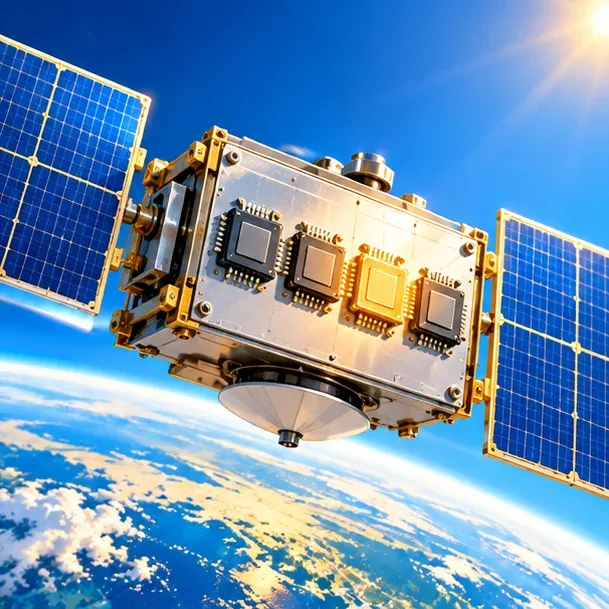
The satellite uses Planet's standard satellite platform. Heavier computing workloads have to wait for the two satellites designed for advanced computing, planned for 2027.
After about three weeks of commissioning, Gemma 4 completed inference in orbit
The satellite spent about three weeks testing its subsystems before it went into operation. The first prompt asked Gemma 4 to write a haiku about space, and the reply included the line "Starlight feeds my core." Google then sent a telemetry prompt asking the satellite to report the technical status of its payload systems, and a Google spokesperson told TechCrunch that the satellite is operating nominally.
After the haiku, Google moved on to evaluating how the TPUs handle thermal stress and radiation exposure in orbit.
In ground proton tests, the HBM showed irregularities only at 2 krad(Si)
Cosmic rays can cause "bit flips" in memory, which corrupt data and do not always trigger ordinary monitoring alerts. Google earlier tested its sixth-generation Cloud TPU (Trillium) on the ground with a 67 MeV proton beam. High-bandwidth memory (HBM) was the most sensitive component, and irregularities appeared only at a cumulative dose of 2 krad(Si), nearly three times the 750 rad(Si) expected after shielding over a 5-year mission. Individual chips were tested up to 15 krad(Si) with no hard failures attributable to total ionizing dose.
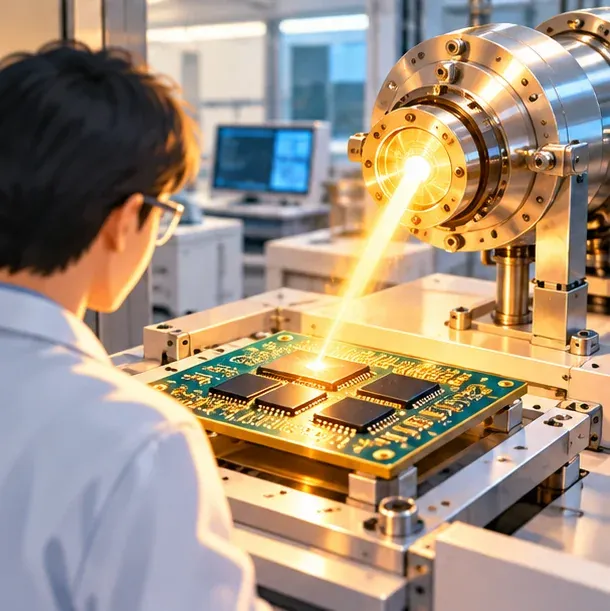
The research paper estimates that the observed HBM uncorrectable errors would cause about one failure per ten million inferences in typical inference workloads; the effect on training and ways to mitigate it still need study. Beals told TechCrunch that the error rate for ordinary inference is around one in a million, but that it becomes a problem for very large training runs in which thousands of chips operate continuously for months. Google also noted that the original test setup provided more shielding than the real satellite, so it redid the particle accelerator tests; logic-circuit errors were slightly higher, but the team remains confident the chips can handle large-scale inference over a 5-year lifetime. The on-orbit test is meant to check the ground-test conclusions against the real space environment.
Two satellites planned for early 2027 will test inter-satellite optical links
The next step is to launch two satellites designed for advanced computing in early 2027. TechCrunch reports that they will generate more power, and Google says the mission will test TPUs and verify free-space optical links between the satellites, checking whether the two can run distributed machine learning tasks together. Planet's announcement of November 4, 2025 also gives early 2027 as the launch target for this two-satellite mission.
TechCrunch notes that among space data center concepts, Suncatcher is one of the few that plans to connect satellites with high-speed links to support coordinated distributed workloads. SpaceX's concept also expects laser links, but its satellites sit in orbits farther apart, which makes it hard to share computing effectively; companies such as Starcloud and Cowboy Space expect to run inference on single satellites.
The research paper proposes a formation of 81 satellites
The research team's long-term concept is a constellation of 81 satellites in a dawn-dusk sun-synchronous low Earth orbit at an average altitude of about 650 km, with a cluster radius of about 1 km and neighboring satellites spaced roughly 100 to 200 m apart. In a suitable orbit, solar panels can produce up to 8 times as much power as on the ground and receive light almost continuously, which reduces the need for batteries.
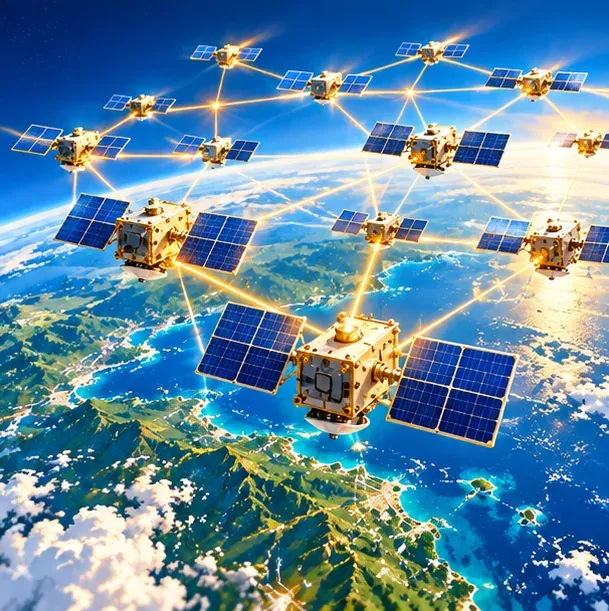
To reach data-center-class inter-satellite bandwidth (tens of Tbps), Google's analysis uses multi-channel dense wavelength division multiplexing (DWDM) and spatial multiplexing. Received power falls with the square of distance, so the satellites must fly very close together for the optical links to work; in the lab, a single transceiver pair has reached 800 Gbps one way (1.6 Tbps in both directions combined). Orbital dynamics models indicate that such a formation may need only modest station-keeping maneuvers.
The key economic factor is launch price. Based on SpaceX's trend since Falcon 1, the paper estimates that the price falls by about 20% for each doubling of cumulative launched mass; if that learning rate holds, launch prices could drop below about $200 per kilogram around 2035. At that level, the annualized cost of launched power could be comparable to US terrestrial data center electricity spending. The paper calculates that reaching this price would take about 1,800 Starship flights over roughly 10 years, delivering an additional 370,000 tonnes to orbit, assuming 200 tonnes per flight. As of TechCrunch's report on October 1, 2026, Starship had flown no more than five times in a year. The paper describes its scope as a high-level assessment of how launch costs affect the economics, rather than a complete economic feasibility study. Google also notes that thermal management, high-bandwidth ground communication and on-orbit reliability remain open engineering problems.
Directions Taiwan can draw on
Suncatcher is currently a research and testing program, and Google's 2030s timeline is a research vision for infrastructure it hopes will become economical, and it carries no commercial commitment. The articles below are related reports already on this site, useful for comparison on data center power.
- Power and low-carbon supply for terrestrial data centers. See Formosa Mailiao Plans AI Data Center and Low-Carbon Power and Google and Voltus Expand PJM Virtual Power Plant to 1 GW.
- Grid and data center electricity demand. See Taiwan VP on AI power: new plants, grid resilience, storage and PJM Capacity Auction Falls 6.8 GW Short as Data Centers Grow.
- Following Suncatcher's results. The open problems Google lists are thermal management, high-bandwidth ground communication and on-orbit reliability; the early-2027 two-satellite mission will test TPUs and inter-satellite optical links.
Leave a comment
Comments are reviewed before publication. Email is private and used only when contact is necessary. Privacy notice