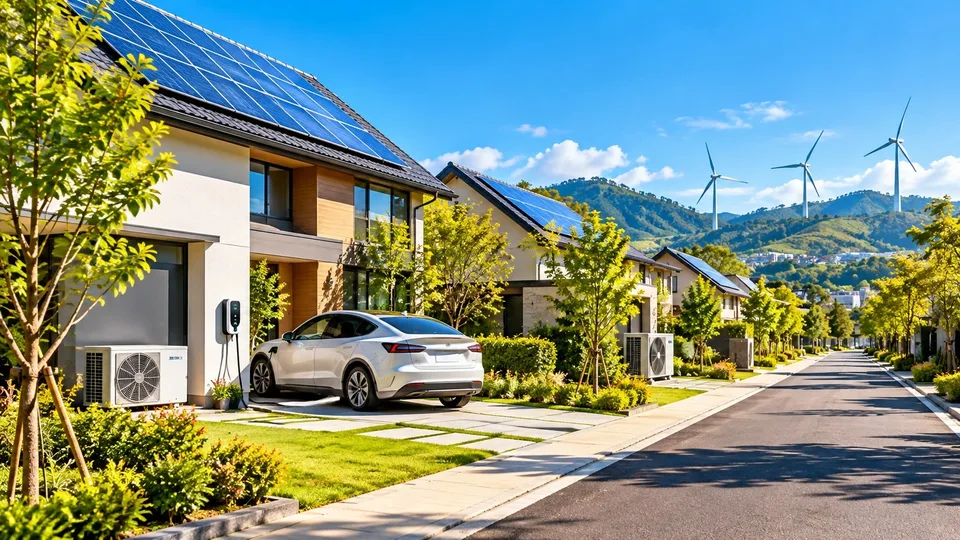
On September 22, 2026, the IEA published its Electrification special report at the request of Türkiye and Australia, which hold the COP31 presidency. The report starts from one number: electricity supplies about 23% of global final energy consumption, while coal, oil and gas together account for just over 60%.
First things first: what electrification means
Electrification means switching uses that burn oil, gas or coal to electricity: electric vehicles, heat pumps (devices that move heat from the surroundings to where it is needed), electric boilers or industrial heat pumps. The International Energy Agency (IEA) measures it as electricity’s share of final energy consumption, which is the 23% above.
Its advantage is efficiency: an EV is about three times as energy-efficient as a combustion car, and a heat pump delivers 3 to 5 units of heat per unit of electricity, against less than 1 for a conventional boiler. So electricity, at 23% of final energy, provides nearly 40% of energy services and powers economic activity that generates over 45% of global GDP.
The IEA's key numbers: 23%, 30%, 33%, 35%
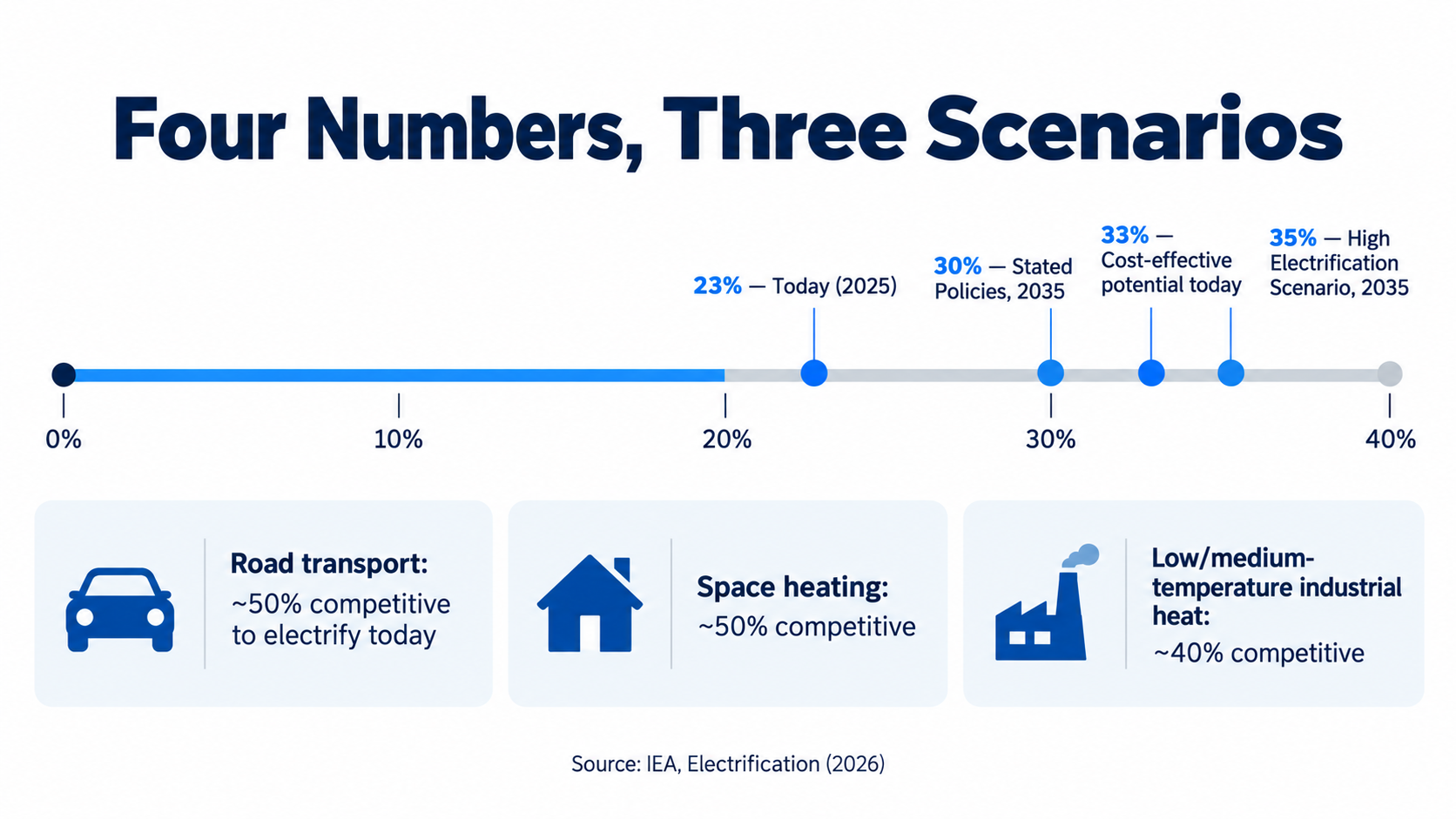
Starting from 23%, the report’s key figures belong to different scenarios:
Stated Policies Scenario (STEPS): if countries stay on their current policy course, the electrification rate reaches about 30% by 2035.
Cost-competitive potential: based on 2025 equipment costs, energy prices and financing conditions, electrifying everything that is already cost-effective today would bring the rate to 33%. This figure estimates potential and does not forecast actual progress.
High Electrification Scenario (HES): the rate reaches 35% by 2035, the global goal now under discussion for COP31. The price is that global electricity demand has to grow by about 1,400 TWh a year, nearly twice the pace of the past decade.
Transport has the most potential: lithium battery prices have fallen about 90% since 2010, and about half of fuel-based road transport is already cheaper to electrify. About half of space heating in buildings and about 40% of low- and medium-temperature industrial process energy (mainly textiles, food processing, pulp and paper, and some chemicals) can also be electrified cost-effectively.
Barriers beyond equipment costs
Per unit of energy, electricity usually costs more than gas or petrol. Per unit of service, it is often cheaper. On IEA 2025 global averages, US$100 takes an EV about three times as far as a combustion car, and provides about 42 days of heating with a heat pump against about 30 with a gas boiler.
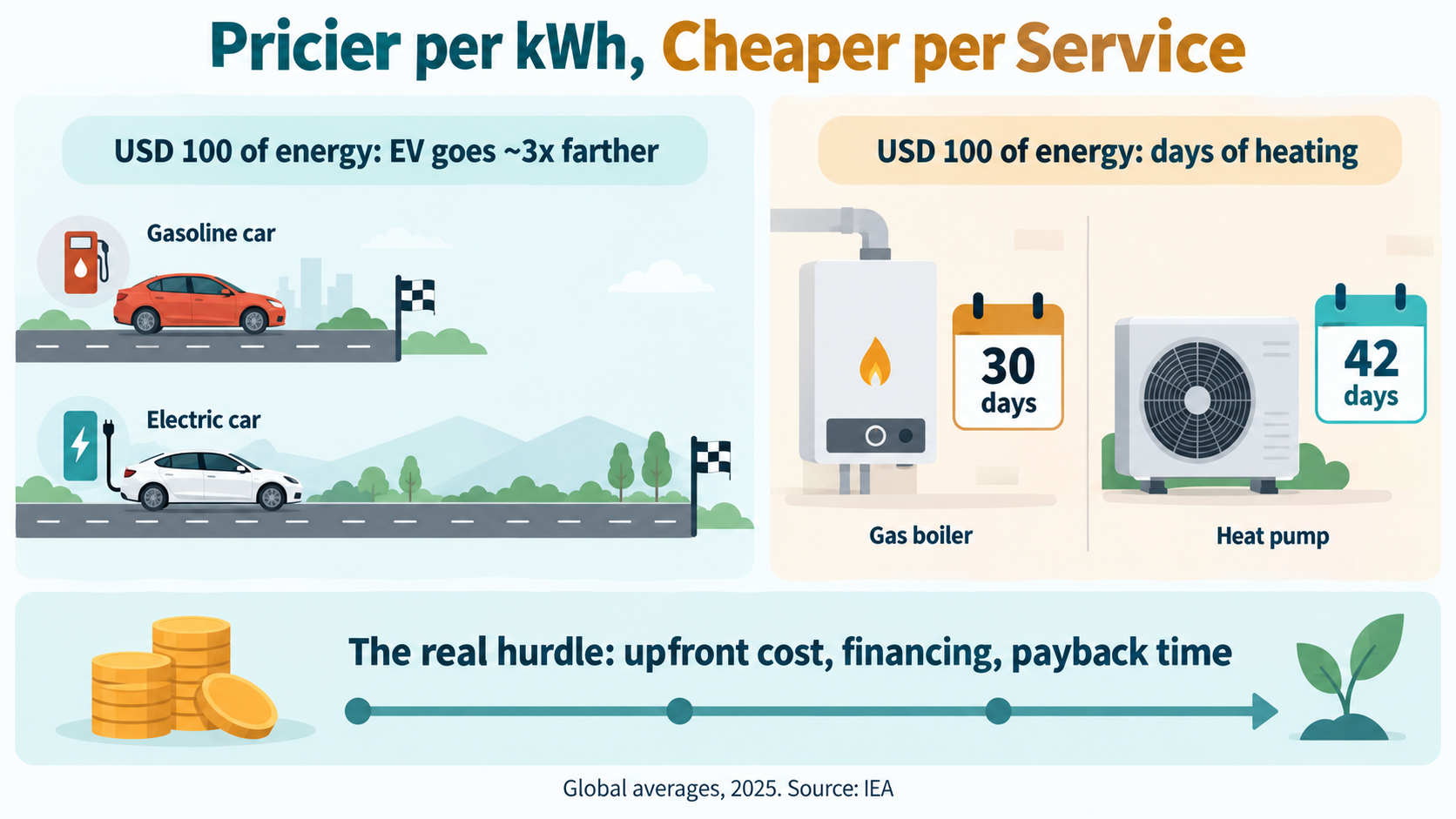
The service is cheaper, but the barriers come up front:
Upfront investment: under the HES, global end-use electrification investment triples to about US$1 trillion by 2035, much of it borne by households and SMEs, some of whom face high borrowing costs or cannot borrow.
Electricity-to-fuel price ratio: whether a heat pump pays off depends on the ratio of power to gas prices. The IEA’s sensitivity analysis finds that 15% cheaper equipment, or a 10% shift in electricity or fuel prices, each has a bigger effect than lower financing rates.
Factories: industrial heat pumps are already cheaper than gas boilers in regions with over three-quarters of global low-temperature heat demand. Uptake is still low because SMEs face high upfront costs, have limited installation and operating experience, and must wait for grid upgrades.

Grid capacity constraints
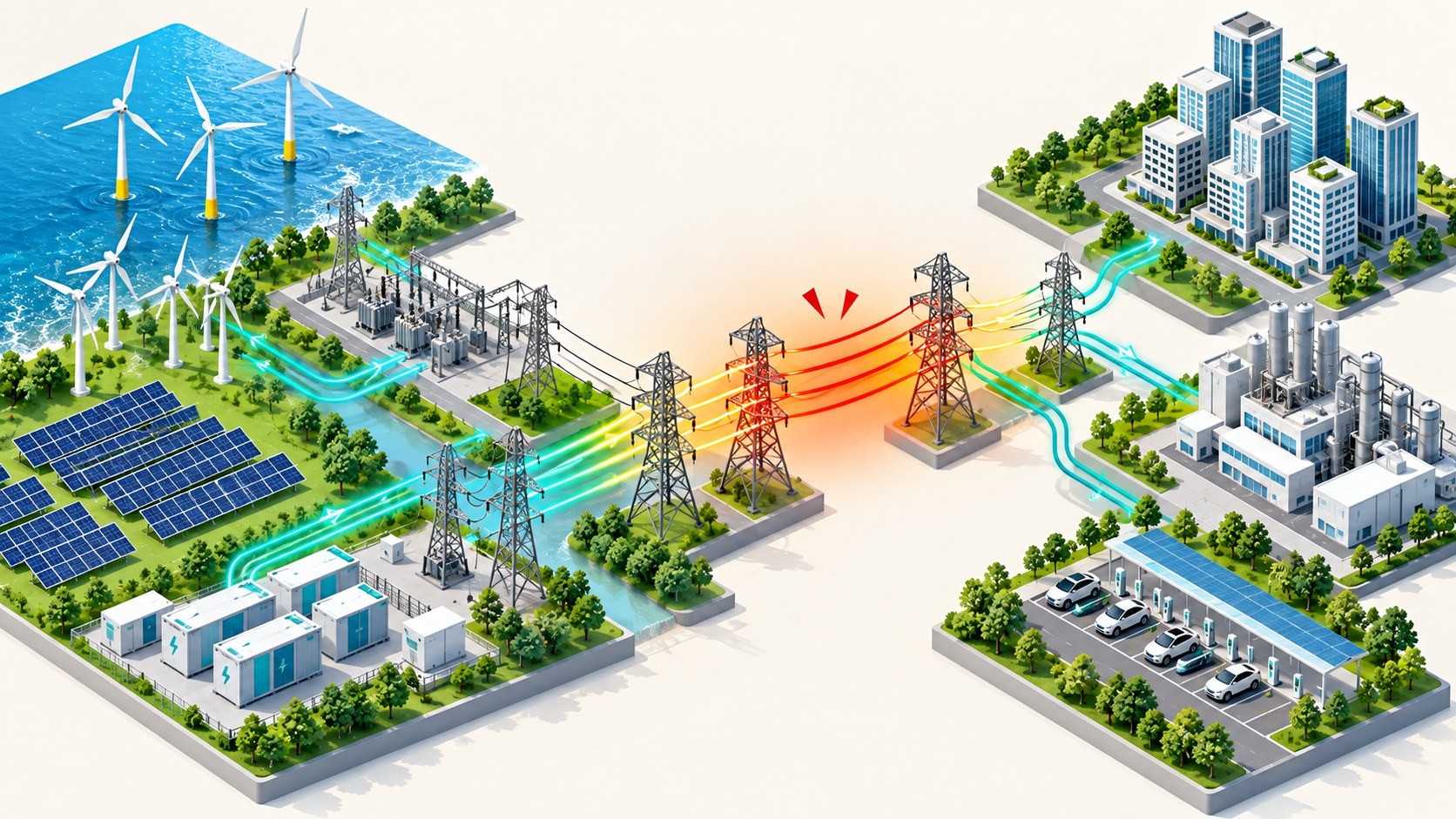
The IEA says grids may be the main factor setting the pace of electrification. Under the HES:
Global grids have to expand around 40% faster than over the past decade, reaching 115 million kilometers by 2035.
Grid investment has to rise from about US$450 billion in 2025 to around US$930 billion by 2035 (in the HES combined with a net zero power mix), about twice the 2025 level.
Peak electricity demand rises by 1,900 GW, equivalent to 40% of today's global peak. Peak hours shift from times of air-conditioning use to the evening, when EVs are plugged in to charge.
Distribution upgrades are the costliest part, about two-thirds of grid investment. Shifting EV and heat-pump demand away from peaks (demand-side flexibility) matters as much as storage: on a net-zero path, global battery storage grows nearly tenfold to about 2,900 GW by 2035.
Energy security: buy less fuel, but keep the power secure
This year's Strait of Hormuz crisis is the second major energy shock in five years. Since February 2026, 25 countries have announced new electrification-related policies. The IEA estimates that:
By 2035, oil demand avoided by EVs is around 10 million barrels per day under the Stated Policies Scenario, rising to 18 million barrels in the HES.
In the HES, fuel importers' import bills in 2035 are around a quarter lower than in 2025, or about US$400 billion a year. Measured against 2026's higher energy prices, the savings exceed US$500 billion.
The report adds two points. If extra demand is met by gas-fired power, part of the cut in gas imports is offset. With battery and critical-mineral supply chains highly concentrated, plus cyberattacks and natural disasters, power-system security becomes more important. Installed equipment needs no continuous fuel imports and keeps running through supply-chain disruptions.
What it means for Taiwan (our view)
Energy Administration data show Taiwan’s 2025 energy import dependence at 94.62% and energy imports worth US$45.9 billion; 84.49% of power comes from thermal plants, gas supplies 47.69%, and 79.54% of natural gas is used for power. Questions to consider:
Industrial heat: 61.48% of Taiwan's electricity consumption is in the energy and industrial sectors. Among textile, food, paper and some chemical producers, assess how much process heat is below 150°C and suitable for industrial heat pumps, and establish support for SMEs on upfront funding and grid upgrades.
Transport: the transport sector accounts for just 0.72% of electricity consumption. Electrifying scooters and buses could be prioritized, following the report's analysis of electric two- and three-wheelers in dense cities.
Low-carbon power: if new demand is met mainly by gas, gains in reducing import dependence will be diluted unless renewables and other low-carbon sources keep pace.
Taipower tariffs: the report says the electricity-to-fuel price ratio decides whether heat pumps and EVs pay off; how Taiwan’s tariff structure and fuel taxes affect electrification is worth examining.

Sources (5)
Sources
IEA, Electrification (Special Report, September 22, 2026, CC BY 4.0): https://www.iea.org/reports/electrification
IEA, full report (PDF): https://iea.blob.core.windows.net/assets/1c696cc3-e251-46a9-8d4d-9edb2a4e806a/Electrification.pdf
IEA press release, Electrification takes centre stage as Hormuz shock spurs countries to seek to enhance energy security (September 22, 2026): https://www.iea.org/news/electrification-takes-centre-stage-as-hormuz-shock-spurs-countries-to-seek-to-enhance-energy-security
Down To Earth, Cost-effective electrification could raise electricity share to 35 per cent by 2035: IEA (September 23, 2026): https://www.downtoearth.org.in/energy/cost-effective-electrification-could-raise-electricity-share-to-35-per-cent-by-2035-iea
Energy Administration, MOEA, Energy Statistics Handbook 2025: https://ea01.moeaea.gov.tw/a0303/02/attachments/handbook/2025/2025EnergyStaHandBook.pdf
Leave a comment
Comments are reviewed before publication. Email is private and used only when contact is necessary. Privacy notice