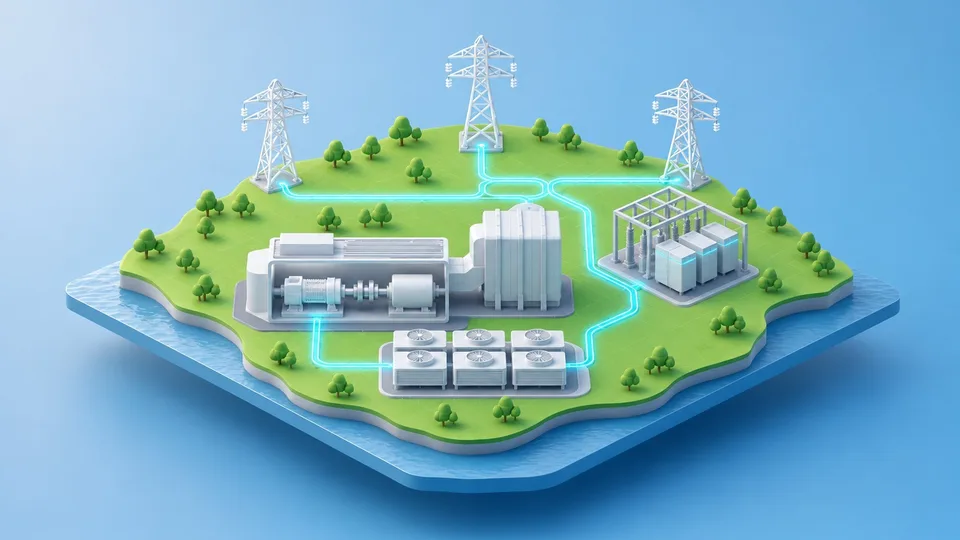
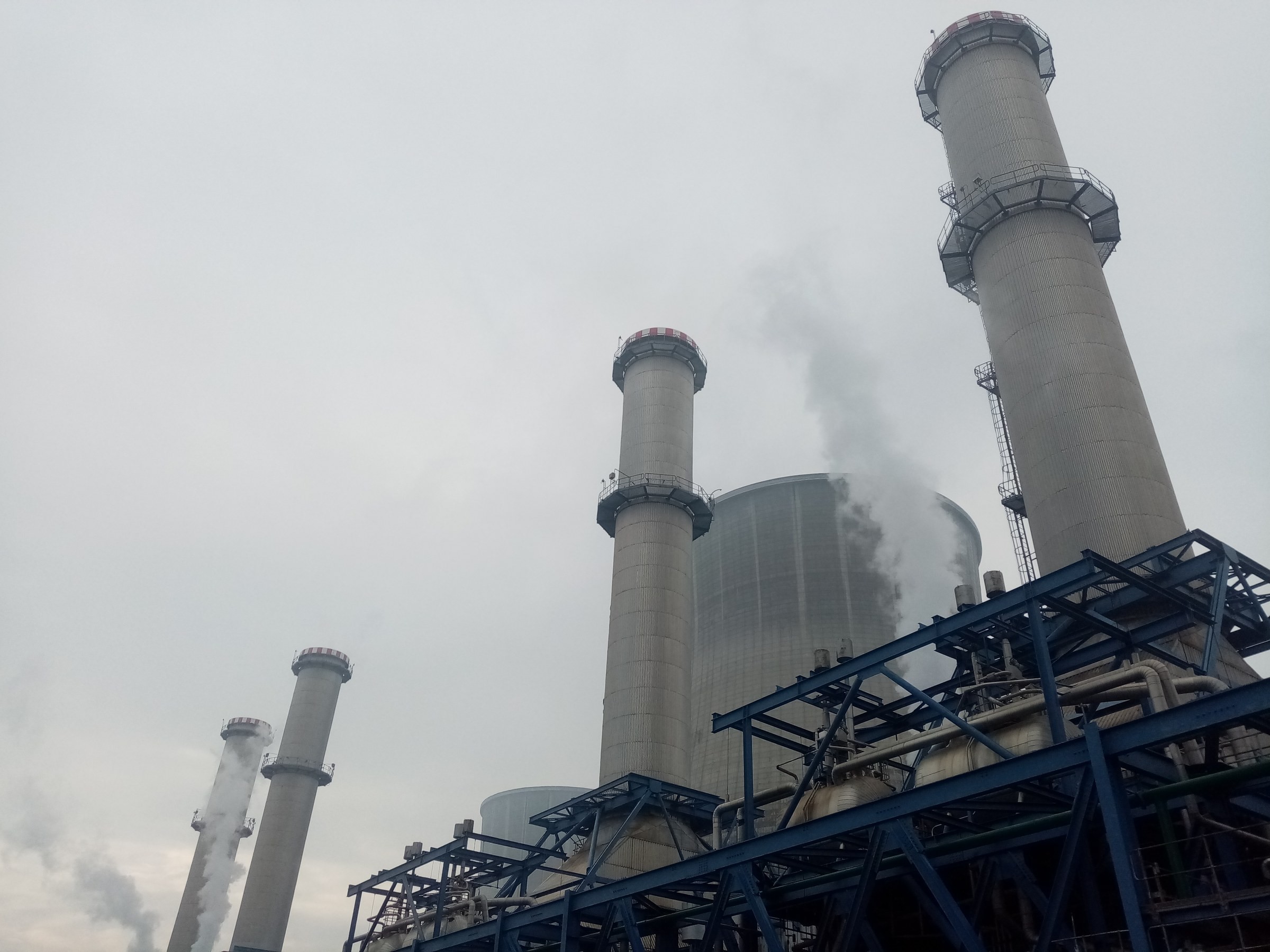
The Sand Lake Energy Center in Orlando, Florida, is a natural gas combined-cycle plant that began commercial operation in 1993. It once ran continuously. It is now dispatched through a power pool and runs far fewer days. Power Engineering published an interview with the plant's maintenance manager on October 27, 2026, and Combined Cycle Journal (CCJ) ran a more detailed technical report on August 12, 2026. This article summarizes what can be verified from the two reports and official documents.

Commissioned in 1993, acquired by the Florida Municipal Power Agency in 2024
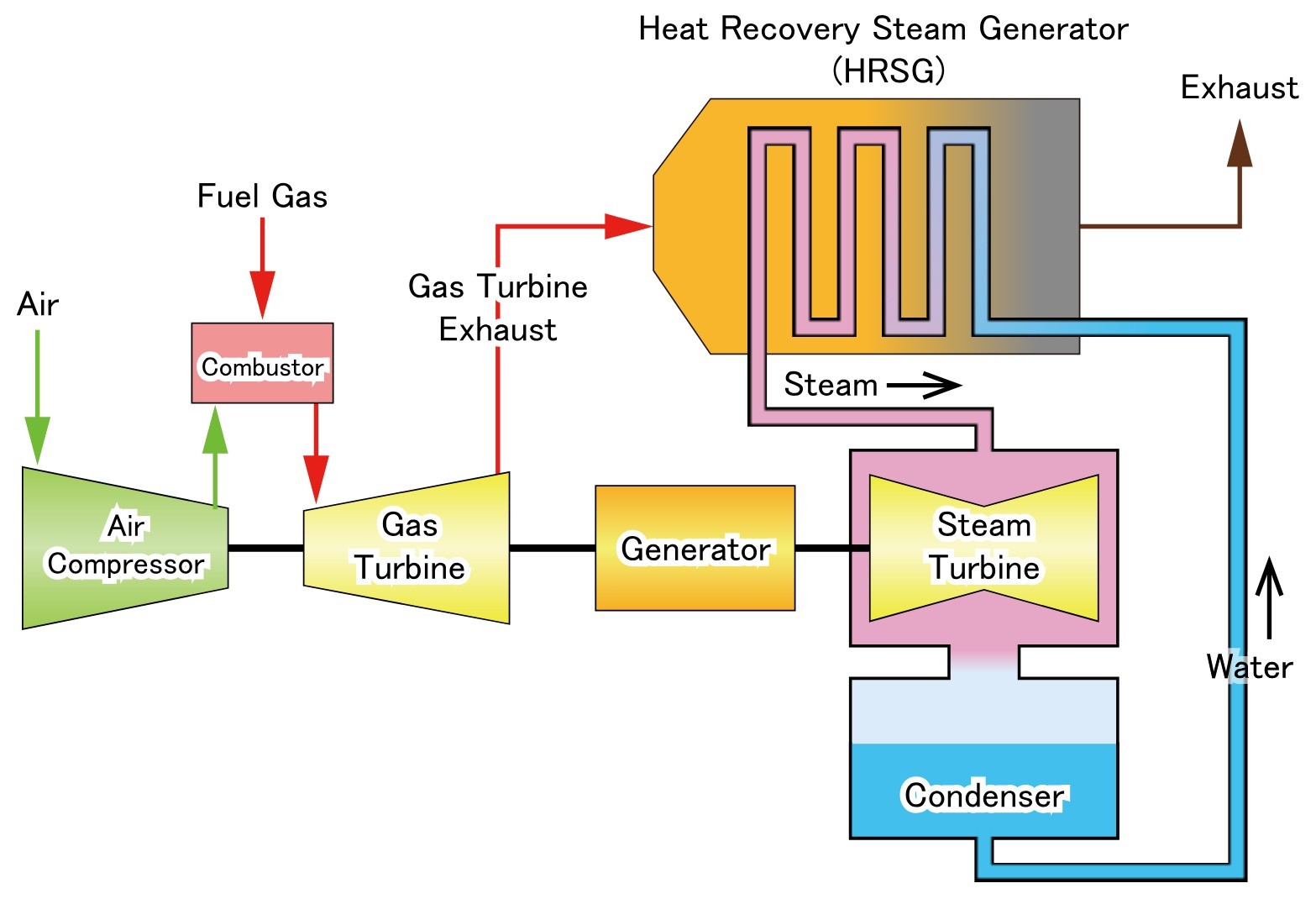
The plant was originally called Orlando Cogen and was built by Air Products and Chemicals next to one of its air separation plants. Besides generating power, it sent steam to an absorption chiller that supplied chilled water to the Air Products site.
The long-term power purchase agreement expired in December 2023. The Florida Municipal Power Agency (FMPA) announced on February 16, 2024 that it had taken ownership and renamed the plant Sand Lake Energy Center. FMPA is a wholesale power agency owned by 33 Florida municipal electric utilities. According to the FMPA press release, the plant supplies 120 MW to 13 Florida communities.
FMPA's 2026–2035 Ten-Year Site Plan, filed with the Florida Public Service Commission, lists a summer rating of 120 MW from one Alstom GT11NMC gas turbine and one steam turbine. Power Engineering reports a former baseload output of 114.5 MW and a peak of up to 125 MW.
Six operating days in the first two months of 2026
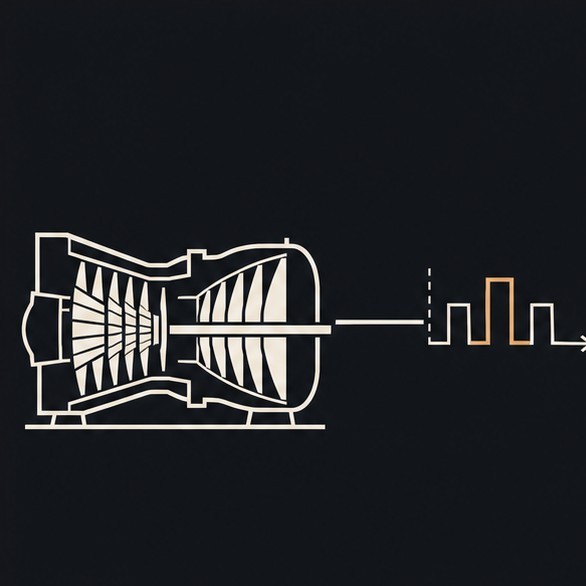
Danny Slade, the plant's maintenance manager, has worked there for more than 30 years and took part in its construction. He says the plant used to run about 8,000 hours a year; now it is fewer running hours and more starts. By his account, the plant ran only 6 days in the first two months of 2026.
The plant is one part of the FMPA power pool. The pool has many plants to dispatch, prices and demand differ by location, transmission owners charge fees, and plant efficiencies differ. Slade notes that a newer, more efficient turbine can be cheaper than an older combined-cycle plant such as Sand Lake, and the pool's dispatchers weigh these factors when choosing which plants run. When a plant trips offline, dispatchers cover the gap with other units in the pool.
At the end of the first quarter of 2025, Sand Lake had accumulated about 240,000 equivalent operating hours (EOH) and more than 600 starts. Slade also says he is unsure how the equipment will hold up to short, fast starts followed by weeks of idleness. Whether limited running hours justify the cost of repeated cycling will become clear over time.
A clutch lets the gas turbine deliver 10 MW within 20 minutes
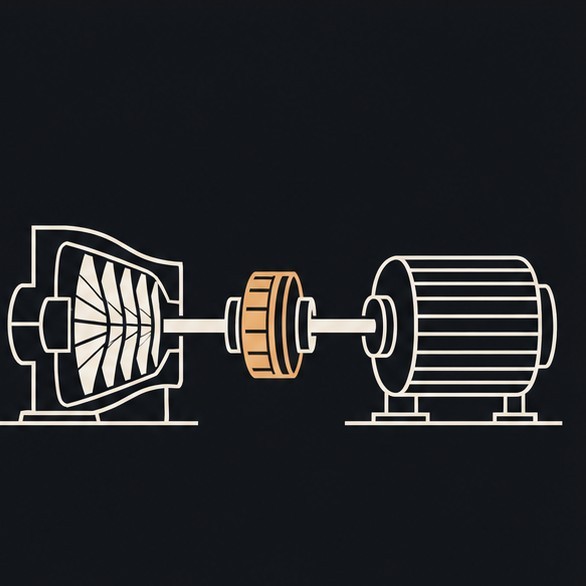
Sand Lake is a single-shaft combined-cycle unit: the gas turbine, steam turbine and generator sit on one shaft. An SSS Clutch (Synchro-Self-Shifting Clutch) is installed between the low-pressure section of the steam turbine and the generator. According to CCJ, quoting a representative of SSS Clutch, it is the first single-shaft combined-cycle plant in the United States above 100 MW to use this kind of clutch. The clutch was part of the original Air Products specification.
The clutch shortens start-up time. Both reports say the plant does not use it to switch into spinning reserve or synchronous condenser modes; its only purpose is faster starts. With the clutch disengaged, the gas turbine can start on its own and deliver 10 MW within 20 minutes, while the steam turbine is made ready in the meantime. Slade says a hot restart reaches full load in 45 minutes; without the clutch, a cold start to full load would take about 3 hours. The clutch also means the gas turbine does not have to trip when the steam turbine trips.
The clutch was damaged in 2011 after an abnormal steam turbine trip, repaired on site, and used until it was replaced in 2017. When the original unit was sent back to the manufacturer, it was found to be in good condition. Slade expects the current clutch to last another 20 years.
Chiller and duct burner removed, fiberglass cooling tower installed
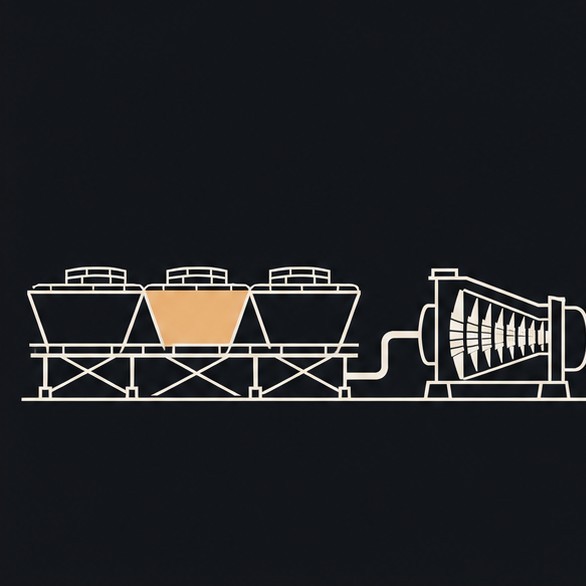
After the cogeneration agreement ended, the plant's 1,600-ton absorption chiller was no longer needed and was decommissioned. The duct burner had been there since construction, but a 2008 compressor upgrade increased mass flow by 8% to 10% and made up for the output the burner provided, so it went unused. According to CCJ, FMPA removed it in early 2025.
The old cooling tower had been exposed to moisture, chemicals, ultraviolet light and temperature swings for years. FMPA contracted ICT Industrial to replace it with a four-cell cooling tower made of fiber-reinforced polymer (FRP). According to Power Engineering, FRP fibers do not oxidize like metal or rot like wood; the advantages include corrosion resistance, a high strength-to-weight ratio, low maintenance and better resistance to ultraviolet light and weather. CCJ reports that the first cell was completed first and the other three were added at the end of 2025.
Upgrading existing units instead of waiting for new ones
Slade says new gas turbines can have lead times of up to 5 years while electricity demand keeps growing, so upgrading existing equipment has become more important. FMPA is implementing GE Vernova's GT11NM XL/XP upgrade package, installed by Hughes Technical Services, which includes new row 4 compressor hardware, cooling improvements and control upgrades. The figures for the two modes are:
- XL mode: the major-overhaul interval extends from 24,000 EOH to 32,000 EOH, output rises by 9.6 MW, and efficiency improves by 2.9%.
- XP mode: the major-overhaul interval stays at 24,000 EOH, output rises by 13.1 MW, and efficiency improves by 3.2%.
FMPA's Ten-Year Site Plan includes a capacity increase at Sand Lake in 2028 in its capacity projections.
Electrical equipment is also under review. Slade estimates that losses in transformers, the substation and transmission lines could keep 8 to 10 MW of output from being delivered. The proposal is to replace the two old transformers with one larger transformer and to reconfigure the connection to the Duke Energy substation. A new duct burner is also being considered; Slade estimates it would add 4 to 6 MW. According to the figures CCJ lists, using the burner raises the heat rate from 8,000 Btu to 8,800 Btu (the report does not state the basis), but he says the extra fuel is not a problem when electricity prices are high enough.
Spare parts for a discontinued model come from an owners group
Sand Lake's GT11N-series gas turbine is no longer manufactured, and spare parts are increasingly hard to get. The model has belonged to Asea Brown Boveri (ABB), Alstom and GE Vernova in turn. Every summer Slade attends the Alstom Owners Group, where owners of older ABB and Alstom equipment exchange information and work on shared problems. He says members help each other find obsolete parts, and some companies manufacture redesigned blades.
FMPA's goal is to keep the plant running for about 20 more years. Slade also cautions that in 10 to 15 years, finding parts for a 50-year-old turbine could be quite difficult. The service life of the steam turbine is also unclear, and the next scheduled outage will look at what needs attention. One of his recommendations to other plant owners is to leave working space in the layout so maintenance can be carried out quickly.
Directions Taiwan can draw on
The following review items are drawn from this case. Their applicability depends on each unit's design and the needs of the power system.

Leave a comment
Comments are reviewed before publication. Email is private and used only when contact is necessary. Privacy notice