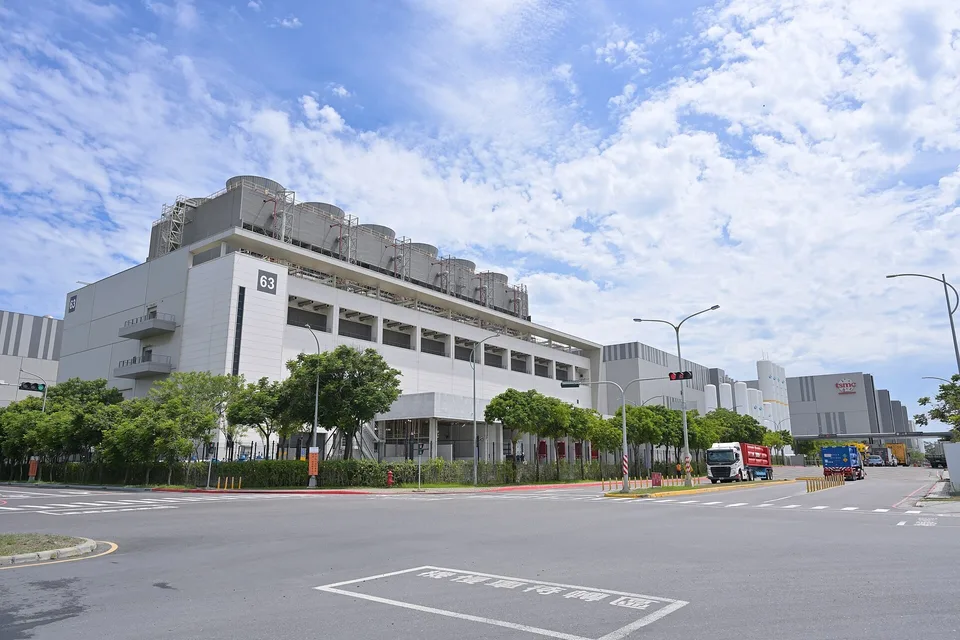
Taiwan Index Plus Corporation (TIP) published an article on October 19, 2026 under its TIP Taiwan Sustainability Assessment, analyzing the carbon management performance of listed companies in 2025. 95.25% of listed companies disclosed Scope 1 and 2 emissions, and 69.17% had set reduction targets; the Scope 3 disclosure rate was 55.61%, and 11.01% of companies had set Scope 3 reduction targets. As carbon fee reporting gets under way, Taiwan is entering the era of carbon pricing, and the next step is to extend carbon management to the supply chain and value chain covered by Scope 3.
TIP Taiwan Sustainability Assessment: over half disclose Scope 3, 11.01% set targets
According to the Economic Daily News report and the original TIP article, the carbon management figures for listed companies in 2025 were:
- Scope 1 and 2 emissions disclosure rate 95.25%; reduction targets set by 69.17%
- Scope 3 emissions disclosure rate 55.61%; reduction targets set by 11.01%
- 2.86% used voluntary emission reduction credits and carbon credits; 6.96% adopted internal carbon pricing
- Among companies with reduction targets, 18.19% met their Scope 1 and 2 targets and 11.48% met their Scope 3 targets
TIP noted that Scope 3 covers supply chain and value chain activities, so reductions need to be advanced jointly with partners such as suppliers and customers, and companies can drive real decarbonization through supply chain collaboration and evaluation mechanisms. Under Ministry of Environment rules, companies in the electricity and gas supply industries and in manufacturing whose emission sources are subject to mandatory inventory registration and verification, and whose combined annual direct emissions and indirect emissions from electricity use at the whole-plant (site) level reach 25,000 tonnes of carbon dioxide equivalent (CO₂e) or more, are subject to the carbon fee; in 2026 they report their 2025 emissions, and the general rate is NT$300 per tonne. For more on the system, see Taiwan's carbon fee and ETS on a dual track: rate adjustments, pilot timeline and impacts on companies.
What Scope 3 is: the 15 value chain categories of the GHG Protocol
Scope 1 covers a company's own direct emissions, Scope 2 covers indirect emissions from using energy such as electricity, and Scope 3 covers other indirect emissions across the company's value chain. In 2011 the Greenhouse Gas Protocol (GHG Protocol) released the Corporate Value Chain (Scope 3) Accounting and Reporting Standard, developed over 3 years by 2,300 participants from 55 countries and 96 technical working group members, and road-tested by 34 companies in 2010. The standard divides Scope 3 into 15 categories across upstream and downstream.
8 upstream categories:
- Category 1: Purchased goods and services
- Category 2: Capital goods
- Category 3: Fuel- and energy-related activities (not included in Scope 1 or Scope 2)
- Category 4: Upstream transportation and distribution
- Category 5: Waste generated in operations
- Category 6: Business travel
- Category 7: Employee commuting
- Category 8: Upstream leased assets
7 downstream categories:
- Category 9: Downstream transportation and distribution
- Category 10: Processing of sold products
- Category 11: Use of sold products
- Category 12: End-of-life treatment of sold products
- Category 13: Downstream leased assets
- Category 14: Franchises
- Category 15: Investments
TWSE guidance: material disclosure categories for 7 major industries
In December 2023 the Taiwan Stock Exchange and the Taipei Exchange published the Greenhouse Gas Scope 3: Disclosure Guidance and Reference Examples, based on IFRS S2 and the GHG Protocol. The guidance groups 7 major industries, namely semiconductors, communications and internet, computers and peripheral equipment, textiles, plastics, rubber, and trading and department stores, and lists "Category 1: Purchased goods and services" and "Category 11: Use of sold products" as material disclosure categories for these 7 industries.
Other common disclosure categories include:
- Category 2: Capital goods
- Category 3: Fuel- and energy-related activities
- Category 4: Upstream transportation and distribution
- Category 9: Downstream transportation and distribution
- Category 10: Processing of sold products
- Category 12: End-of-life treatment of sold products
Companies can start by checking against their own industry, identify categories with relatively high shares of emissions, and then gradually widen the scope of their inventory.
IFRS S2 timeline: Scope 3 phased in
On September 23, 2026 the Financial Supervisory Commission (FSC) and the Ministry of Environment revised the "Roadmap for Taiwan's Adoption of IFRS Sustainability Disclosure Standards" and the "Sustainable Development Roadmap for Listed Companies". Under this general adjustment plan, full mandatory adoption of the IFRS sustainability disclosure standards now applies to listed companies with paid-in capital of NT$2 billion or more (about 535 companies) and to companies below NT$2 billion that are on the Ministry of Environment's list of entities subject to mandatory inventory registration and verification (about 25 companies), about 560 companies in total, accounting for over 87% of the market value of all listed companies. These adjustments do not yet apply to the financial, insurance, and securities and futures industries; regardless of size, these industries continue to follow the FSC's "Green and Transition Finance Action Plan" and the plans of the respective supervisory bureaus. The general phased timeline set out in the attachment to the revised roadmap is as follows:
- Phase 1 (paid-in capital of NT$10 billion or more, 126 companies): first adoption for fiscal year 2026, with Scope 3 disclosure exempted for the first 3 fiscal years; Scope 3 becomes mandatory from fiscal year 2029 information (disclosed in 2030)
- Phase 2 (paid-in capital of NT$5 billion or more but under NT$10 billion, 118 companies): first adoption for fiscal year 2027; Scope 3 mandatory from fiscal year 2030 (disclosed in 2031)
- Phase 3 (non-financial, non-insurance companies with paid-in capital of NT$2 billion or more but under NT$5 billion, plus companies below NT$2 billion that are on the Ministry of Environment's list of entities subject to mandatory inventory registration and verification, 316 companies): first adoption for fiscal year 2028, with Scope 3 disclosure made voluntary
The voluntary Scope 3 arrangement above applies to general industries; Scope 3 disclosure for the financial, insurance, and securities and futures industries follows separate plans by the competent authority.
About 1,410 listed companies have paid-in capital below NT$2 billion and are not on the Ministry of Environment's list of entities subject to mandatory inventory registration and verification; they must still disclose basic information such as climate governance, risk management, and Scope 1 and 2. Under the revised roadmap, all listed companies must complete Scope 1 and 2 inventory and disclosure for the parent company on a standalone basis by 2026 at the latest (fiscal year 2025 information), and complete Scope 1 and 2 inventory and disclosure for the consolidated reporting boundary by 2027 at the latest (fiscal year 2026 information); the financial industry follows separate plans by the competent authority.
Possible directions for Taiwan
Taiwanese companies can build Scope 3 inventory mechanisms step by step on top of their existing Scope 1 and 2 disclosure work. Based on the information above, they can start with the following:
- Screen for material categories first: Drawing on the industry groupings in the TWSE guidance, these industries can review Category 1 and Category 11 first, and then add common categories such as capital goods and transportation and distribution according to their industry characteristics.
- Build data channels with suppliers: The FSC and the Ministry of Environment are improving the product carbon footprint emission factor database to lower the cost for companies of obtaining Scope 3 data; companies can also work with suppliers and customers on reductions through supply chain collaboration and evaluation mechanisms.
- Link targets to operational decisions: TIP recommends linking reduction pathways to equipment investment, energy use and procurement decisions, and using carbon management tools such as internal carbon pricing according to operational needs. For international practice on transition plans and third-party verification, see ISO 14060 draft: net-zero transition plans, validation and verification.
- Make good use of the transition period: Mandatory Scope 3 disclosure for Phase 1 companies starts from fiscal year 2029, so the first 3 fiscal years can be used to build inventory methods and supply chain data. From October 21, 2026, the Taiwan Stock Exchange is also holding 4 outreach sessions on adopting the IFRS sustainability disclosure standards in Taipei, Hsinchu, Taichung and Kaohsiung, providing IFRS S2 disclosure examples.
Leave a comment
Comments are reviewed before publication. Email is private and used only when contact is necessary. Privacy notice