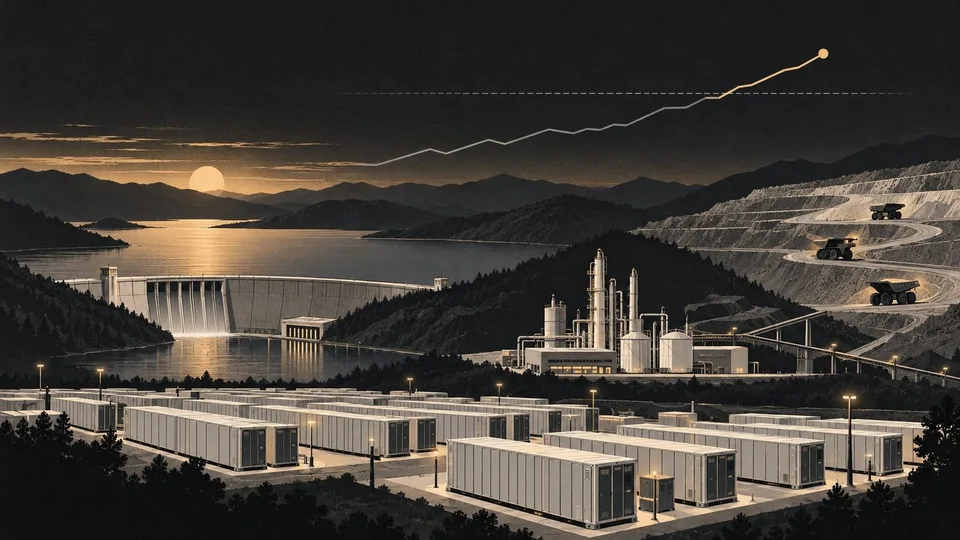
On 16 October China's Ministry of Ecology and Environment (MEE) posted two letters on its website seeking comments on 11 draft methodologies for greenhouse gas voluntary emission reduction projects. Comments are due by 23 October 2026. A methodology sets the rules for calculating emission reductions; once finalised, eligible projects can use it to apply for China Certified Emission Reductions (CCERs).
Over the same period, prices of allowances in China's national emissions trading market (CEAs) rose. CEAs closed at RMB 95.80 per tonne on 9 October and RMB 97.56 on 16 October. Carbon Pulse's CP Daily summary of 18 October said CEAs had broken above the RMB 95 short-term resistance level.
Key terms: CEA, CCER and methodology
- CEA (China Emission Allowance): an allowance issued to covered entities in China's national carbon market; each represents one tonne of carbon dioxide (CO₂), and companies surrender allowances equal to their emissions each year.
- CCER (China Certified Emission Reduction): an emission reduction calculated under a methodology, validated, verified and registered, which can be sold to companies that need to offset emissions.
- Methodology: the rules for a project type, covering eligibility, the baseline, how reductions are calculated and how they are monitored.
1. The 11 draft methodologies
The MEE General Office sent the two letters (Huanban Bianhan [2026] No. 345 and No. 346) on 15 October and published them on 16 October. They cover the following 11 draft methodologies:

Energy:
- Renewable energy-based ammonia synthesis
- Pumped-storage hydropower stations
- Methanol from gasification of agricultural and forestry biomass
- Methanol from biomass gasification coupled with green hydrogen
- Hydrocarbon-based biodiesel from waste oils and fats, used as fuel
- Ester-based biodiesel from waste oils and fats, used as fuel
- Sodium-ion battery energy storage stations
- All-vanadium flow battery energy storage stations
Transport:
- Electrification of mine haulage vehicles
Waste and resource recycling:
- Chemical recycling of low-value waste plastics
- Biogas from centralised anaerobic treatment of food waste
Each draft comes with an explanatory note. The MEE said the methodologies are meant to complete the methodology system, encourage more sectors and companies to cut emissions, and standardise project design, implementation and validation as well as the quantification and verification of reductions. Eight of the drafts are in the energy sector, and three of those are for energy storage stations (pumped storage, sodium-ion batteries and vanadium flow batteries).
2. Rules for using CCERs
China relaunched CCERs with the Measures for the Administration of Greenhouse Gas Voluntary Emission Reduction Trading (Trial), published and in force from 19 October 2023. Under an MEE notice of October 2023, old CCERs registered before 14 March 2017 could be used only until 31 December 2024 and may not be used for offsetting in the national carbon market from 2025.

Under Article 29 of the 2021 Measures for the Administration of Carbon Emissions Trading (Trial), covered entities may use CCERs to offset no more than 5% of the allowances they must surrender each year, and the reductions may not come from projects already covered by national carbon market allowances.
3. National carbon market prices
China's national carbon market publishes a daily price summary:

- 8 October: closed at RMB 94.94 per tonne, down 0.02% on the previous day.
- 9 October: closed at RMB 95.80, up 0.91%.
- 16 October: opened at RMB 97.64, high RMB 98.00, low RMB 97.00, closed at RMB 97.56, up 0.39%. Total allowance volume that day was 2,015,878 tonnes, worth about RMB 195 million.
From 1 January to 16 October 2026, 140,998,246 tonnes of allowances traded, worth about RMB 12.27 billion; cumulative volume since the market opened has passed 1 billion tonnes.
4. Taiwan's voluntary reduction projects and carbon fee
Taiwan's counterpart is the Greenhouse Gas Voluntary Reduction Project Management Regulations, issued by the Ministry of Environment on 12 October 2023. Projects must use reduction methods approved and published by the ministry and complete registration, monitoring and third-party verification before reduction credits can be issued. On 12 May 2026 the ministry said it had approved and published 150 reduction methods, including eight new or revised natural carbon sink methodologies (afforestation, forest and bamboo management, soil management, mangrove planting and seagrass restoration), and had registered 40 reduction projects, five of them afforestation.

Reduction credits can be deducted from the carbon fee. Under Article 9 of the Carbon Fee Collection Regulations as amended on 1 September 2026:
- Deductions are capped at 10% of a company's chargeable emissions.
- Credits from voluntary reduction or offset projects are deducted at a ratio of 1.2.
- Credits from early-action projects are deducted at a ratio of 0.3 for companies not at high risk of carbon leakage and 0.1 for those at high risk, and only in the first three years of the carbon fee.
The general carbon fee rate is NT$300 per tonne. The ministry also said it expects companies holding credits to use them first against their own carbon fee, so low trading volumes in the carbon market are expected, and it plans to introduce a cap-and-trade emissions trading system (ETS) on a trial basis in 2027–2028.
Possible directions for Taiwan
- Check whether reduction methods cover new technologies: China's drafts include sodium-ion and vanadium flow battery storage, green-hydrogen methanol and waste-oil biodiesel. Taiwan can compare its 150 methods with the storage, green fuel and recycling projects under development at home and identify gaps.
- Publish technical notes with draft methods: each Chinese draft comes with an explanatory note on its baseline and parameters. When Taiwan approves new reduction methods, it can publish the technical basis as well, so developers and verifiers can prepare early.
- Plan credit use together with the carbon fee and the ETS: China caps CCER offsets at 5% of surrendered allowances, while Taiwan caps carbon fee deductions at 10%. Whether credits can be used for allowance surrender in the ETS trial, and up to what share, will shape demand and prices.
- Publish market prices and volumes regularly: China's national market publishes daily opening and closing prices and volumes. Once Taiwan's ETS trial starts, regular price and volume data would help companies estimate the cost of cutting emissions or buying credits.
- Further reading: Taiwan's carbon fee and ETS dual track, Taiwanese companies pre-purchase Guatemalan bamboo carbon credits, Carbon credit market in Q3 2026.
Sources
- MEE General Office, letter seeking comments on five methodologies including renewable energy-based ammonia synthesis (Huanban Bianhan [2026] No. 345, sent 15 October and published 16 October 2026): https://www.mee.gov.cn/xxgk2018/xxgk/xxgk06/202610/t20261016_1183138.html
- MEE General Office, letter seeking comments on six methodologies including biomass gasification to methanol (Huanban Bianhan [2026] No. 346, sent 15 October and published 16 October 2026): https://www.mee.gov.cn/xxgk2018/xxgk/xxgk06/202610/t20261016_1183149.html
- National carbon market daily price summary (published by the Shanghai Environment and Energy Exchange), via Sina Finance, 16 October 2026: https://finance.sina.com.cn/money/future/roll/2026-10-16/doc-inivmazf7026870.shtml
- China Finance Information Network (Xinhua Finance), CEA close on 9 October 2026: https://www.cnfin.com/dz-lb/detail/20261009/4478701_1.html
- East Money (Xinhua Finance), CEA close on 8 October 2026: https://finance.eastmoney.com/a/202610083889800384.html
- Gov.cn, Measures for the Administration of Greenhouse Gas Voluntary Emission Reduction Trading (Trial) (19 October 2023): https://www.gov.cn/zhengce/202310/content_6911001.htm
- MEE, notice on arrangements for the national voluntary emission reduction market (October 2023): https://www.mee.gov.cn/xxgk2018/xxgk/xxgk04/202310/t20231025_1043981.html
- Gov.cn, Measures for the Administration of Carbon Emissions Trading (Trial) (January 2021): https://www.gov.cn/zhengce/zhengceku/2021-01/06/content_5577360.htm
- Carbon Pulse, CP Daily Newsletter (18 October 2026, paywalled; only the free summary is cited), "CN Markets: CEAs break above short-term resistance level, CCER programme to expand": https://carbon-pulse.com/561331/
- Ministry of Environment (Taiwan), Greenhouse Gas Voluntary Reduction Project Management Regulations (12 October 2023): https://oaout.moenv.gov.tw/Law/LawContent.aspx?id=GL007885
- Ministry of Environment (Taiwan), press statement on carbon pricing and high-quality reduction credits (12 May 2026): https://enews.moenv.gov.tw/moenv-news/zh-tw/News/1749
- Executive Yuan Gazette, amendment of Articles 3-1 and 9 of the Carbon Fee Collection Regulations (1 September 2026): https://gazette.nat.gov.tw/EG_FileManager/eguploadpub/eg032162/ch07/type1/gov60/num19/Eg.pdf
- Ministry of Environment (Taiwan), announcement of carbon fee rates (23 October 2024): https://enews.moenv.gov.tw/page/3b3c62c78849f32f/3a0a408a-33e5-4a0d-9939-23e8222c5284
Leave a comment
Comments are reviewed before publication. Email is private and used only when contact is necessary. Privacy notice