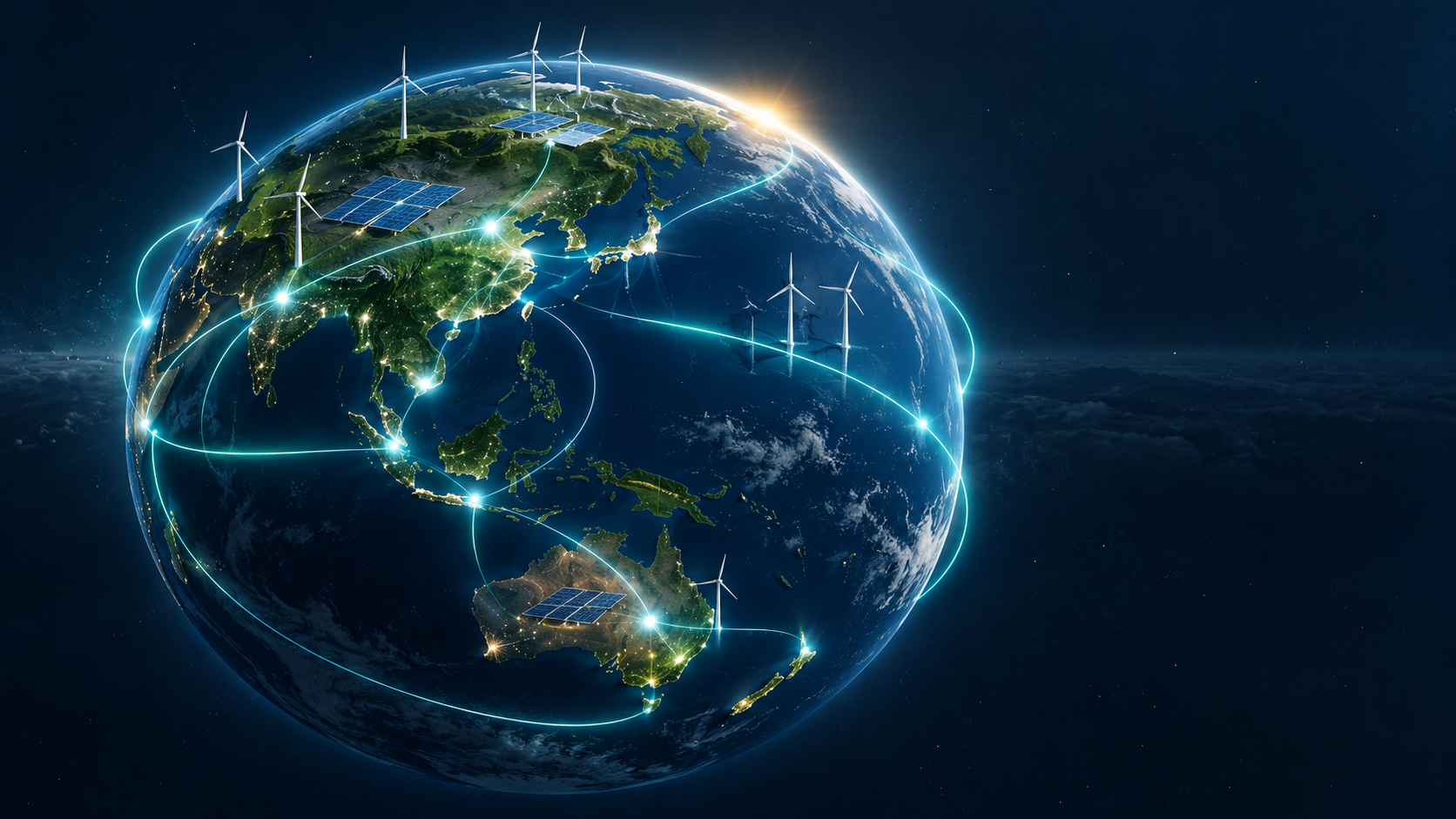
DNV, the Norwegian assurance company, released the tenth edition of its Energy Transition Outlook (ETO) in Singapore on 7 October. The report forecasts energy supply, demand and emissions to 2060 globally and in ten regions. Instead of scenarios, DNV presents a single most likely pathway that accounts for policy, construction time and supply chain limits.[1][2]
1. Electrification as the main trend
- Electricity was 16% of global final energy demand in 2005 and is 21% today. DNV expects 33% by 2045, with electrification over the next 20 years more than twice as fast as over the past 20.[1]
- Global generation rises from 33,000 TWh in 2025 to 84,000 TWh in 2060.[1]
- In 2033, wind and solar together will generate more than all fossil plants. Renewables supply 65% of global electricity in 2040.[1]
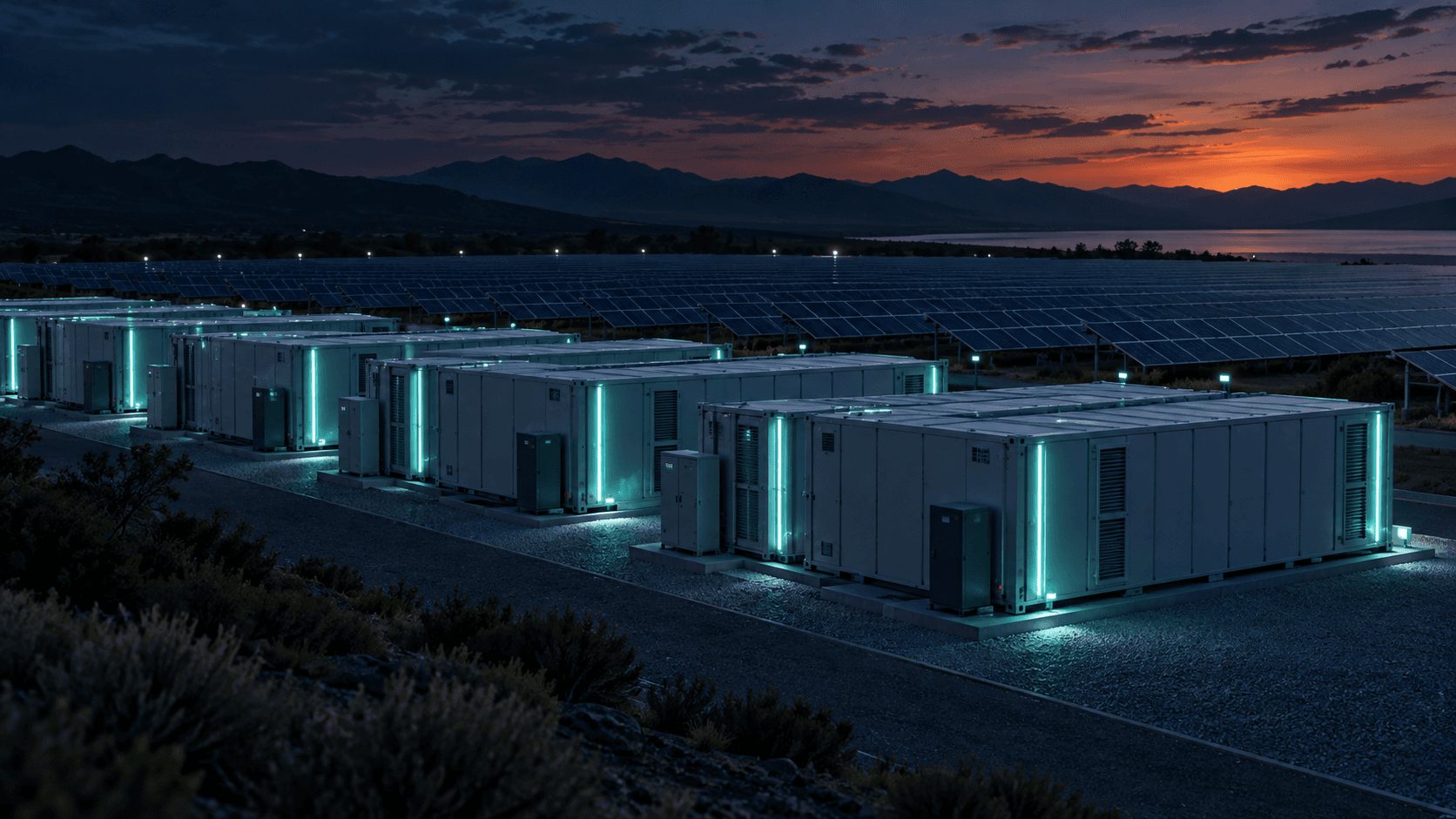
- Battery storage is the fastest-growing power capacity: installed capacity rose 14-fold over five years, and twice as much utility battery storage was installed in 2026 as in 2025.[1]
- Annual renewable investment grew from $860 billion in 2021 to $1,770 billion in 2026.[1]
2. Importers moving faster
DNV notes that disruption at the Strait of Hormuz has raised the priority of energy security. Over the past five years, the non-fossil share of primary energy rose 2.2 percentage points in importing regions (China, India and Europe) and 0.7 points in exporting regions (Middle East, North America and Russia), a difference of more than three times.[2]
3. AI and data centers
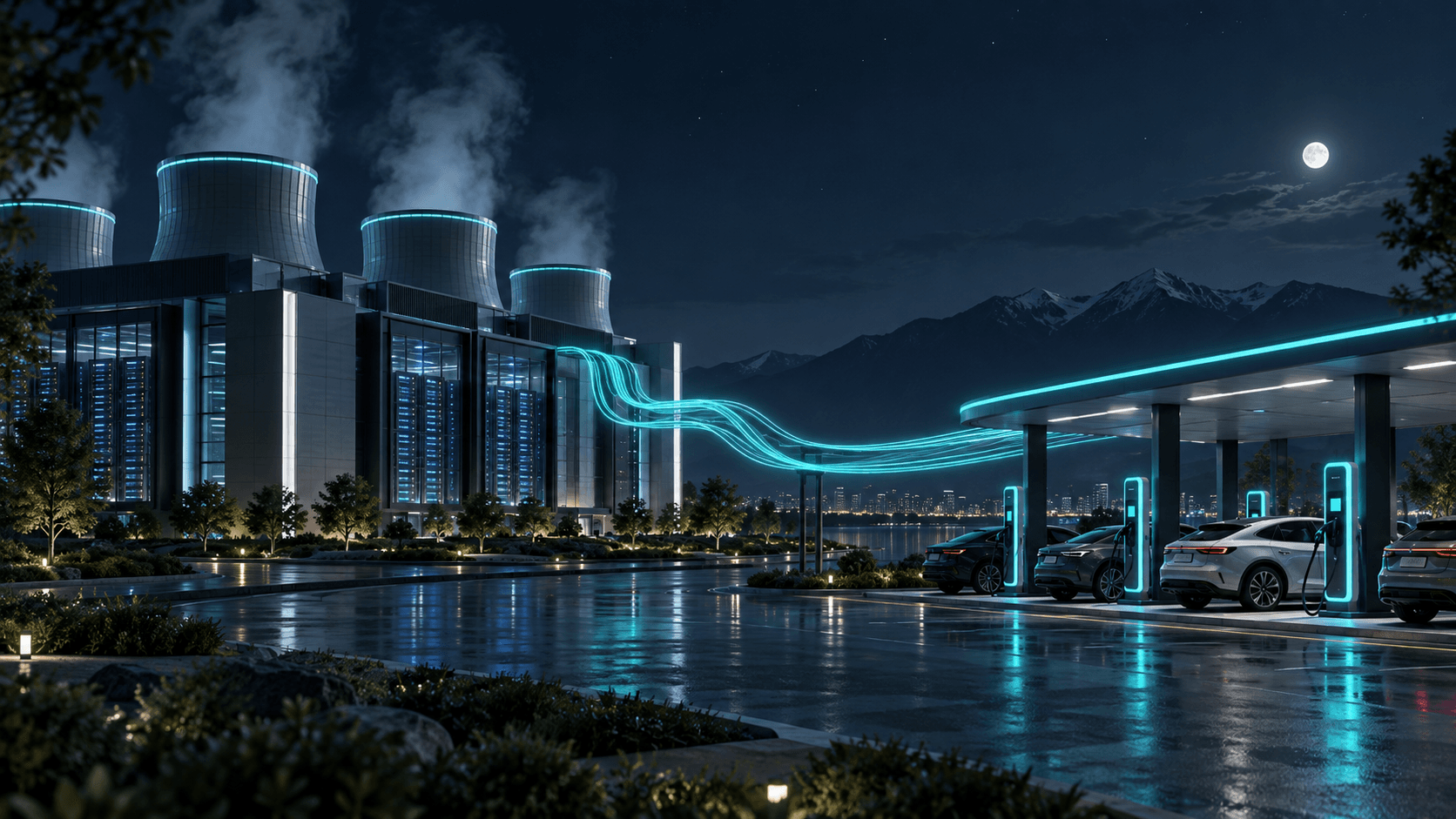
Global data center electricity use is expected to grow from about 400 TWh in 2025 to 1,100 TWh in 2030 and 2,700 TWh in 2040. From 2031, AI workloads will exceed conventional data center use.[1][2] DNV also finds that, to 2040, the largest sources of electricity demand growth are space cooling (22%), EV charging (21%) and data centers (18%).[1] The report says data center growth is set by access to firm power rather than chips or capital.[1]
4. CCS and hydrogen
DNV separates mature from emerging technologies. Solar, onshore wind and batteries keep getting cheaper and are deploying faster. Hydrogen and CCS, used in sectors such as heavy industry and long-distance transport, remain costly and need policy support. Compared with last year, DNV has lowered its 2060 forecasts for hydrogen and CCS by 29% and 15%, though both are still expected to grow quickly from a low base.[1][2] The report adds that hydrogen and CCS face higher financing costs than mature renewables, and lowering the cost of capital is one of the most effective ways to speed up decarbonisation.[1]

5. Emissions and warming
DNV forecasts energy-related CO₂ emissions falling from 39 Gt today to 22 Gt in 2050, a 44% reduction. Global emissions likely peaked in 2024, net zero comes in the late 2090s, and warming reaches 2.3°C by 2100.[1] Power sector emissions fall the most. Process emissions, such as those from cement, decline more slowly because they cannot be removed by switching to electricity.[1]
6. Directions Taiwan can consider
- Grids and storage together: DNV sees the next decade as being about system integration, including pricing, grids and demand flexibility.
- Plan CCS early for process emissions: process emissions from cement and petrochemicals need more than electrification, CCS remains the main option, and policy support can lower financing costs.
- Include data centers in power planning: AI demand grows quickly in specific places and can be planned together with grid expansion.
Related reading: the IEA on electrification costs and energy security, the Global Status of CCS report launch on 20 October and PJM's capacity auction and data center demand.
References
- DNV, Energy Transition Outlook 2026. https://www.dnv.com/energy-transition-outlook/2026/
- DNV, Energy-importing countries scaling clean energy three times faster than exporters (2026-10-07). https://www.dnv.com/news/2026/energy-importing-countries-scaling-clean-energy-three-times-faster-than-exporters/
- Future Energy Publishing, Carbon capture and storage newsletter (2026-10-12).
Leave a comment
Comments are reviewed before publication. Email is private and used only when contact is necessary. Privacy notice