
On October 22, 2026, Google and Voltus, Inc. (Voltus), a distributed energy aggregator, announced an expansion of their Bring Your Own Capacity (BYOC) agreement on the PJM grid in the United States. The virtual power plant will exceed 1 GW in total capacity, or 1,000 MW. A gigawatt (GW) equals one billion watts. The trade outlet Microgrid Knowledge reported on it the next day.
A virtual power plant (VPP) has no tall smokestack and no plant on a single plot of land. It is software. It links small power resources spread across many places into one whole, and they cut demand or discharge together when the grid needs it.
From 100 MW to 1 GW
The partnership began in June 2026, when the two companies signed an initial agreement for 100 MW. The new deal adds 1,070 MW. Together with the initial 100 MW, that comes to about 1,170 MW. The press release describes the overall program as a 1 GW virtual power plant.

Google provides the funding, and Voltus runs the software and aggregates the resources. According to the Voltus press release, it is one of the largest distributed capacity portfolios known to date from a hyperscaler.
The timeline has been shared too. A Voltus spokesperson said the company expects to ramp the VPP up to full capacity within three to four years, then operate it under the Google contract through 2040. This detail comes from Utility Dive.
PJM's Capacity Gap and Data Center Demand
PJM stands for PJM Interconnection. It is the largest wholesale electricity market in the United States. It covers 13 eastern states and Washington, D.C., and serves about 67 million customers.

The region is also one of the areas with the densest data center capacity in the United States, especially northern Virginia. Artificial intelligence (AI) and cloud services are expanding fast and adding a lot of new electricity demand. Recent PJM capacity auctions showed a shortfall in reliability margin and rising prices, which makes resource adequacy a challenge. For background, see our related article PJM Capacity Shortfall and the Data Center Power Challenge.
Many Small Resources Dispatched Together
Voltus aggregates flexible resources at local businesses and homes in the PJM footprint.
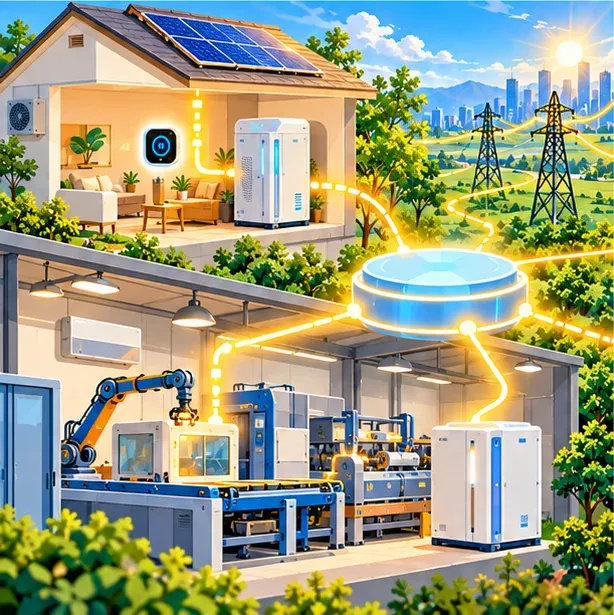
- Smart thermostats, which can briefly adjust air-conditioning use.
- Commercial and residential battery storage systems, which can discharge at peak times.
- On-site backup generation.
- Adjustable loads in industrial processes.
When the grid is tight, Voltus notifies these sites, and they cut consumption through batteries, smart thermostats and process adjustments. Load reduction lowers electricity demand during peak hours. Batteries that take on this kind of dispatch need to be safe. An analysis of the Electric Power Research Institute (EPRI) database shows that from 2018 to 2025, the failure rate of lithium-ion battery energy storage systems worldwide fell 98% per GWh (gigawatt-hour). That means the incident rate per unit of capacity declined; individual systems still need careful safety management. Details are in EPRI: Global Lithium Battery Storage Failure Rates and Safety Progress.
Participants Earn Income
According to the official press release, Google funds the capacity purchase, and participating homes and businesses can receive bill savings or direct payments.
Another study offers context. In March 2026, the energy economics consultancy The Brattle Group published the report "Untapped Grid". It estimates that if the United States makes better use of existing transmission and distribution assets and distributed energy, consumers could save more than US$100 billion over the next ten years. The model's estimated range is US$110 billion to US$170 billion. The report was commissioned by the Utilize Coalition and GridLab. Microgrid Knowledge notes that coalition members include companies such as Google.
California's Demand Side Grid Support (DSGS) program takes a similar path. Data from the California Energy Commission show estimated enrolled capacity of 1,145 MW, of which nearly 1 GW comes from clean resources. Participating options include storage-based VPPs, smart thermostats and heat pumps. This is enrolled capacity and does not equal actual output at any one time. For a side-by-side read, see California's DSGS Virtual Power Plant and Demand Response Experience.
California DSGS: Over 1 GW, 2027 Funding Undecided
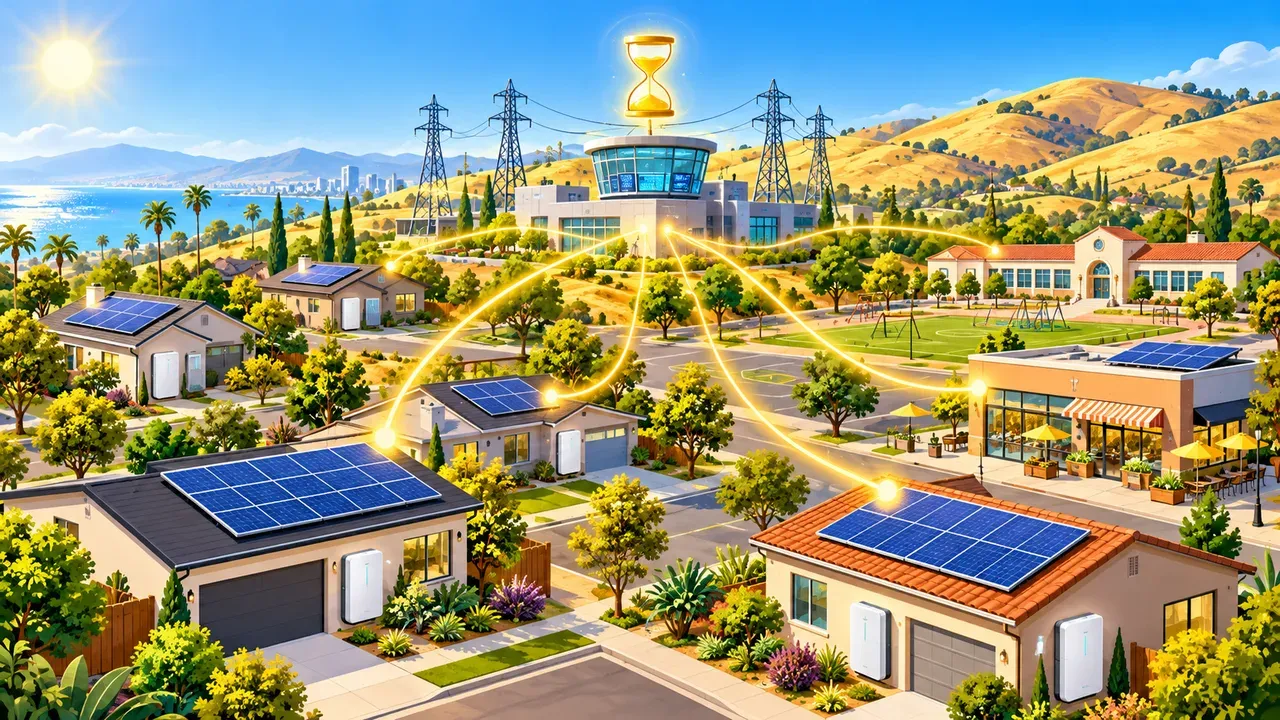
California's Demand Side Grid Support (DSGS) program and the Google and Voltus project are both virtual power plants, and their funding comes from different sources. In a policy episode on October 22, 2026, the energy industry outlet Factor This examined the funding outlook for California's largest virtual power plant and reported that DSGS has enrolled more than 200,000 unique customer sites across every legislative district in California and coordinates more than 1 GW of dispatchable capacity. During a prolonged heat wave in October 2026, the home battery fleets of the residential solar and storage company Sunrun and the electric vehicle maker Tesla together dispatched 669 MW on October 5 and 745 MW on October 6.
On funding, the Legislative Analyst's Office of California says in its 2026–27 budget analysis that the 2026 budget trailer legislation authorized transferring about US$27 million in unused General Fund money to DSGS, which supports the 2026 program season. The episode notes that the last legislative session ended without dedicating new funding for 2027 and later. The 1 GW virtual power plant on the PJM grid is funded by Google. A Voltus spokesperson told Utility Dive that once the plant reaches full capacity, it will run under contract until 2040.
Interviewees in the episode offered options for what comes next. Brandon García, California policy lead at Advanced Energy United, argued for early budget action after the new governor takes office to continue DSGS. Lauren Nevitt, senior director of California policy and energy markets at Sunrun, said that if DSGS goes unfunded, other mechanisms should be found to build a longer-term market in which virtual power plants can take part. Nevitt also cited a report by The Brattle Group for Everyday Electric, "The Affordability Advantage", saying that under the report's modeling the total value created by virtual power plants exceeds their activation cost by more than seven times. For the funding history of DSGS and the bidirectional charging programs, see our earlier article.
Directions Taiwan Can Draw On
Taiwan has made public progress on markets, technology and subsidies.

- The market platform is running. The Electricity Trading Center of Taiwan Power Company (Taipower) was inaugurated in July 2021. The platform began trial operation in October and full operation in November, letting private storage and aggregator resources join ancillary services. Products include dynamic regulation reserve (dReg), enhanced dynamic regulation reserve (E-dReg) and supplementary reserve.
- Home-grown technology can integrate many resources. The Industrial Technology Research Institute (ITRI) developed the Multi-Resource Virtual Power Plant Application Platform and designed a resource interface called U-Box, which integrates diverse distributed resources.
- Behind-the-meter storage has clear targets. The Energy Administration under the Ministry of Economic Affairs runs the Technology Energy Storage Subsidy Program. It sets targets of 300 MWh each for 2026 and 2027 and subsidizes energy storage equipment for users in science parks and industrial parks.
- Solar and storage work together. The Ministry of Economic Affairs' guidelines for bidding and capacity allocation of solar PV systems combined with energy storage support Type 1 solar sites that add storage. The storage charges during periods scheduled by Taipower and supplies power at night.
The Google and Voltus case shows that aggregators, batteries and customer-side resources could play a larger role on the grid. Taiwan's market platform, ITRI technology and storage subsidy targets are each moving forward, and as diverse resources are gradually integrated, they can make the grid more resilient. As experience builds up, these resources may join dispatch in more situations.
Leave a comment
Comments are reviewed before publication. Email is private and used only when contact is necessary. Privacy notice