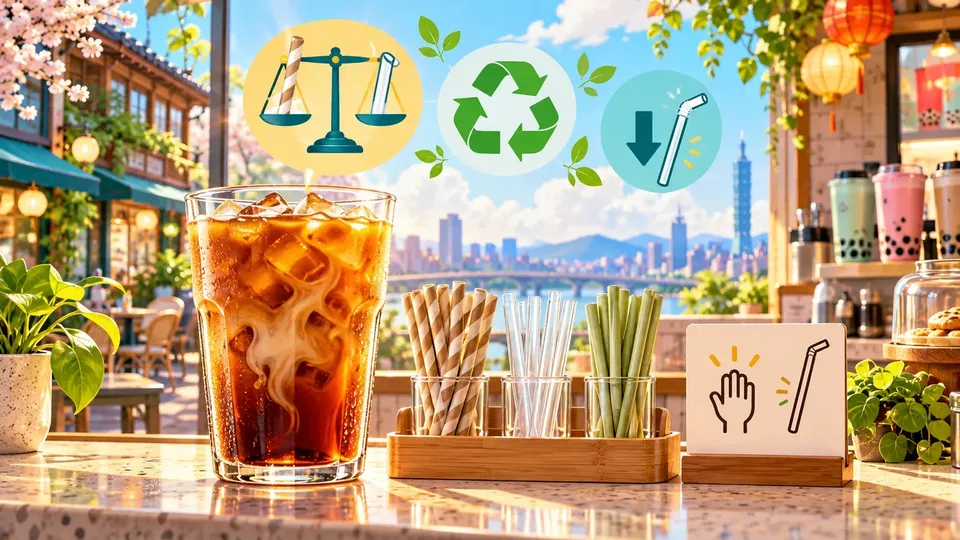
Halfway through an iced latte, the tip of a paper straw starts to go soft and flat. Paper softens when it soaks up liquid, and Kim Sung-hwan, head of South Korea's Ministry of Climate, Energy and Environment (MCEE), used that very point in a briefing to the president to explain why paper straws need special coatings. A study the Korean government has just made public puts numbers on that soggy straw, from raw material to disposal.
The Comprehensive Survey on Single-Use Straws was commissioned by the ministry and carried out by the Korean Society for Life Cycle Assessment (한국전과정평가학회) between May 2025 and April 2026. Kim Wi-sang, a National Assembly member from the People Power Party, disclosed the report on October 21, 2026, and The Korea Herald covered it the next day. The study concluded that changing the straw material alone barely lowers the overall environmental burden, while using fewer straws does far more.
The Korean study compared four straws from raw material to disposal
The researchers used life cycle assessment (LCA). Think of it as writing a résumé for a straw: where the raw material came from, how much energy the factory used, how far the straw travelled, and whether it was burned or buried after use. Each step's emissions are recorded and converted into environmental impacts.
Four straws were compared: conventional straws made of polypropylene (PP), paper straws, biodegradable plastic straws, and straws made of bio-based polyethylene (bio-PE) from plant sources such as sugarcane. Bio-PE is chemically identical to ordinary polyethylene and does not biodegrade. The assessment covered 16 categories, including climate change, ozone depletion, acidification, particulate matter and human carcinogenic effects, using version 3.1 of the European Union's Environmental Footprint (EF) method.
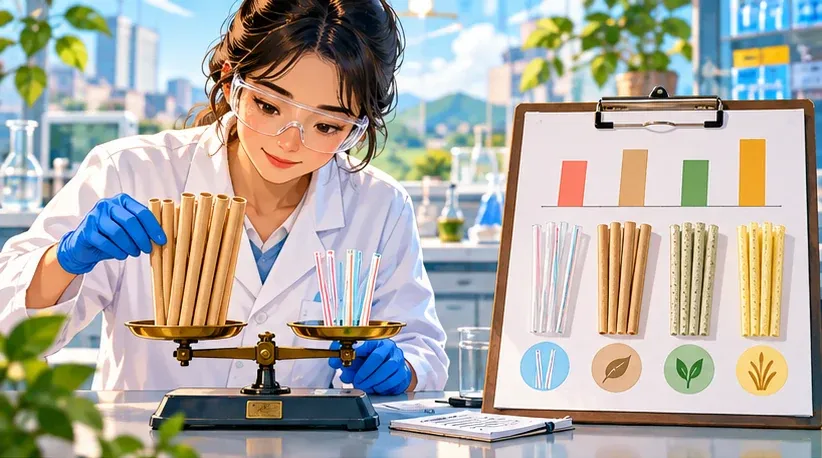
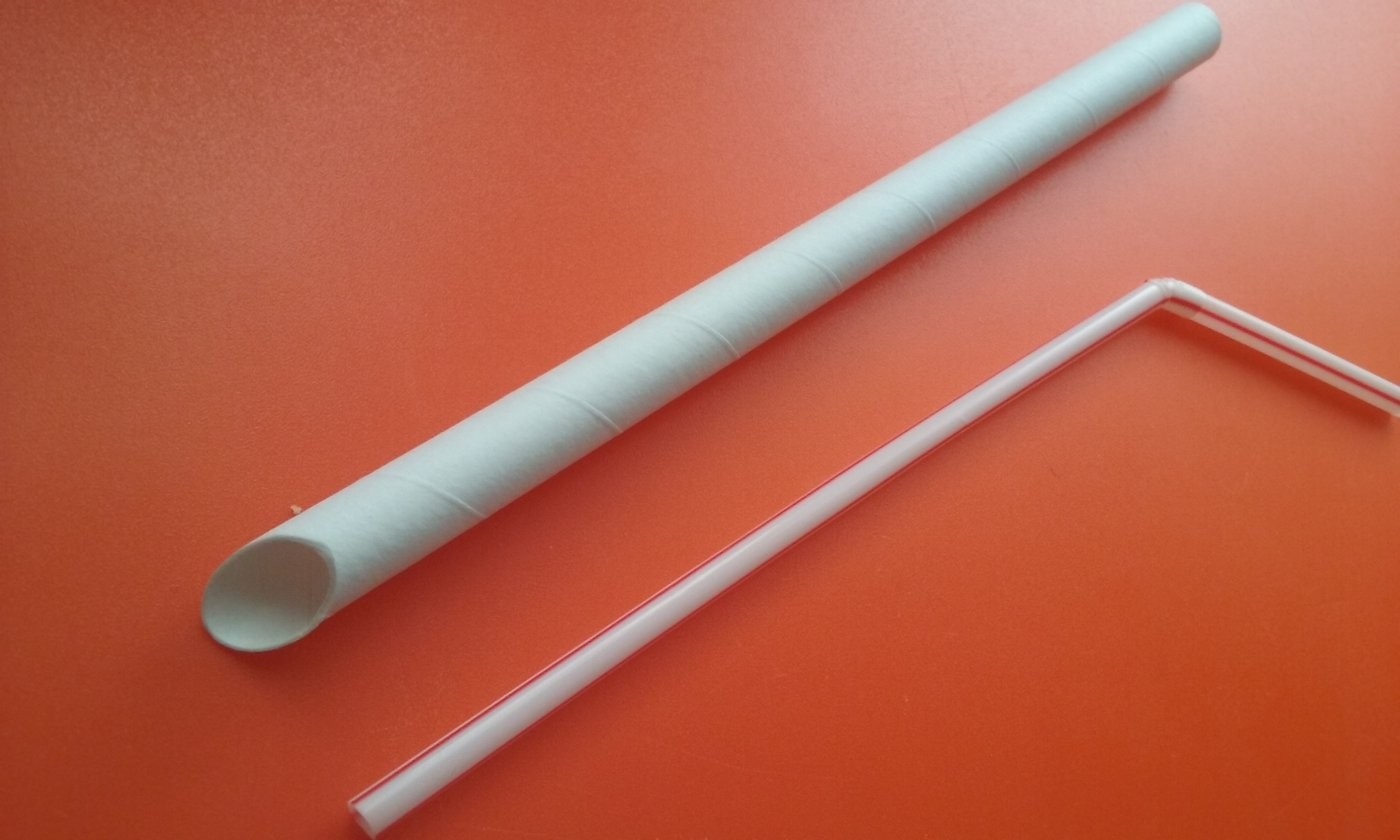
Weight is the first difference. Report figures cited by the Korean outlet News1 in January 2026 show that 1,000 straws 21 centimetres long weigh 0.72 kilograms in plastic and 1.54 kilograms in paper, more than twice as much. To survive a soak in a drink, paper needs thicker layers, adhesive and a waterproof coating, so it uses more material.
Plastic straws had the lowest impact in 10 of 16 categories
Based on Korean waste statistics, the study assumed that 73.6% of discarded straws are incinerated and 26.4% go to landfill. Under that scenario, conventional plastic straws had the lowest impact in 10 categories, including climate change, acidification, particulate matter and human toxicity. Bio-PE straws had the highest impact in 10 categories, including ozone depletion, acidification and smog. Paper straws were highest in 3 categories and biodegradable straws in 2.
Compared with plastic straws, paper straws scored 6.33 times higher on human carcinogenic impact, 2.04 times on acidification and 2.23 times on ozone depletion. Bio-PE straws scored 16.18 times higher on human carcinogenic impact and biodegradable straws 3.34 times. That carcinogenic figure is a modelled estimate of emissions from production, manufacturing and disposal, used to compare environmental burdens. It does not mean that people drinking through a paper straw face six times the cancer risk.
The results also depend on the assumptions. In a separate scenario where every straw is incinerated, paper straws had the lowest greenhouse gas emissions of the four. When the 16 categories were weighted into a single score, both scenarios produced the same ranking: plastic lowest, followed by biodegradable, then paper, with bio-PE highest.
Tiny straws are hard to pick out at recycling plants
Paper straws are often promoted as recyclable. When the research team visited sorting facilities, they found that straws of every material were almost never recycled. They are too small and thin for machines or workers to pick out, so they end up classed as non-recyclable waste and incinerated. Coatings and adhesives make paper straws even harder to recycle.
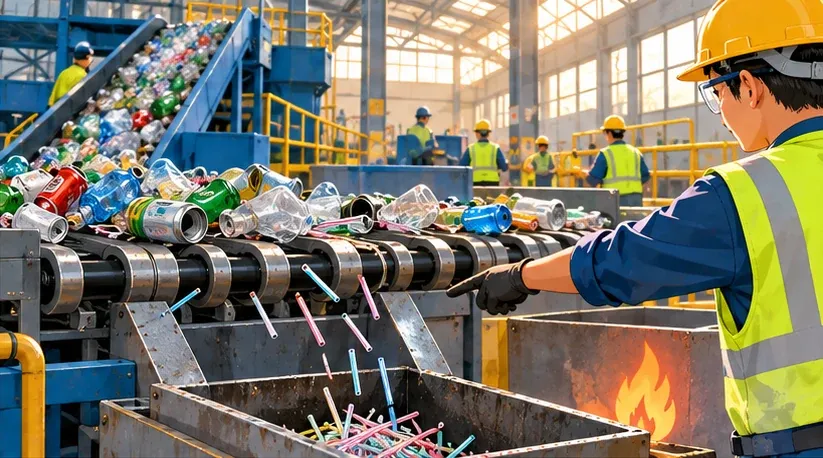
The study found that 62.1% of plastic straws were placed in recycling bags by consumers, yet they still rarely became recycled material at the sorting stage. People had already sorted them; the straws' size made it hard for the rest of the system to follow through.
South Korea shifted to giving straws only on request
South Korea restricted plastic straws in cafes and restaurants in November 2022, then indefinitely extended the grace period in November 2023 amid public complaints and doubts about effectiveness. The research team recommended that shops stop offering any kind of single-use straw by default and hand one out only when a customer asks.
That approach is already under way. On July 13, 2026, the ministry signed an agreement with 23 chains, including Starbucks, McDonald's and Paris Baguette, plus more than 150 independent cafes. About 22,000 outlets nationwide pledged to provide straws and other disposables only when customers ask at a kiosk or the counter. Public support is solid: in the report's survey of 1,001 people, 54.4% backed the request-only policy and just 18.4% opposed it. For more on Korea's wider green transition, see our article on Korea's K-GX green transformation strategy.
Taiwan began cutting plastic straws in dine-in settings in 2019
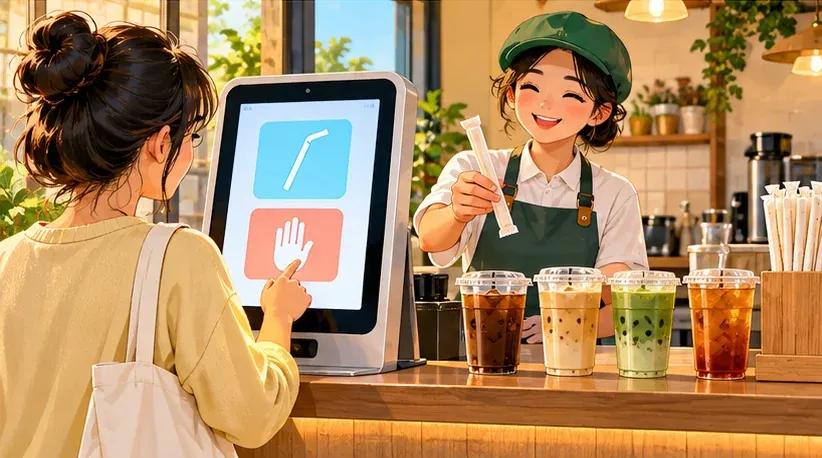
Taiwan's approach is close to what the Korean study recommends. On May 8, 2019, the Environmental Protection Administration (now the Ministry of Environment, MOENV) announced that from July 1 that year, government agencies, schools, department stores and shopping malls, and fast-food chains could not provide single-use plastic straws for dine-in customers. About 8,000 businesses were covered.
The rule started with dine-in situations where a straw is often unnecessary, helping people get used to drinking straight from the cup, while takeaway businesses were encouraged not to hand out straws unprompted. Some businesses also switched early to sip-through lids. According to MOENV, Taiwan now uses about 100 million fewer plastic straws each year than in 2019.
Taiwan's cup and bag reductions show concrete results
Beyond straws, drink cups are a far bigger stream. In April 2022 the Environmental Protection Administration announced rules on single-use cups, which took effect that July: customers bringing their own cup get at least NT$5 off, and convenience store and fast-food chains lend reusable cups. Figures released by MOENV in July 2024 show that the share of customers bringing their own cups rose from 6% to 17%, and they did so 160 million times in 2023.
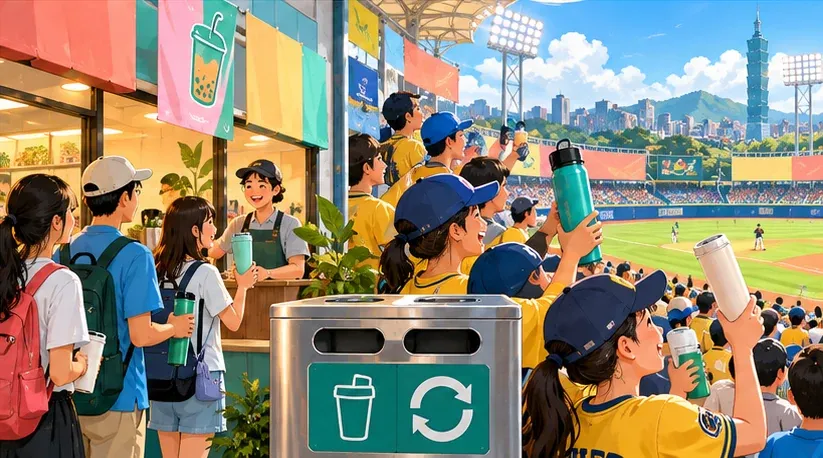
- Since September 1, 2024, drink shops across Taiwan no longer provide single-use plastic cups, and about 790 million plastic cups a year are expected to be replaced by other materials, personal cups or reusable cups.
- In 2024 about 1,500 outlets were required to lend reusable cups; 5,428 actually did, lending about 398,000 cups.
- Compared with 2020, about 460 million fewer plastic cups have been used each year since the restrictions began.
- Shopping bags have been regulated since 2002, and use in 2022 was about 10.08 billion bags lower than in 2002.
Taiwan's recycling system sends large volumes back into production
Once use is reduced, what remains has to find its way back into industry. MOENV's Resource Circulation Administration reports on its resource circulation data platform that in 2024 Taiwan's municipal waste recycling rate was 59.60%, the recycling rate for officially designated recyclables was 80.92%, and the output-side circular use rate was about 76.9%.
The Resource Circulation Administration's draft Taiwan Circular Economy Roadmap, now in public consultation, also puts the focus on using fewer resources. It sets 2050 targets of doubling resource productivity from its 2020 level and cutting material consumption to 6–7 tonnes per person, with plastics, textiles, electronics and key chemicals as priority materials.
Directions Taiwan can consider
- Extend "on request only": Taiwan has already built a habit of skipping plastic straws for dine-in. Following the Korean agreement covering more than 20,000 outlets, straws of every material and stirrers could be offered only on request, including for takeaway.
- Choose substitutes with life cycle data: Before picking alternative materials, local life cycle assessments based on Taiwan's incineration share and recycling conditions, combined with material flow data from the resource circulation platform, can give both policy and shops a data-backed basis for their choices.
- Bring reusable cups to more venues: Taiwan's reusable cups have built experience in convenience stores, ballparks and cinemas, and can keep expanding to semi-closed venues such as music festivals and sports events, making reuse even easier.
- Publish how much less is used: The source reduction website already reports results as the number of straws, cups and bags avoided each year. Keeping it updated lets people see what their daily choices add up to.
Leave a comment
Comments are reviewed before publication. Email is private and used only when contact is necessary. Privacy notice