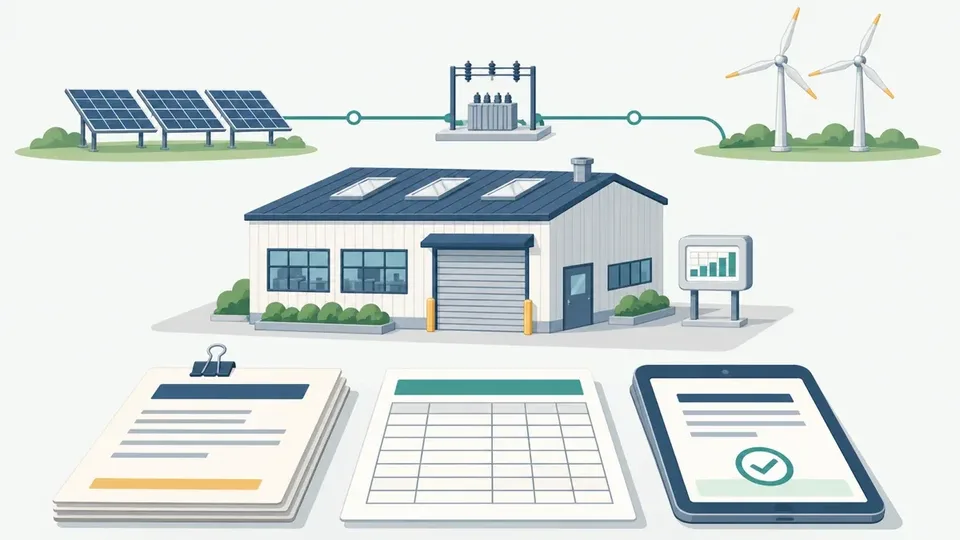
A small factory is filling out a customer’s supply-chain survey. One field asks how much renewable electricity it used this year. The purchasing team has a quote and accounting has the power bills. To fill in the number, they still need the electricity records and the certificates. First-time buyers can start by getting three things clear: what the quoted rate includes, how many kilowatt-hours will actually be credited to the factory, and when the certificates will arrive in the company account.
Check what the quoted rate includes
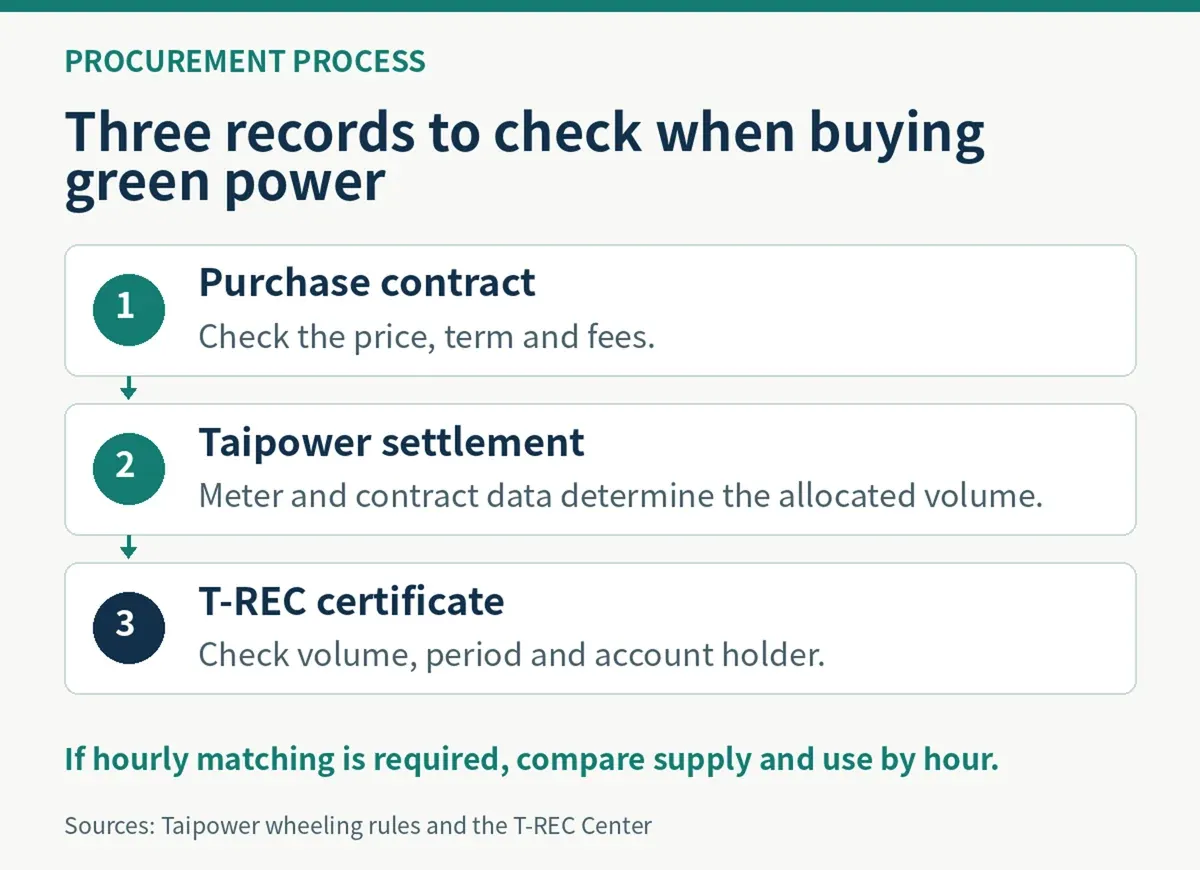
Ask the seller to itemize energy, grid delivery, certificate fees and tax. Put the contract term, available volume and treatment of unmatched electricity on the same comparison sheet. This makes it easier to see what each price per kilowatt-hour covers.
Take the Taipower offers of November 16, 2026, circulated by the Changhua County Industrial Association. The small-volume daytime option used solar power at NT$5.50 per kWh. The all-day option combined solar and wind at NT$5.80 per kWh. The application range for each was 10,000 to 1 million kWh, and both advertised prices excluded tax and grid delivery charges. These are the terms announced at the time, useful for reading a quote. Check the price, available volume and delivery period with the seller before buying.1
The Bureau of Standards, Metrology and Inspection’s 2026 Affordable Green Power Program for SMEs, whose bidding period has closed, priced electricity differently. Solar farms in Changbin supplied the program, with a five-year purchase term and a bidding floor of NT$4.30 per kWh. The floor covered electricity, project assessment and certificate review; business tax, grid delivery and certificate service fees were separate. The program charged for the volume actually matched and delivered under the wheeling arrangement. Other contracts may handle it differently.2
Put the two examples side by side and the difference is clear: NT$4.30 per kWh was the floor in an auction, while NT$5.50 per kWh was an advertised rate for a separate offer. Compare the contract and settlement terms to see what each would actually cost.1, 2
Check how much electricity was credited after signing
A business can arrange a purchase with a renewable generator or ask a renewable electricity retailer to assemble a supply offer that fits its pattern of use. With grid delivery, also known as wheeling, the generator and factory use the existing grid. Taipower checks the meter readings on both ends and applies the contract and its rules to assign a volume to the factory’s electricity account. This is called matching. Under the general wheeling rules, Taipower first matches generation and use based on 15-minute readings. It then uses eligible surplus for a second pass within the same billing cycle and time-of-use tariff category. The settlement record tells the buyer how much of the contracted volume was actually credited.3, 4
This matters at factories that run a night shift. When a quote says “all-day,” look at its mix of sources and ask the seller to run the offer against the factory’s existing load profile. That gives the buyer an estimate for night-shift coverage. If a customer asks for hourly matching, obtain the corresponding usage and supply records and check them against the customer’s reporting criteria. A monthly bill and the all-day label alone cannot establish a match hour by hour.1, 3
Match certificates to the same reporting period
When it is time to report, compare the wheeling settlement with the certificates on Taiwan’s National Renewable Energy Certification Center platform (T-REC). When electricity and certificates are purchased together through a wheeling arrangement, their volumes should agree. The company can check receipt in its T-REC account and register its use or claim afterward as required. Since January 22, 2026, T-REC has used monthly settlement and can issue fractional certificates for amounts below 1,000 kWh. That makes it easier to align certificates with the reporting period. Electricity offers can still have their own purchase minimums.4, 5
Before a first purchase:
- Gather the records. Pull together each site’s electricity account number, a year of bills and any available load profile. Ask the seller to check each account’s offer and wheeling eligibility.
- Confirm settlement terms. Get the treatment of unmatched volumes in writing. If the site is leased, establish whether electricity use can be apportioned and who needs to consent.
- Confirm certificate delivery. Specify which account will receive the certificates, when they will be visible and who pays the related fees.
In the 2026 Affordable Green Power Program, tenants using an allocation needed the electricity account holder’s consent, the lease, proof of consumption and an agreed allocation method.2, 4
The next time the customer asks, accounting can pull the bills, the plant team can find the wheeling records, and the person filling out the survey can reconcile the certificates for the same period. At renewal, those records help show how much the contract delivered, which shifts still need coverage, and what the extra spending bought.
Related reading (Traditional Chinese): Floating Solar in Taiwan: Clean Power and Shared Waters
The SME renewable power program launch, October 7, 2025. Photo: Bureau of Standards, Metrology and Inspection, Taiwan; Government Open Data License 1.0.6
Sources (6)
Sources
- Changhua County Industrial Association: Taipower’s November 16, 2026, small-volume and supplemental renewable electricity offers (date, energy mix, application volumes and excluded charges).
- Ministry of Economic Affairs: 2026 Affordable Green Power Program for SMEs, sales Q&A (Q9–11 and Q24–27: term, tenants, bidding floor and charges); program sales plan (Changbin supply).
- Taipower: Operational Rules for Wheeling and Grid-connected Direct Supply (revision of March 18, 2024, sections 3 and 13: grid, metering and fees).
- Bureau of Standards, Metrology and Inspection: Procedures for Applying for and Managing Renewable Energy Certificates (sections 5, 6, 9 and 10: recording electricity volumes, issuance, transfer and use registration).
- T-REC: Fractional Certificates and Monthly Electricity Settlement (effective January 22, 2026).
- BSMI: 2025 program launch and press photo · BSMI reuse terms
Leave a comment
Comments are reviewed before publication. Email is private and used only when contact is necessary. Privacy notice