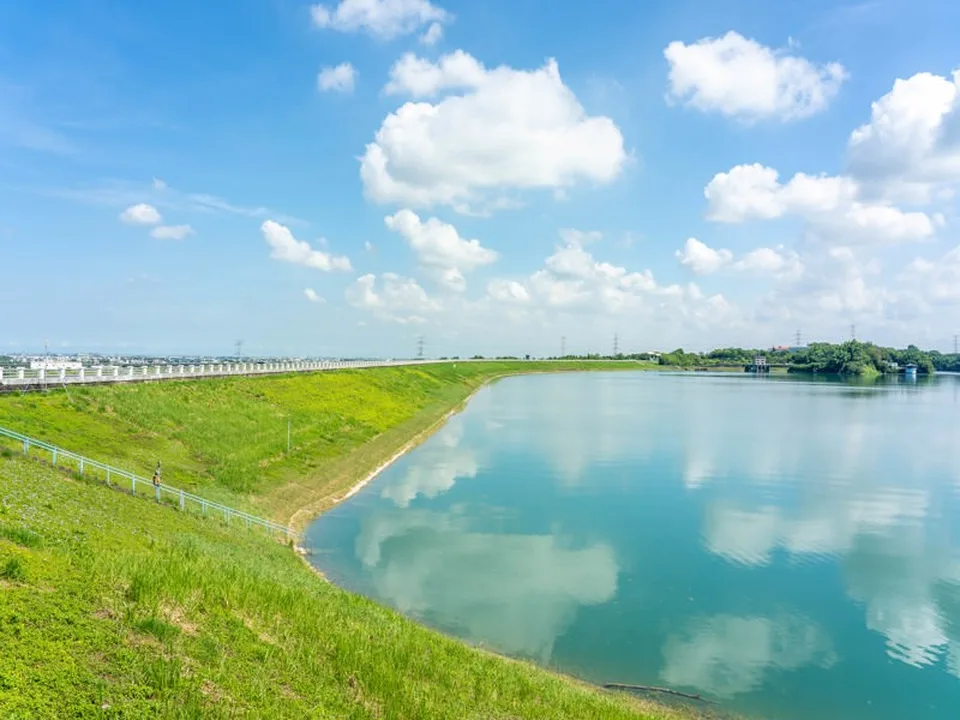
Taiwan’s chip fabs and data centers need more clean electricity, but good places to build solar are limited. Rooftops and suitable land still matter. As Taichung’s rooftop study shows, even a roof with ample space can lose part of it to shade. Some reservoirs and fishponds give Taiwan another place to look, provided they can keep doing the jobs they already do.[2, 3]
In 2019, Google announced its first renewable power purchase agreement in Taiwan. The long-term deal covers a 10 MW array within a larger Tainan solar farm and is meant to supply Google’s Taiwan data centers. The panels stand on raised supports, leaving room for fish farming below. That arrangement shows why the choice is sometimes about how to build, rather than how to find an empty site.[1]
Large floating solar projects already operate on reservoirs
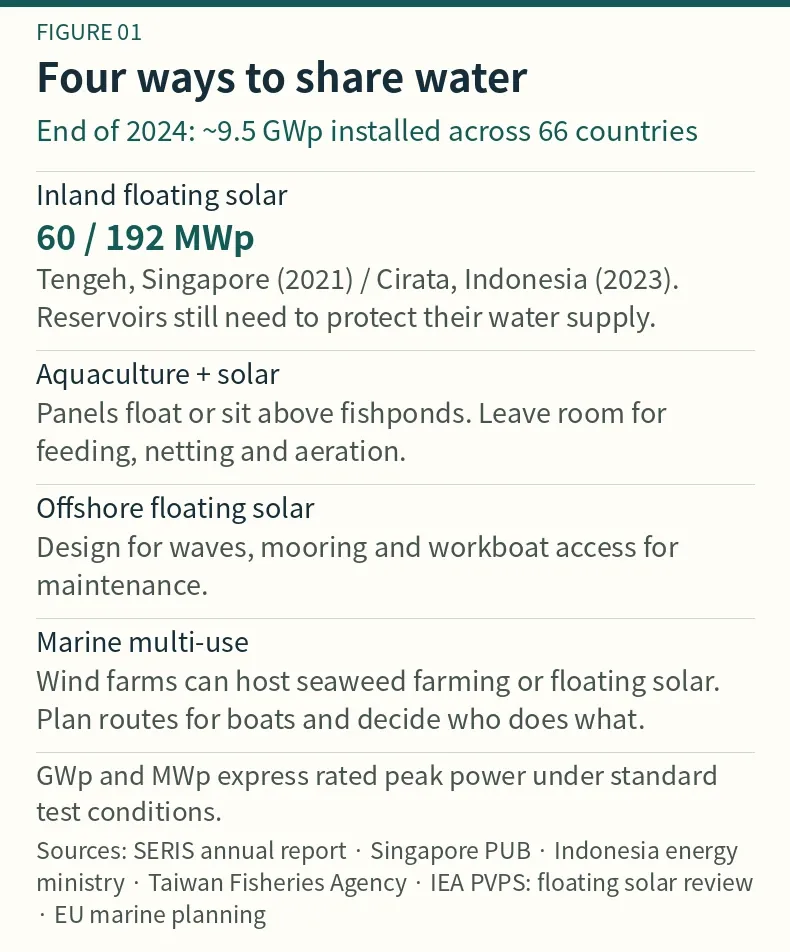
By the end of 2024, 66 countries had installed around 9.5 gigawatts of floating solar capacity, according to the Solar Energy Research Institute of Singapore. The figure is 9.5 GWp: rated peak capacity under standard test conditions. How much electricity those panels deliver over a year depends on sunlight and operating conditions. Singapore opened its 60 MWp Tengeh project in 2021, and Indonesia followed with its 192 MWp Cirata plant in 2023.[8, 9, 10]
Those two projects float on inland reservoirs. A working fishpond calls for a different design: farmers need space to feed and harvest whether the panels float or, as in Tainan, stand above the water. Offshore floating solar faces wind and waves, with moorings, subsea cables and access for maintenance among the first things to work out. Most offshore projects are still demonstrations.[11, 12, 13]
There is also a wider question offshore: how can different activities share the same sea? A wind farm might have room for a floating solar platform or for seaweed cultivation. Marine multi-use is the planning of that shared space, from boat routes to who maintains each installation. It can involve solar, aquaculture or both, depending on the site.[14, 15]
Factories need power after the sun goes down
TSMC’s Taiwan sites and VisEra used 2.98 TWh of renewable electricity in 2025, or 11.5% of their electricity use. TSMC’s separate target of 60% by 2030 applies to its global operations. The company’s procurement includes rooftop solar and offshore wind.[16]
Those figures count electricity over a year. A fab or a server hall needs it around the clock. More solar helps meet daytime demand. Meeting demand after dark takes a mix of resources, including wind, storage and a grid that can move power where it is needed. That is why the hours a project can deliver matter alongside the annual total.[17, 18]
At reservoirs, the first job is to supply water
Wushantou Reservoir supplies water for Tainan’s public system and farms along the Chianan Canal. At Feitsui Reservoir, the management authority says its water-source protection rules prohibit panels on the reservoir. The Water Resources Agency says its 2022–2024 letters asked agencies to inventory possible solar sites on roofs, land and water. The agency says it neither planned nor required an installation at Feitsui.[4, 5, 6]
On November 20, 2026, the Legislative Yuan advanced a Kuomintang caucus proposal directly to second reading and referred it to cross-party talks. The proposal calls for removing existing panels from reservoirs that supply households or farms, and barring new solar facilities on reservoirs that provide public water or serve as backup sources for public water supply. Sending the proposal to negotiations did not put a ban in place.[7]
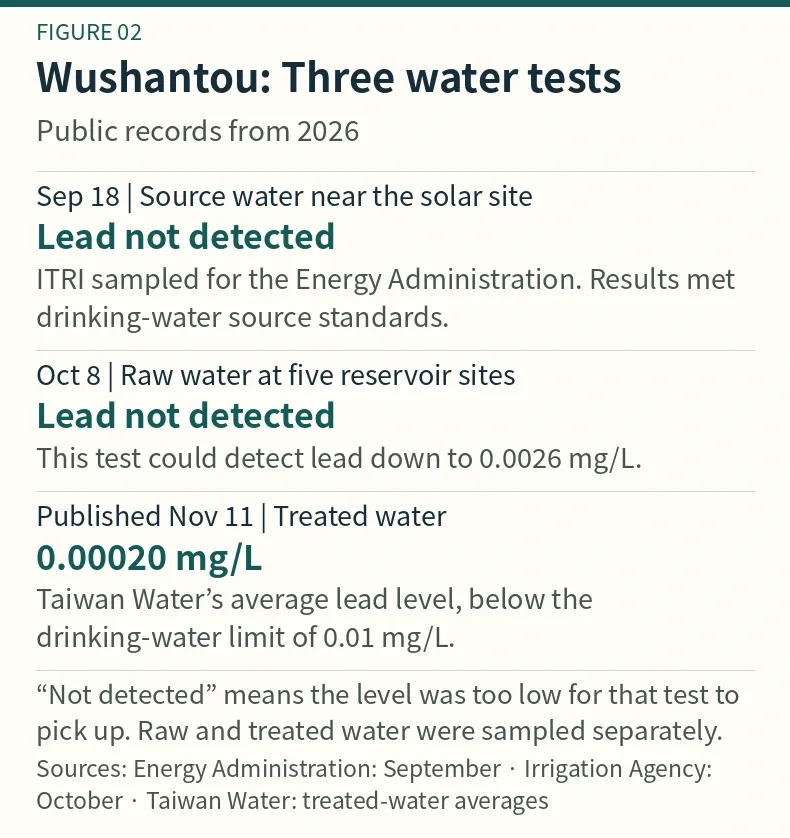
In September, the Industrial Technology Research Institute sampled untreated water near the solar site for the Energy Administration. The agency reported that the September 18 samples met the standard for drinking-water sources and that lead was not detected.[21]
At Wushantou, Taiwan’s Irrigation Agency collected untreated water at five reservoir sites on October 8, 2026. None of the samples had detectable lead. The test’s detection limit was 0.0026 mg/L. Below that limit the lab reports “not detected” rather than a concentration of zero. On November 11, Taiwan Water published a separate average lead concentration in treated water: 0.00020 mg/L, below the drinking-water limit of 0.01 mg/L. These were separate sets of samples, so the results cannot show how treatment changed the same water.[19, 20]
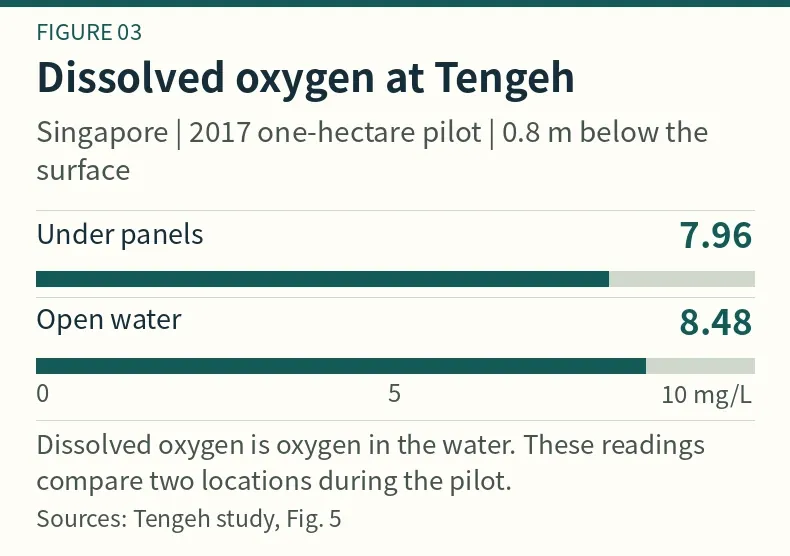
Lead is one measure. The oxygen dissolved in the water matters to fish and other aquatic life. At Singapore’s Tengeh Reservoir, researchers used sensors at 0.8 m below the surface, one beneath a one-hectare solar pilot and one in open water. The sensor under the array was in place from June 21 to July 12, 2017, while the open-water sensor was already recording. The study reports 7.96 mg/L under the panels and 8.48 mg/L in open water. The figures compare two sites during the trial; to find out what changed after installation, add measurements from those same sites before the panels go in.[22]
Sources:[22]
Wushantou’s October report already gives the sampling date and locations, including the reservoir inlet upstream of the solar site and the outlet downstream. Future reports could add the sampling time and depth and say who follows up if a reading is unusual. For a new project, mark three areas before work begins: beneath the planned array, along its edge and in open water. Go back to the same places after installation and use the same methods at comparable times and depths.[19]
At a fishpond, look at the harvest and the oxygen
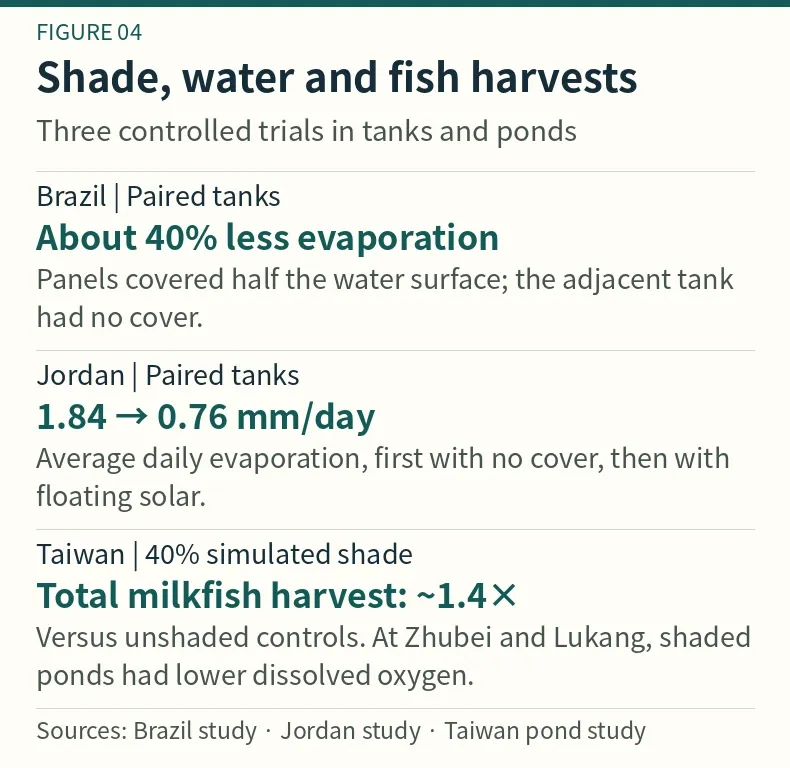
Shade can slow evaporation. In Brazil, a tank with panels covering half the surface lost about 40% less water to evaporation on average than the uncovered tank beside it. A Jordanian study measured 1.84 mm a day without panels and 0.76 mm with them. Both were tank experiments. The results tell us what happened under those test conditions, rather than how much water an entire reservoir would save.[23, 24]
The question changes when the water is someone’s livelihood. A Taiwanese research team imitated the shade cast by floating panels by covering 40% of the pond surface at three trial sites. In the milkfish comparison, the shaded pond yielded about 1.4 times the total harvest of its unshaded counterpart, with no clear difference in individual growth. At Zhubei and Lukang, the shaded ponds also had lower dissolved oxygen than their controls. When farmers and developers draw up a layout, they need to leave room for feeding, pulling in nets and running paddlewheel aerators when oxygen drops.[25, 11]
Offshore, leave a route for the workboats
The same layout question picks up where the pond ends. Farmers need a stretch of water clear enough to draw in a net. Offshore, a skipper needs room to bring a workboat alongside a platform and a technician needs a safe place to step across. Moorings and cables have to fit around those routes. If turbines or aquaculture gear share the site, put their service routes on the same chart.[12, 13, 15]
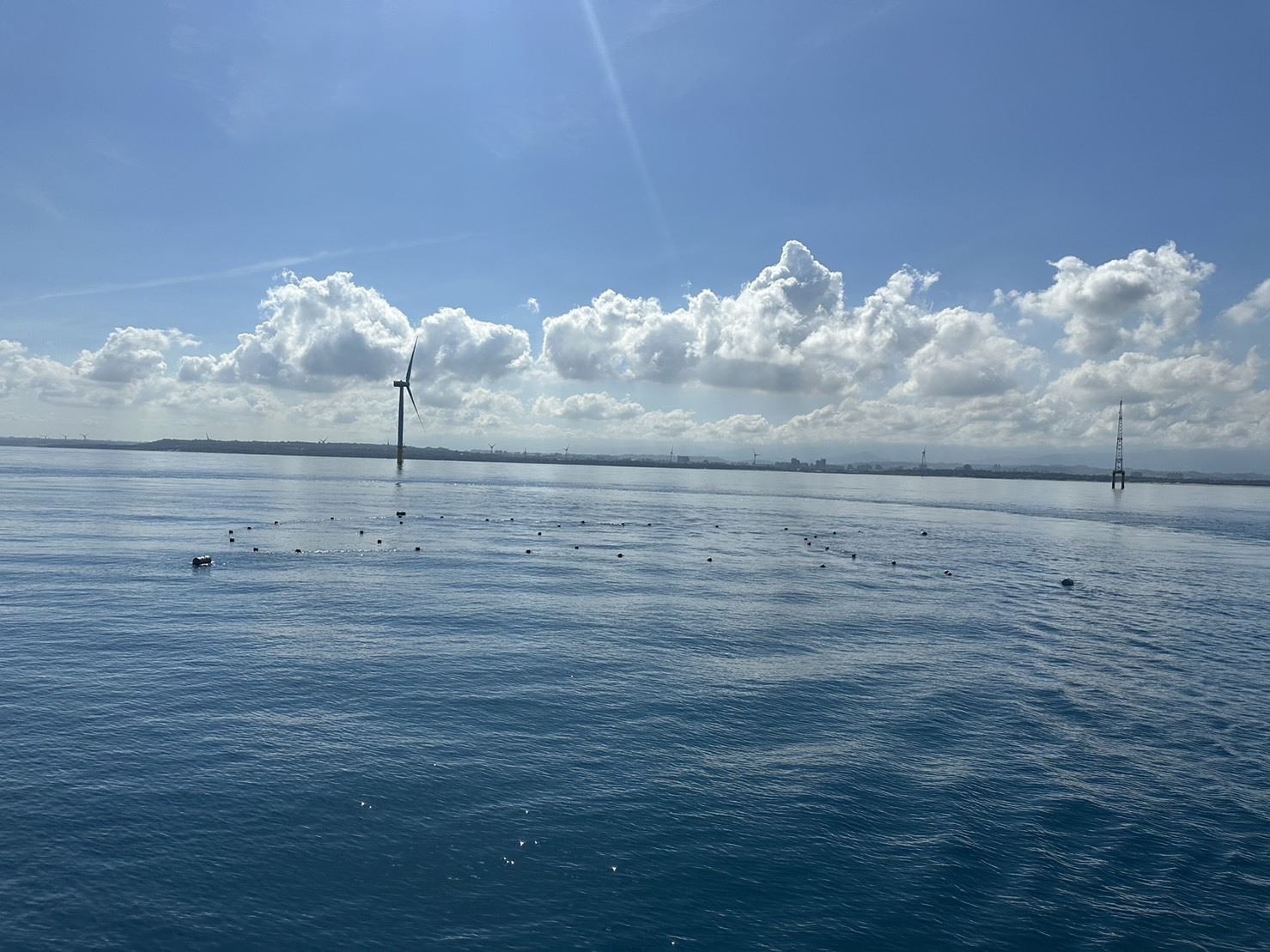
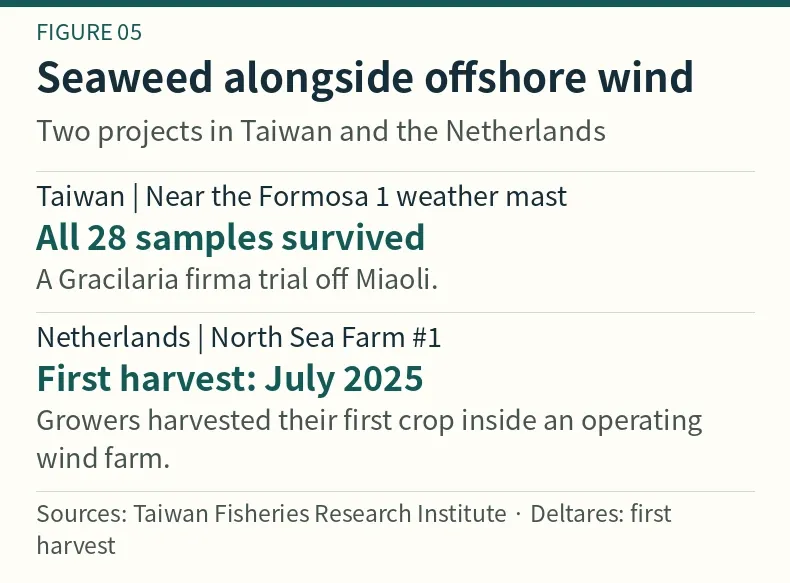
Seaweed farming shows what that looks like in practice. Taiwan’s Fisheries Research Institute reported that all 28 samples of Gracilaria firma survived in a trial near the Formosa 1 weather mast off Miaoli. At North Sea Farm #1, a crew working between Dutch offshore wind turbines brought in a first harvest from nets anchored to the seabed, announced in July 2025. These examples pair wind-energy sites with aquaculture. What they offer floating solar developers is experience with sharing offshore space.[26, 27]
What Taiwan should ask before choosing a site
A water site is worth developing when it can supply useful power and leave the people who depend on the water able to do their jobs. Bring water suppliers, farmers or offshore crews into the design early, alongside developers, grid operators and power buyers. On the power side, ask how much the project will deliver, when it will deliver it and where it can connect. On the water side, agree on the sampling plan, the conditions the project needs to maintain and how results will be published.[29]
Over time, comparable records from before and after installation can show where water-based solar works and where a roof or another site makes more sense. That would give fabs and data centers more credible power options while keeping the water reliable for homes, farms and the people who work at sea.
Sources (29)
Sources
- Google (2019), “Let the sunshine in: opening the market for more renewable energy in Asia” · Google Taiwan power purchase announcement
- Taiwan’s 2030 Energy Transition White Paper
- Taichung rooftop solar case study, in Chinese
- Taiwan Water Resources Agency, Wushantou Reservoir profile
- Taiwan Water Resources Agency, statement on the absence of a floating-solar plan or installation requirement at Feitsui Reservoir
- Taipei Feitsui Reservoir Administration, statement on rules for solar installations at Feitsui Reservoir
- Legislative Yuan, Kuomintang caucus draft resolution and its referral to caucus negotiations (November 20, 2026)
- SERIS 2025 Annual Report, p. 57
- Singapore’s national water agency, PUB (2021), opening of the 60 MWp Sembcorp Tengeh Floating Solar Farm
- Indonesia’s Ministry of Energy and Mineral Resources (2023), Cirata Floating Solar Plant commissioning
- Taiwan Fisheries Agency guidance
- IEA PVPS floating solar review
- EU maritime spatial planning: offshore energy co-location
- EU marine multi-use case studies
- Offshore energy and aquaculture
- TSMC 2025 Sustainability Report, p. 99
- IEA, Energy and AI
- notes on local and hourly renewable procurement, in Chinese
- Taiwan Irrigation Agency, Wushantou Reservoir five-site water-quality results (October 8, 2026)
- Taiwan Water Corporation, Wushantou Treatment Plant average water quality (published November 11, 2026)
- Taiwan Energy Administration, Wushantou solar-site area source-water results (September 18, 2026 sampling)
- Yang et al. (2022), “Impacts of a floating photovoltaic system on temperature and water quality in a shallow tropical reservoir,” Figure 5
- Freitas et al. (2026), “Floating Photovoltaic Systems in Urban Areas: Insights on the Thermoelectric Behavior and Water Evaporation Reduction”
- Abdelal (2021), controlled comparison of evaporation in outdoor floating-solar test tanks in Jordan
- Wang et al. (2022), “Effects of floating photovoltaic systems on water quality of aquaculture ponds”
- Taiwan Fisheries Research Institute (2023), experimental seaweed cultivation near the Formosa 1 weather mast
- Deltares (2025), “Pioneering seaweed harvest in the North Sea”
- Taiwan Fisheries Research Institute, open-data declaration (license for the experimental seaweed farm photograph)
- AI power demand, grid resilience and storage, in Chinese
Leave a comment
Comments are reviewed before publication. Email is private and used only when contact is necessary. Privacy notice