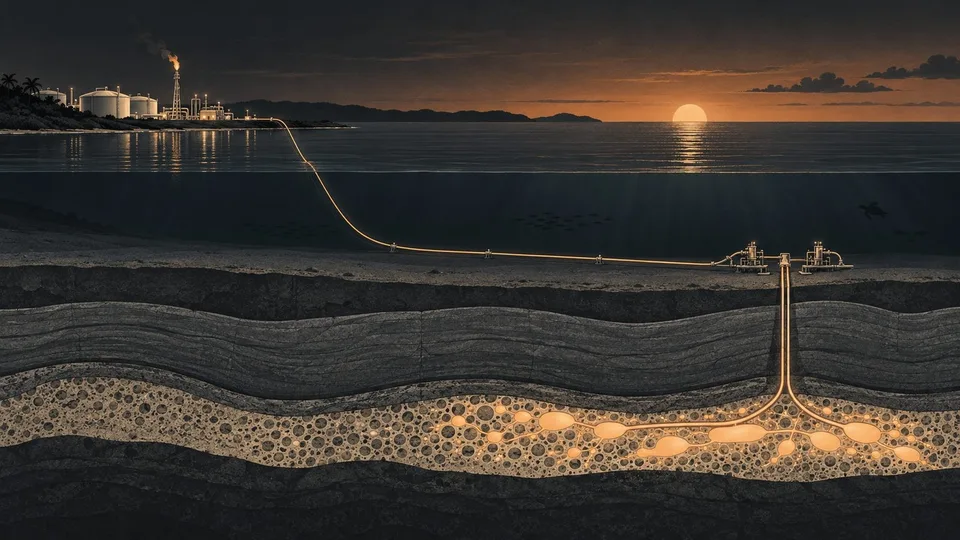
On 16 October 2026 the Australian Government declared the West Peron formation, off the Northern Territory, an identified greenhouse gas storage formation. The formation belongs to the Bonaparte carbon capture and storage (CCS) project led by Japan's INPEX. INPEX plans to permanently store up to 443 million tonnes of carbon dioxide (CO₂) in this formation beneath the seabed over a period of up to 35 years.
INPEX said this is the first declaration of its kind in Australia for an offshore saline aquifer storage site. Madeleine King, Minister for Resources and Northern Australia, called the declaration an important first step for the Bonaparte project.
The declaration and the joint venture partners
The Bonaparte CCS joint venture is made up of:
- INPEX Browse E&P, an INPEX subsidiary: 53%, operator.
- TotalEnergies CCS Australia: 26%.
- Woodside Energy: 21%.
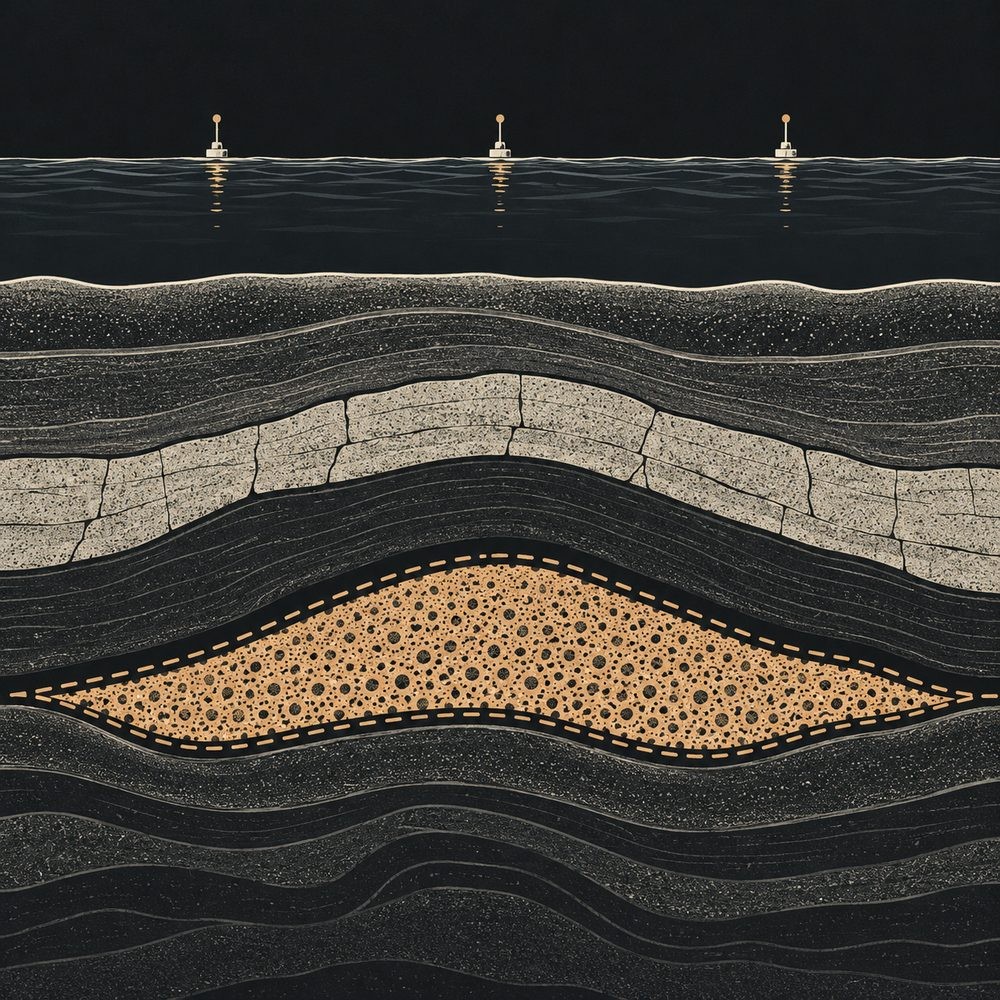
The partners were awarded greenhouse gas assessment permit G-7-AP in 2022. It lies in the Petrel Sub-basin of the Bonaparte Basin, in the Joseph Bonaparte Gulf, about 260 km from Darwin. According to INPEX's referral report to the Northern Territory Environment Protection Authority, the storage formation sits about 2,000 m below the seabed.
INPEX said the declaration establishes the technical viability of the site the joint venture has assessed for greenhouse gas injection and storage. Reuters and Offshore Engineer both reported that INPEX plans to inject up to 443 million tonnes of CO₂ into the West Peron formation over a period of up to 35 years.
Where the declaration sits in the permitting process
The declaration is made under Australia's Offshore Petroleum and Greenhouse Gas Storage Act 2006 (OPGGS Act). According to the National Offshore Petroleum Titles Administrator (NOPTA), offshore storage rights in Australia move through several stages:
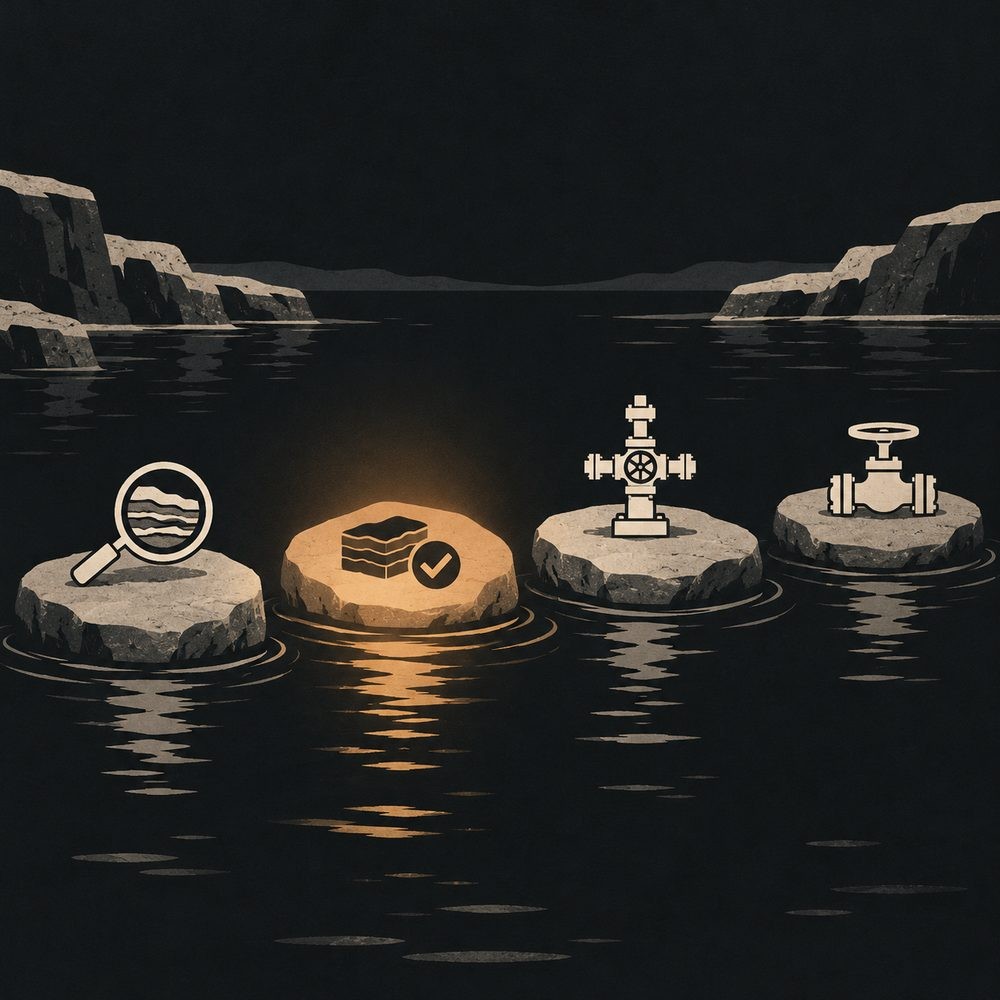
- Assessment permit: explore the permit area for potential storage formations and injection sites.
- Declaration of an identified storage formation: the minister confirms that the formation can permanently store a particular amount of CO₂, injected over a particular period at particular injection points, with a suitable seal. The declaration sets out the formation's spatial extent, the maximum volume and the maximum injection period.
- Holding lease or injection licence: a declaration is required before either can be applied for. An injection licence also needs a site plan, and the holder's financial and technical capacity is assessed at that point.
- Site closing certificate: applied for after injection stops permanently.
NOPTA states that a declaration is not a title and does not give the titleholder the right to inject or store CO₂. The Bonaparte joint venture still has technical, environmental, regulatory and commercial work to do, and INPEX said first injection depends on regulatory approvals and commercial agreements.
Project timeline and scale
In 2025 Bonaparte received Major Project Status from the Australian Government; INPEX said it was the first offshore CCS project in Australia to do so. Pre-front-end engineering and design (pre-FEED) began in April 2025, with first CO₂ injection targeted for the early 2030s.
According to INPEX's referral report, the facilities would be built in phases:
- The first phase can transport and store up to 8 million tonnes of CO₂ a year.
- Later phases would raise capacity to about 10 million tonnes a year.
- The facilities have a design life of about 30 years.
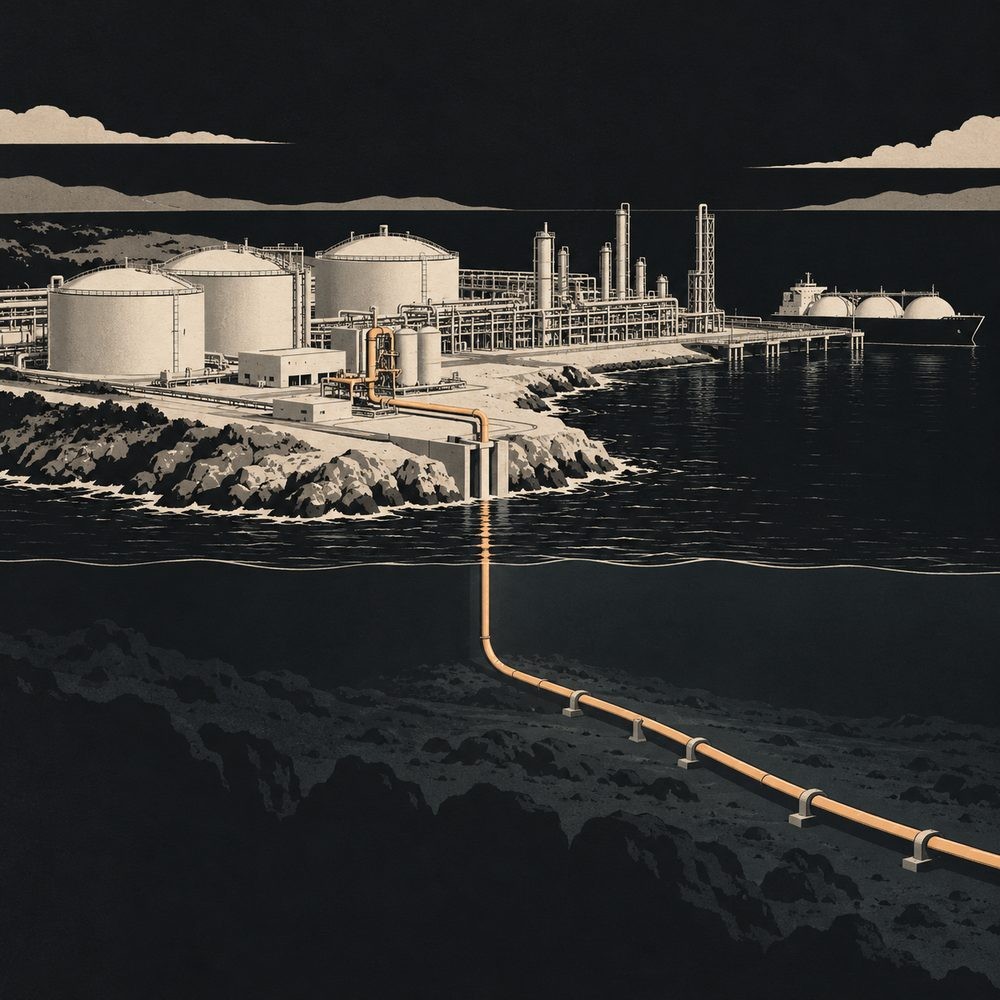
- CO₂ would be collected at an onshore inlet station on Darwin's Middle Arm Peninsula and sent to the injection wells through a subsea pipeline of about 260 km, up to 22 inches in diameter.
CO₂ mainly from Ichthys LNG at first
INPEX said the Ichthys LNG joint venture is expected to be the project's anchor customer, and the project could cut CO₂ emissions from Ichthys LNG by around 40%. INPEX's project overview states that Ichthys LNG has a production capacity of 9.3 million tonnes of LNG a year and supplies about 10% of Japan's LNG imports. The first CO₂ to be stored is the reservoir CO₂ separated from natural gas at the Ichthys onshore facility; the project also plans to take CO₂ from other industrial facilities in the region.
A joint study on shipping Japanese CO₂ to Australia
In October 2024 INPEX Browse E&P and Chubu Electric Power signed an agreement to study the feasibility of shipping CO₂ from the Port of Nagoya to the Bonaparte Basin for storage. In October 2025 they signed a new agreement to study the best way to transport the CO₂ and a schedule that reflects the legal systems of both Japan and Australia. The study is still at the feasibility stage, and neither company has announced volumes or a start date.
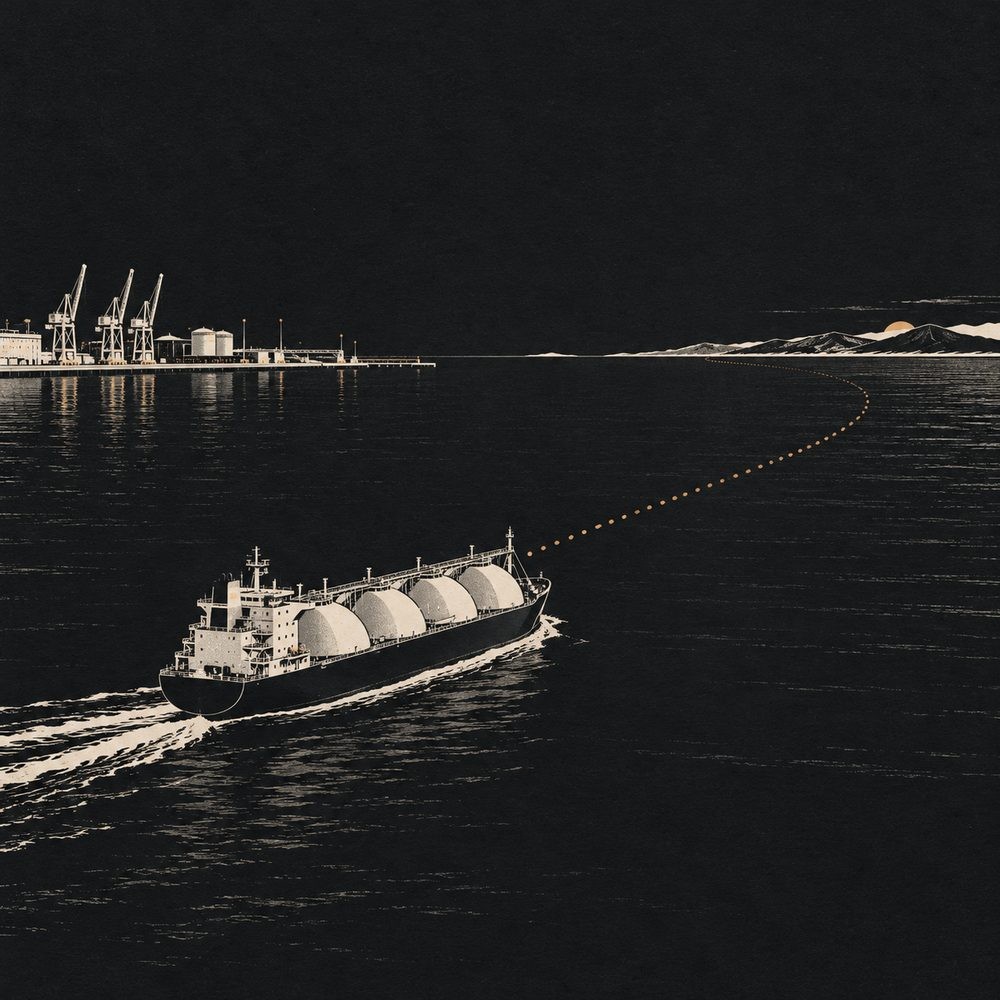
Moving CO₂ across borders for sub-seabed storage requires an agreement between the countries involved; our article on Germany's cross-border CO₂ storage summarises the London Protocol rules. For demand and costs of cross-border transport in Asia-Pacific, see offshore energy and CO₂ transport.
Possible directions for Taiwan
- Geological data for offshore storage: Taiwan's 2023 key strategic action plan on carbon capture, utilization and storage says the sea area off western Taiwan has the most storage potential, but that the geological exploration, marine engineering and monitoring capabilities needed for deep offshore saline aquifers still need to be built up. The Bonaparte joint venture took about four years from its 2022 assessment permit to this declaration, with work including two appraisal wells, new 3D seismic and post-well analysis. That is a useful reference for planning offshore saline aquifer exploration.
- Separate geological confirmation from injection approval: in Australia the minister first declares a formation's maximum volume and injection period, and the operator then applies for an injection licence. The Regulations for the Management of Carbon Dioxide Capture and Storage, issued by Taiwan's Ministry of Environment on 25 August 2026, require exploration, then an environmental impact assessment, then a storage application whose implementation plan states the target volume and storage period. For future offshore sites, Taiwan could treat confirmation of the formation as a separate step, so operators know the site's limits before making large investments.
- Secure a stable anchor source early: Bonaparte starts with Ichthys LNG and then plans to take other emitters. According to the Liberty Times, Taiwan's Tiechenshan storage trial was still looking for CO₂ sources after approval. Large storage sites can line up major emitters at the planning stage.
- Clarify the legal conditions for cross-border transport: Taiwan's storage regulations require stored CO₂ to be captured in Taiwan, except for approved trial projects of up to 4,000 tonnes. If Taiwan assesses sending CO₂ abroad for storage, it could follow the Chubu–INPEX approach of studying shipping methods and both countries' legal systems together, and take stock of the port liquefaction, storage and loading facilities that would be needed. Taiwan's current storage trials are covered in Taiwan's Carbon Capture and Storage Experiments.
Sources
- INPEX, "Bonaparte CCS Project Achieves Greenhouse Gas Storage Milestone", 2026-10-16: https://www.inpex.com/english/news/upload/20261016.pdf
- INPEX (Japanese), "ボナパルトCCSプロジェクト 温室効果ガス貯留マイルストーンの達成について", 2026-10-16: https://www.inpex.com/news/2026/20261016.html
- The Hon Madeleine King MP, "Major milestone for Bonaparte carbon storage project", 2026-10-16: https://www.minister.industry.gov.au/king/media
- Reuters (via Mining Weekly), "Australia names offshore site for Inpex-led Bonaparte carbon storage project", 2026-10-16: https://www.miningweekly.com/article/australia-names-offshore-site-for-inpex-led-bonaparte-carbon-storage-project-2026-10-16
- Offshore Engineer, "Inpex-Led Bonaparte CCS Project Gets Australian Offshore Storage Approval", 2026-10-16: https://www.oedigital.com/news/543732-inpex-led-bonaparte-ccs-project-gets-australian-offshore-storage-approval
- NOPTA, Declaration of an identified greenhouse gas storage formation: https://www.nopta.gov.au/application-processes/greenhouse-gas/ghg-register-dosf.html
- NOPTA, Greenhouse gas storage titles: https://www.nopta.gov.au/legislation-and-compliance/legislative-overview/greenhouse-gas-storage-titles.html
- INPEX, Bonaparte CCS Project Referral Report (NT EPA), 2025-10-17: https://ntepa.nt.gov.au/__data/assets/pdf_file/0008/1586141/attachment-a2-referral-report-bonaparte-carbon-capture-and-storage-project.pdf
- INPEX, Bonaparte Carbon Capture and Storage project overview, August 2025: https://www.inpex.com.au/media/xsiiv1gk/bonaparte-ccs-august-2025.pdf
- Chubu Electric Power, agreement on a joint study with INPEX (Japanese), 2024-10-21: https://www.chuden.co.jp/publicity/press/1214742_3273.html
- Chubu Electric Power, agreement to deepen the joint study with INPEX (Japanese), 2025-10-17: https://www.chuden.co.jp/publicity/press/1216895_3273.html
- National Science and Technology Council, Ministry of Economic Affairs and Environmental Protection Administration, Taiwan 2050 Net-Zero Transition key strategic action plan on CCUS (in Chinese), April 2023: https://www.ey.gov.tw/File/EF63415FAC210FF2?A=C
- National Council for Sustainable Development (Ministry of Environment release, in Chinese), Regulations for the Management of Carbon Dioxide Capture and Storage, 2026-08-25: https://ncsd.ndc.gov.tw/Fore/News_detail/fe0e5586-be90-4b67-a2b1-365f7717c541
- Liberty Times (in Chinese), on CPC's Tiechenshan storage project and CO₂ sources: https://ec.ltn.com.tw/article/breakingnews/5600673
Leave a comment
Comments are reviewed before publication. Email is private and used only when contact is necessary. Privacy notice