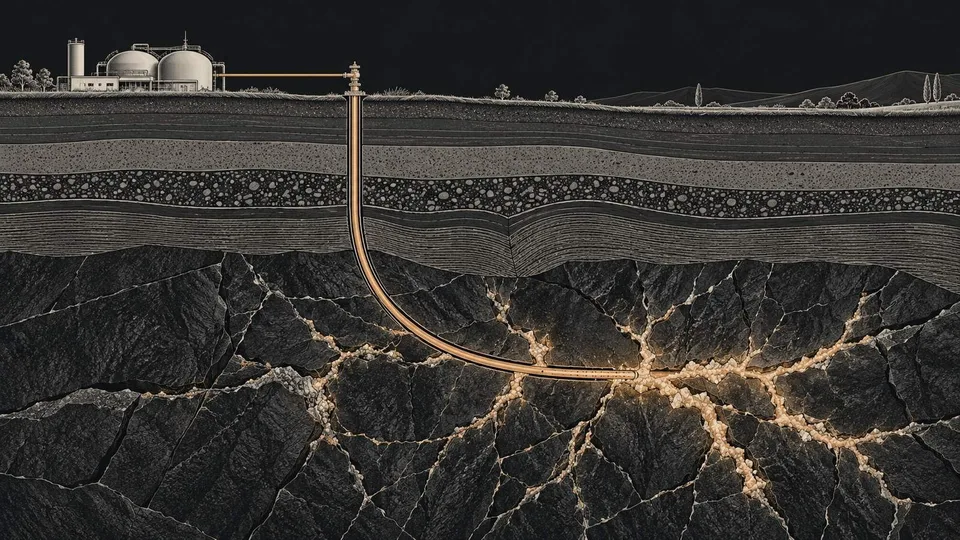
Buyers in the carbon removal purchasing group Frontier have signed Frontier's first in-situ mineralization (ISM) offtake with 44.01, paying US$11.7 million for 20,932 tonnes of carbon dioxide (CO₂) removal to be delivered between 2028 and 2031. 44.01 dissolves CO₂ in water and injects it into peridotite about 1,000 metres underground, where the CO₂ turns into solid carbonate minerals within one to three years. Frontier announced the deal on October 15, 44.01 issued a press release the same day, and ESG Dive reported it on October 16.
Key terms
- Carbon dioxide removal (CDR): taking CO₂ out of the atmosphere and storing it for the long term. This project uses biogenic CO₂ separated during biogas upgrading at a wastewater treatment plant.
- In-situ mineralization: CO₂ reacts with minerals in the rock where it is injected and forms stable carbonates, a form of mineral storage.
- Peridotite: a rock rich in magnesium silicate minerals that reacts readily with CO₂ dissolved in water.
- Offtake: the buyer commits in advance to purchase a set volume of future removals, and the supplier delivers under the contract.
The deal
- Buyers: Frontier founding members Stripe, Google and Shopify, and members Autodesk, H&M Group and Workday. Aledade, Canva, SKIMS, Zendesk, Wise, Skyscanner and Match Group took part through Watershed's partnership with Frontier.
- Value and volume: US$11.7 million for 20,932 tonnes, delivered 2028–2031. That works out to about US$559 per tonne; Frontier says the price covers CO₂ capture, mineralization, and the measurement, reporting and verification (MRV) that each tonne is stored safely and permanently.
- Firsts: it is Frontier's first ISM purchase, and 44.01 says it is also Frontier's first carbon removal purchase in the Middle East. ESG Dive, citing Frontier's portfolio, says it is only Frontier's second offtake this year apart from marine CDR research funding.
- Background: Stripe and Shopify pre-purchased from 44.01 in 2022; this deal moves the relationship from early support to commercial-scale deployment. 44.01 is based in London, and its mineralization site is in Fujairah, UAE.
How in-situ mineralization turns CO₂ into rock
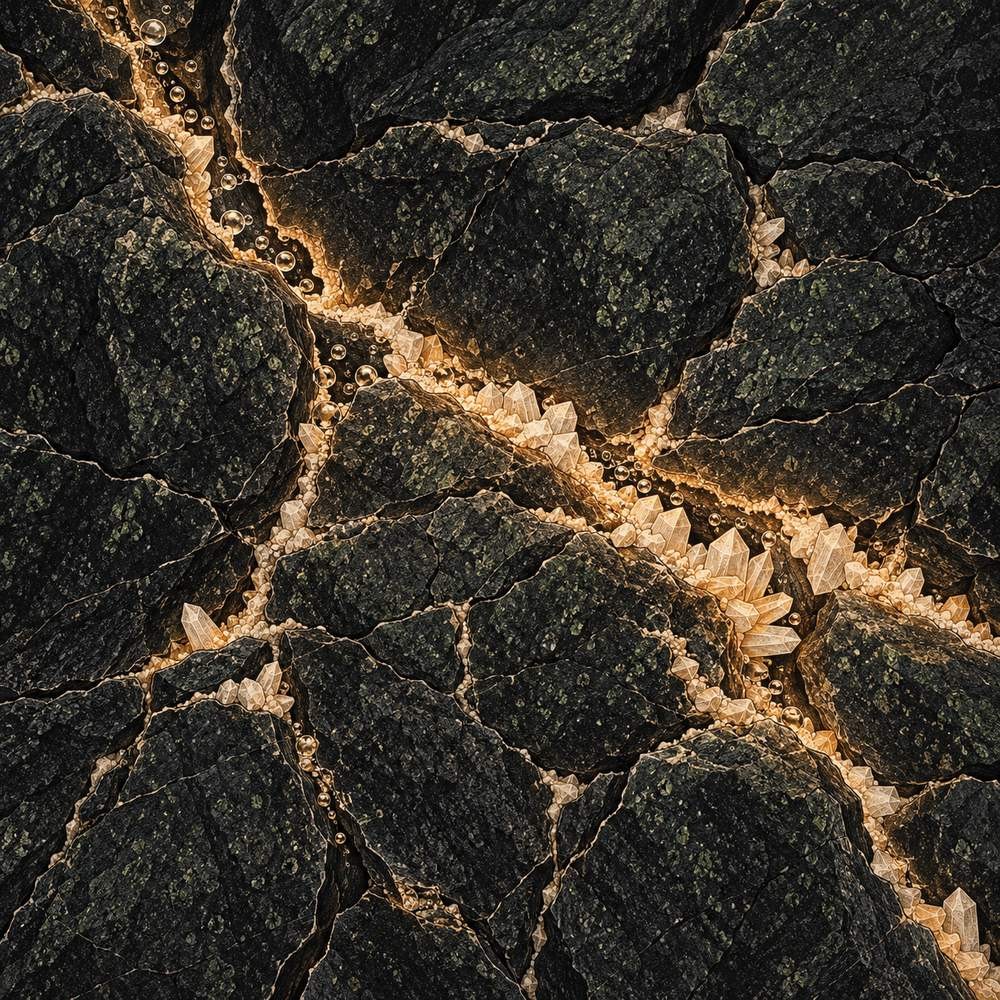
Frontier sets out 44.01's process:
- Capture and delivery: biogenic CO₂ separated during biogas upgrading at a wastewater treatment plant is transported to 44.01's storage site.
- Dissolving: on site, the CO₂ is mixed with water to make a mildly acidic carbonated solution.
- Injection: a deviated well drilled to about 1,000 metres spreads the fluid across a large volume of naturally fractured peridotite. The carbonated water is denser than groundwater, so it sinks rather than rises.
- Turning to rock: the acidic fluid dissolves magnesium and other cations from the rock, the pH rises, and the dissolved CO₂ precipitates as stable magnesium carbonate (MgCO₃). Mineralization takes one to three years.
- Measurement and verification: monitoring runs from the wellhead to the subsurface; see the MRV section below.
44.01 uses a deviated rather than vertical well, with drilling techniques borrowed from enhanced geothermal and oil and gas, so the injected fluid meets far more reactive rock. The company has demonstrated the process on peridotite in Oman and the UAE, has run short-duration injection programmes since 2023 across five field pilots, and has had third-party safety reviews from TÜV SÜD and the XPRIZE Carbon Removal board.
How it differs from conventional geological storage
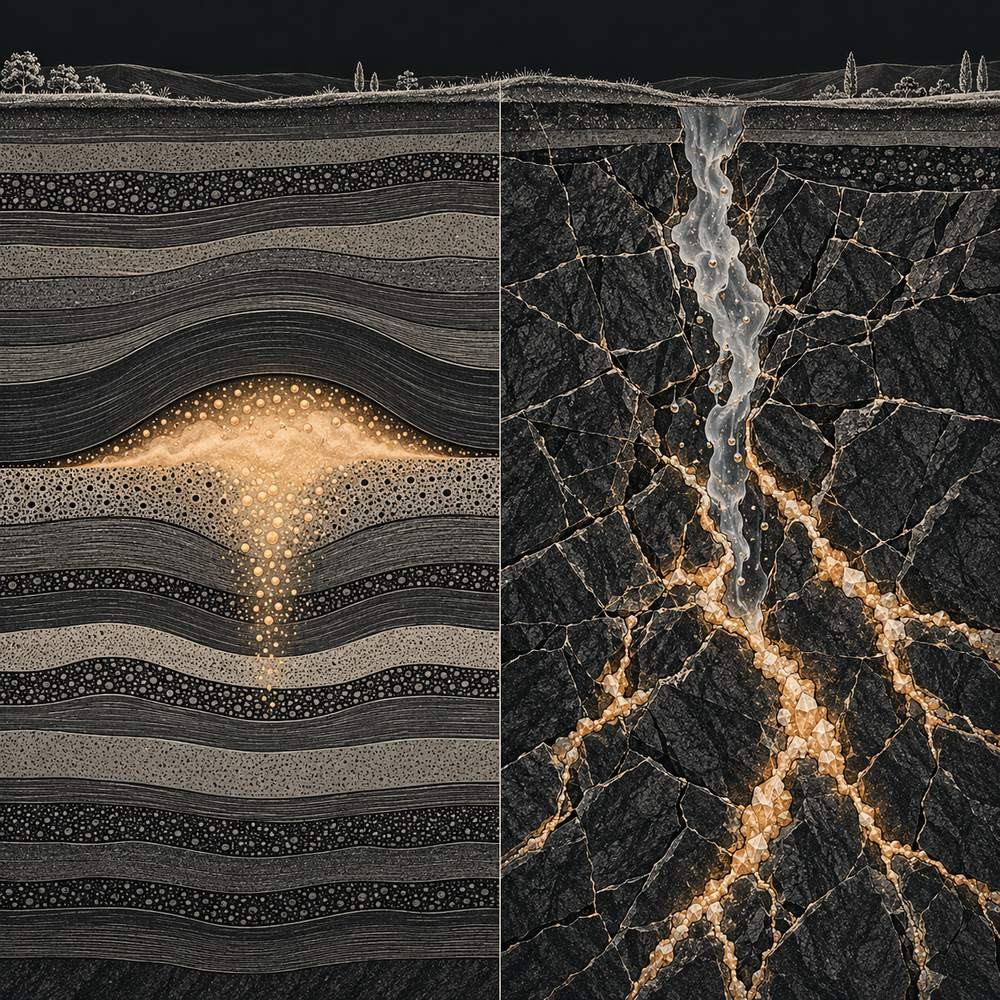
Most geological storage today compresses CO₂ into a supercritical fluid and injects it into deep sedimentary basins. Supercritical CO₂ is buoyant, so it relies on an overlying caprock and needs decades of post-injection monitoring. In-situ mineralization differs in several ways:
- Location: sedimentary basins are concentrated, while reactive rock is widespread. Industrial sources near 44.01's UAE site are within 50 km of peridotite but more than 300 km from viable conventional storage in the Gulf. Frontier says Japan, Oman, Finland, inland Norway and the US Pacific coast have similar conditions.
- Scale: conventional storage sites and pipelines need large upfront investment, and permitting can take five to ten years. Wastewater plants, biogas upgraders and small factories emitting only tens of thousands of tonnes a year struggle to pay for transport to a distant basin. Where suitable rock is nearby, ISM can avoid long pipelines or shipping, and projects can be sized to the CO₂ available locally.
- Uses: the same rock can store CO₂ captured from cement, steel and other hard-to-abate industries. 44.01 also runs a capture and mineralization pilot at a Holcim cement plant in the UAE.
- Potential: Frontier estimates that more than 50 million tonnes of industrial emissions in the UAE could be captured and stored this way, and that similar formations worldwide could store over 5 billion tonnes of CO₂ a year. ESG Dive, citing a Frontier primer, says operating ISM sites currently store less than 50,000 tonnes a year.
MRV and permanence
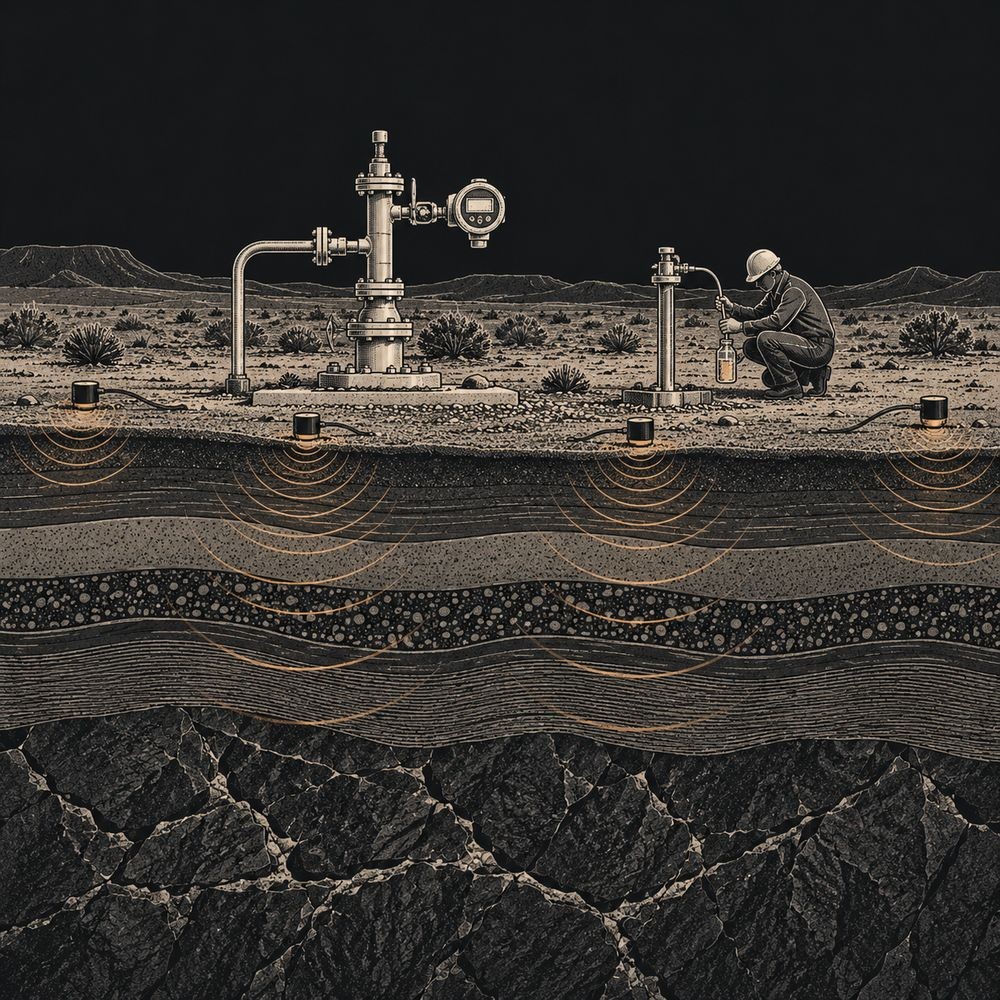
44.01 monitors at three levels:
- Mass flow meters at the wellhead record how much CO₂ is injected.
- Fluid samples from an adjacent monitoring well confirm the CO₂ is precipitating into rock rather than staying in solution.
- Geophysical sensors map the fluid underground and continuously monitor for induced seismicity.
Frontier says that once CO₂ becomes rock it stays put, so permanence does not rest solely on a caprock, post-injection monitoring is much shorter than for conventional storage, and site closure and liability transfer can come sooner. Before mineralization, the CO₂ is held in a fluid denser than groundwater, and 44.01's site characterization and monitoring data show that the layers above and below the injection zone act as additional barriers.
What the project will test
44.01's pilots so far have been short injection campaigns. This purchase supports a move to continuous operation over several years to answer three questions: whether target injection rates can be sustained, how much water the process needs, and what continuous operation costs. 44.01 will share the data so other projects can evaluate the approach. ESG Dive quotes CTO Ehab Tasfai on LinkedIn saying the company will improve injection, cut water and energy use, and use AI with remote monitoring to better understand the subsurface.
Possible directions for Taiwan
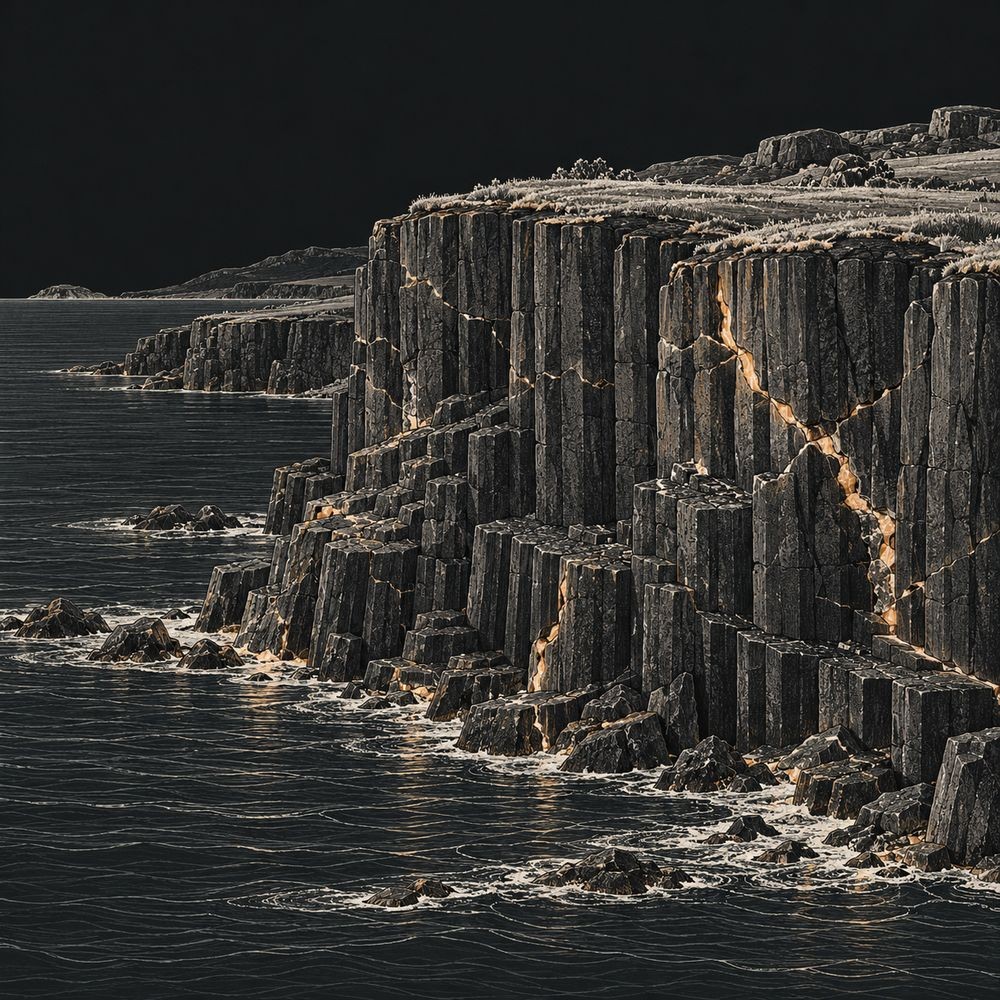
Taiwan's storage trials so far follow the conventional geological route. As ccs.tw's Taiwan carbon capture and storage experiments explains, Taipower's exploration well in the Changbin Industrial Park confirmed suitable sandstone and caprock, and CPC's Tiechenshan test site has completed its initial trial injection. Domestic research on mineral storage is still at laboratory scale:
- A 2024 National Taiwan University master's thesis ran water–rock reaction tests on Penghu alkali basalt, detected early carbonate signals on the rock surface, and found that higher CO₂ partial pressure helped basalt dissolve and carbonates precipitate.
- A 2025 NTU master's thesis noted that Iceland's CarbFix method needs large amounts of fresh water, compared fresh water, seawater and brine, and found the 1,000 psi brine group gave the best carbonate formation under high pressure.
- A National Ilan University team presented an abstract at the 2026 EGU General Assembly. It injected CO₂ and waste desalination brine into Penghu basalt cores under lab conditions simulating 1,500 metres depth and, from the rock's composition, estimated a mineral storage potential of about 7,800 million tonnes of CO₂ for the best-performing unit.
Possible directions:
- In-situ mineralization could be assessed as an option alongside conventional geological storage, for smaller sources far from storage sites, such as biogas and wastewater plants.
- The water use 44.01 will measure is the same problem domestic studies address by replacing fresh water with seawater or brine; the project's published data on injection rates, water and costs is worth following.
- The Ministry of Environment issued its CO₂ storage regulations on August 25, 2026, and CNA reported that sealed wells must be monitored for 20 years (see ccs.tw's IMO marine CDR frameworks article). How monitoring periods and liability transfer should apply to mineral storage could be assessed at the same time.
- If mineralization projects are to generate removal credits, the MRV design here (flow meters, monitoring-well sampling, induced-seismicity monitoring) is a useful reference.
- Cross-border transport is another route; ccs.tw's offshore energy and CO₂ transport article covers Asia-Pacific storage demand, and local mineralization and cross-border storage can be compared on cost.
Sources
- Frontier, "44.01 and Frontier advance permanent CO₂ storage through in-situ mineralization", 2026-10-15: https://frontierclimate.com/writing/44-01
- Frontier, 44.01 portfolio page: https://frontierclimate.com/portfolio/44-01
- 44.01, "Frontier backs 44.01 to take in-situ CO₂ mineralisation to commercial scale", 2026-10-15: https://www.4401.earth/blog/frontier-backs-44-01-to-take-in-situ-co-mineralisation-to-commercial-scale
- ESG Dive, "Frontier Climate buyers ink deal to store CO2 as solid rock", 2026-10-16: https://www.esgdive.com/news/frontier-climate-buyers-ink-deal-to-store-co2-as-solid-rock/833250/
- Hsiao Hsien-Yi, "Water-Rock Interaction for Carbon Dioxide Mineralization Sequestration in Penghu's Alkali Basalt", NTU master's thesis, 2024: https://tdr.lib.ntu.edu.tw/jspui/handle/123456789/91380
- Liao Ting-Yu, "CO2 Mineral Sequestration in Basalt", NTU master's thesis, 2025: https://tdr.lib.ntu.edu.tw/handle/123456789/99442
- Chang, C.-W. and Yang, W.-T., "Carbon Sequestration in Penghu Basalt: Integrating CO2 Mineralization with Sustainable Brine Management", EGU General Assembly 2026: https://doi.org/10.5194/egusphere-egu26-19695
Leave a comment
Comments are reviewed before publication. Email is private and used only when contact is necessary. Privacy notice